
Random Orbital Sander vs Sheet Sander: Which One Do You Need?
TOOL COMPARISON
Random orbital sanders and sheet sanders can both smooth wood and prepare surfaces, but they excel at different jobs. This guide compares sanding speed, finish quality, control, material removal, and best uses to help you choose the right sander.
Quick answer
If you are in a hurry...
Choose a random orbital sander for faster material removal and versatile everyday sanding. Choose a sheet sander for lighter finishing work and better access into corners.
A random orbital sander is the better all-around choice for most DIYers because its combined rotating and oscillating action removes material efficiently while helping minimize visible sanding marks. A sheet sander is better suited to light finishing, flat surfaces, and areas where its square pad can reach into corners.
Random Orbital Sander vs Sheet Sander at a Glance
The biggest difference is the sanding motion and pad shape. A random orbital sander combines rotation with an orbital movement for faster, more versatile sanding, while a sheet sander uses a smaller orbital motion and rectangular pad for controlled finishing work.
RANDOM ORBITAL SANDER
Best for: General sanding & material removal
Pad shape: Round
Sanding speed: Fast
Material removal: Excellent
Finish quality: Excellent
Corners: Poor
Large surfaces: Excellent
Best all-around choice? YES
SHEET SANDER
Best for: Light finishing & corners
Pad shape: Square / rectangular
Sanding speed: Moderate
Material removal: Moderate
Finish quality: Excellent
Corners: Excellent
Large surfaces: Good
Best for detail finishing? YES
What’s the Difference Between a Random Orbital Sander and a Sheet Sander?
The main difference is how the sanding pad moves and the shape of the sanding surface. Random orbital sanders prioritize fast, versatile material removal, while sheet sanders provide controlled finishing and easier access to corners.
Sanding Motion
Random orbital sanders combine rotation with an orbital movement to reduce repetitive sanding patterns. Sheet sanders use a smaller orbital motion without the same rotating action.
Material Removal
Random orbital sanders generally remove material faster, making them better for leveling surfaces, removing finishes, and progressing through sanding grits efficiently.
Pad Shape & Corners
A random orbital sander uses a round pad that cannot reach directly into square corners. A sheet sander’s rectangular pad makes it much better for edges and corners.
Sandpaper & Versatility
Random orbital sanders typically use hook-and-loop sanding discs, while sheet sanders use rectangular sheets that can often be cut from standard sandpaper, potentially reducing abrasive costs.
Random Orbital Sander vs Sheet Sander: Which Is Better for Different Jobs?
Both sanders can produce smooth results, but each has advantages depending on the surface and stage of the project. Random orbital sanders excel at faster general sanding, while sheet sanders shine during lighter finishing and corner work.
Sanding Large Surfaces
Winner: Random Orbital Sander
For tabletops, doors, panels, and other large surfaces, a random orbital sander removes material efficiently and covers larger areas quickly.
Removing Old Finish
Winner: Random Orbital Sander
Its more aggressive sanding action makes a random orbital sander better suited to removing paint, varnish, and existing finishes when paired with the appropriate abrasive.
Sanding Into Corners
Winner: Sheet Sander
The rectangular pad can reach directly into square corners and along edges that a round random orbital sanding pad cannot access.
Fine Finish Sanding
Winner: Sheet Sander
For light sanding between finish coats or final surface preparation, a sheet sander provides excellent control with less emphasis on aggressive material removal.
General Woodworking
Winner: Random Orbital Sander
Its balance of material removal, finish quality, and versatility makes the random orbital sander the more useful choice for most woodworking projects.
Sandpaper Cost
Winner: Sheet Sander
Many sheet sanders accept pieces cut from standard sandpaper sheets, which can make abrasives more economical than dedicated hook-and-loop discs.
Which Should You Buy: a Random Orbital Sander or Sheet Sander?
For most DIYers and woodworkers, a random orbital sander is the better all-around choice. A sheet sander becomes more useful when you prioritize light finishing, corner access, and inexpensive sandpaper.
Choose a Random Orbital Sander If...
You regularly sand furniture or woodworking projects
You need faster material removal
You work on large flat surfaces
You remove paint, varnish, or old finishes
You want one versatile sander for most projects
Bottom line:
For general sanding and woodworking, choose a random orbital sander.
Choose a Sheet Sander If...
You primarily perform light finishing work
You need to sand into square corners
You want precise control over material removal
You sand between coats of finish
You want to use standard sandpaper sheets
Bottom line:
For light finishing and corner work, choose a sheet sander.
Do You Need Both?
For most DIYers, not initially. A random orbital sander can handle the majority of general sanding jobs. A sheet sander becomes a useful second tool when you frequently need to reach corners or perform controlled finishing work.
Frequently Asked Questions
1. Is a random orbital sander better than a sheet sander?
For most general sanding jobs, a random orbital sander is the more versatile choice because it removes material faster while still producing a smooth finish. A sheet sander is better for light finishing and reaching square corners.
2. What is the main difference between a random orbital sander and a sheet sander?
A random orbital sander uses a round pad that both rotates and oscillates. A sheet sander uses a square or rectangular pad with an orbital motion, making it less aggressive but better suited to corners and controlled finishing.
3. Which sander is better for furniture?
A random orbital sander is generally better for sanding larger furniture surfaces and removing old finishes. A sheet sander can be useful for lighter finishing and areas near square corners.
4. Can a random orbital sander leave swirl marks?
Yes, particularly if you use excessive pressure, the wrong grit, clogged abrasives, or poor sanding technique. Its random orbital motion is designed to reduce noticeable sanding patterns, but it cannot eliminate them under every condition.
5. Can a sheet sander remove paint?
Yes, but it generally removes material more slowly than a random orbital sander. For larger surfaces or heavier finish removal, a random orbital sander is usually more efficient.
6. Which sander should a beginner buy first?
For most beginners, a random orbital sander is the better first purchase because it handles a wider range of sanding tasks, from material removal to surface preparation and finish sanding.
Final Verdict
Random Orbital Sander vs Sheet Sander: The Bottom Line
For most DIYers and woodworkers, a random orbital sander is the better all-around choice. It removes material faster, handles larger surfaces efficiently, and can still produce a smooth finish when used with the appropriate grit and technique.
A sheet sander is the better specialist for light finishing and corner access. Its rectangular pad can reach areas a round random orbital pad cannot, while its gentler sanding action works well for controlled surface preparation and finishing.
If you’re buying only one sander, start with a random orbital sander. Add a sheet sander later if your projects regularly involve corners, edges, or lighter finishing work.
Related Buying Guides
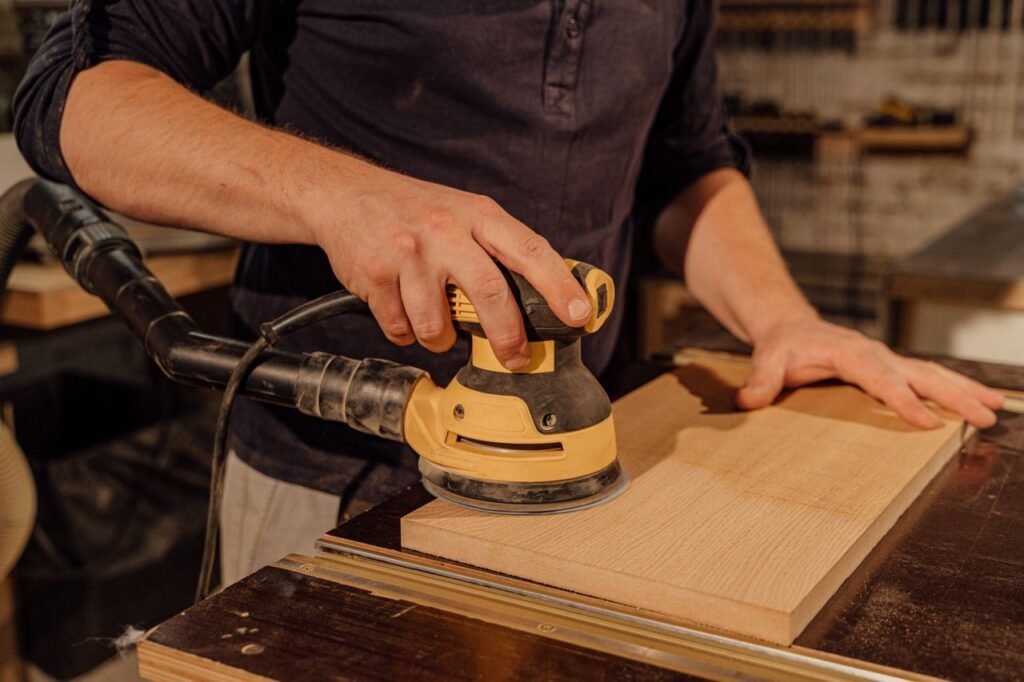
Best Sanders of 2026
Compare our top sanders for woodworking, furniture restoration, surface preparation, and everyday DIY projects.
Best Oscillating Multi-Tools of 2026
Need more versatility? Compare our top oscillating multi-tools for sanding, cutting, scraping, and renovation work.
Best Routers of 2026
Take your woodworking further with our top routers for edge profiles, grooves, joinery, and detailed projects.