
Updated October 21, 2026 · Pelstro Editorial Team · Research-based buying advice
We may earn a commission from qualifying purchases. See our affiliate disclosure. We have not physically tested these saws; recommendations below are editorial judgments based on the linked manufacturer information.
Executive summary
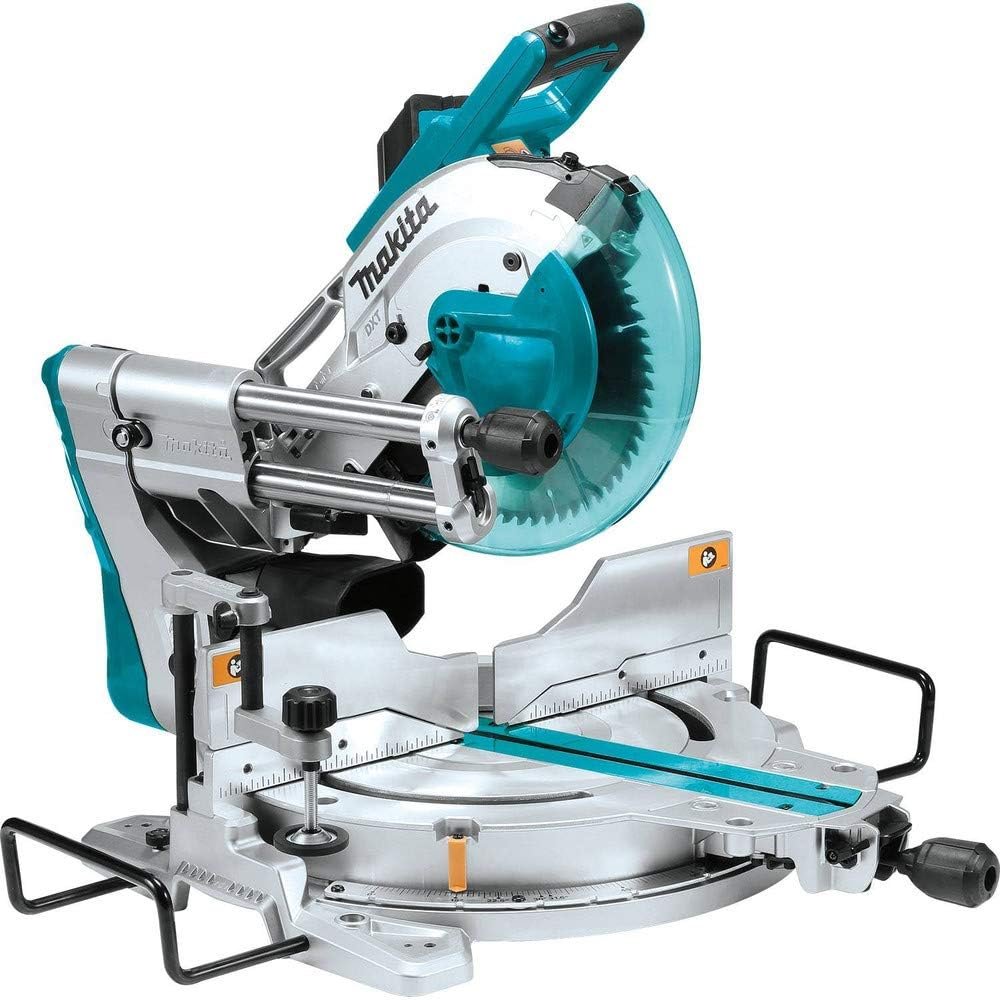
For a small workshop with a shallow wall-side bench, start with the Makita LS1019L and Bosch GCM12SD because their slide mechanisms are designed to reduce rear-space demands. If your budget matters more than wall clearance, the SKIL MS6305-00 deserves a look after you confirm its full operating travel. None is automatically the smallest in every dimension.
This guide focuses on fitting a usable cutting station into a limited room. It complements our broader best miter saws shortlist rather than repeating an overall seven-tool ranking. Electrical specifications and retailer links below concern US-market packages; verify the exact local version before ordering.
30-second decision guide
- Shallow bench; 10-inch saw covers the work: investigate Makita LS1019L.
- Shallow station; want to compare a 12-inch design: investigate Bosch GCM12SD.
- More rear space; tighter purchase budget: compare SKIL MS6305-00 and the complete station cost.
- Only narrow stock: include non-sliding saws in your search instead of assuming a slider is necessary.
- Mainly full sheets: compare track saw and circular saw setups first.
Shortlist at a glance
| Model | Why it belongs here | Check before buying |
|---|---|---|
| Makita LS1019L | 10-inch dual-bevel slider; rail design intended for reduced rear footprint | Capacity, overall width, dust-hose bend and carrying needs |
| Bosch GCM12SD | 12-inch Axial-Glide design aimed at saving space behind the saw | Mounting footprint and weight; size of the complete station |
| SKIL MS6305-00 | 10-inch dual-bevel sliding option to compare on total cost | Operating slide travel, extraction routing and exact package contents |
Measure the station before choosing a model
A small workshop is not one measurement. Bench depth, clear width, storage height and the path used to carry a saw into the room can each eliminate a different candidate. Start with a simple list of your available space and the largest recurring workpiece.
Measure the rear wall to the front edge where you can safely stand and work. Include the complete slide movement and the minimum bend your extraction hose needs. Next measure the left and right stock-support space with a door closed, a vehicle parked or another bench in its usual position. Finally check where the machine will live when the station is not in use.
These are planning checks, not a universal clearance formula. Follow the mounting and operating instructions for the exact model. A reduced-rear-clearance mechanism does not remove the need for space in front, stable stock support or access to the controls.
1. Makita LS1019L: shortlist for a shallow bench
Makita describes a two-steel-rail system that reduces the footprint and allows operation flush against a wall. That is the strongest reason to investigate this model for a compact stationary workshop. The benefit is the layout of the mechanism, not the assumption that any 10-inch saw is compact.
Its dual-bevel sliding configuration is relevant when you need both wider crosscuts and compound angles. Check the manufacturer’s capacity chart for the stock you cut most, then include the hose, mounting surface and control access in your fit check. We have not measured the assembled footprint in a workshop.
Best buying situation: you need sliding capability, a wall-side location is unavoidable and the documented stock capacity covers your recurring jobs. Reason to reconsider: you mainly carry the saw between locations or only need narrow crosscuts.
Check Makita LS1019L package on Amazon
2. Bosch GCM12SD: compare when you need a 12-inch option
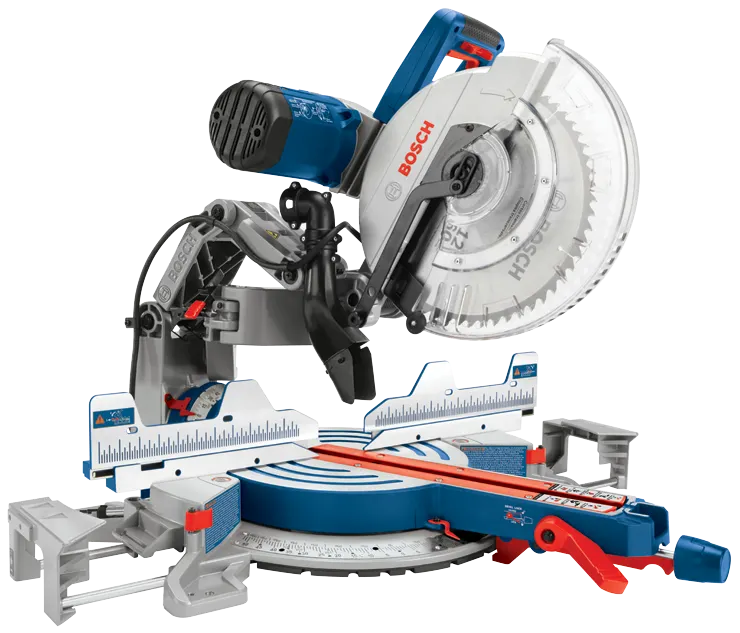
Bosch uses an articulated Axial-Glide system instead of a conventional long rear-rail arrangement. The manufacturer positions that design around smooth movement and a compact working layout. For this guide, the useful question is whether it fits your station better while meeting your required capacity.
Do not call it a compact portable saw merely because the rear mechanism saves space. Check weight, mounting width, carrying route and the workpiece envelope. A heavier machine that stays installed is a different proposition from one you must lift onto a bench every weekend.
Best buying situation: you want a 12-inch glide design for a station that remains assembled. Reason to reconsider: the mounting surface, lifting requirement or complete cost is unsuitable.
Check Bosch GCM12SD bundle on Amazon
The linked Bosch offer is a bundle with an MS1234 length stop. Compare its included equipment with a saw-only listing before comparing prices.
3. SKIL MS6305-00: consider when rear space is available
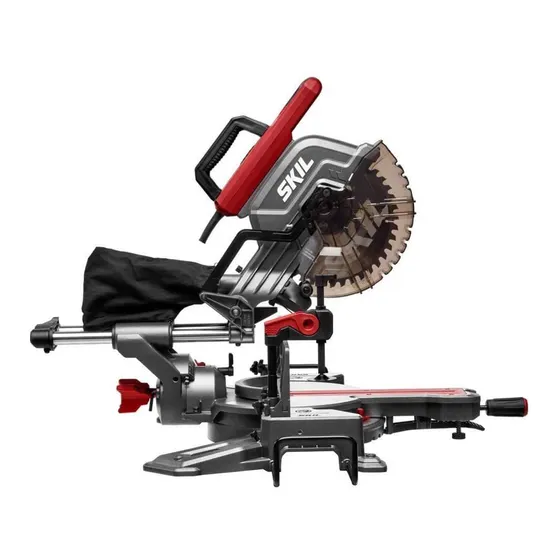
The SKIL is a 10-inch dual-bevel sliding model with an LED shadow-line feature. It gives buyers another configuration to compare without jumping straight to a 12-inch saw. It is included as a budget-screening option, not as a measured winner for the smallest footprint.
A conventional sliding design may demand more room behind the machine than your bench can provide. Confirm the actual operating dimensions in the manual or with the manufacturer. Saving money on a machine that forces you to block a walkway is not good workshop value.
Best buying situation: you have verified rear room and want to compare a 10-inch slider’s total price. Reason to reconsider: the bench must sit tight against a wall or a simpler fixed-head saw already handles your cuts.
Check SKIL MS6305-00 package on Amazon
What about the DeWalt DWS780?
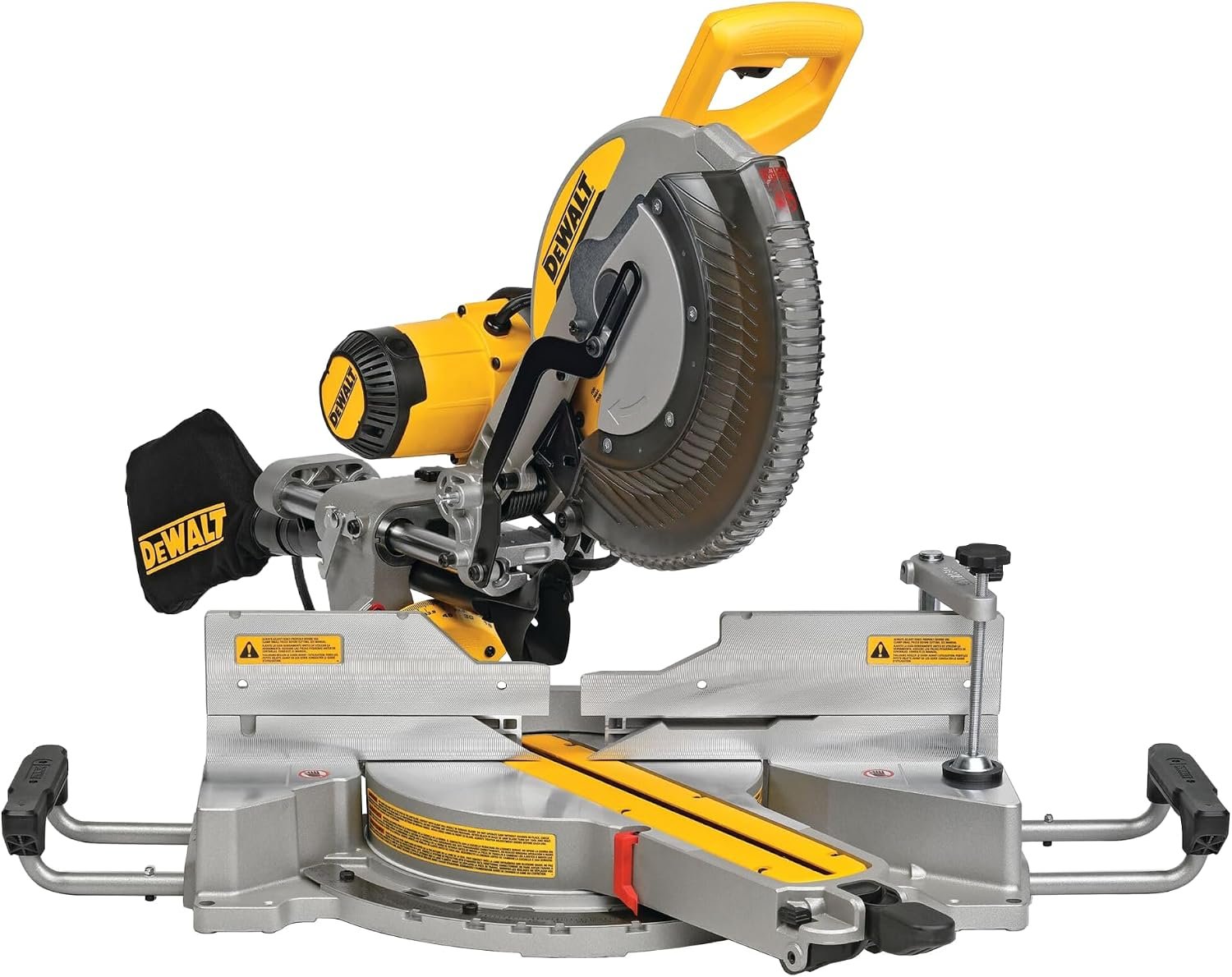
The DWS780 may suit a workshop that has enough operating room and benefits from its integrated XPS guidance. It is not our automatic recommendation for a shallow station simply because it appears in a general best-saw list. Read our DWS780 review for the use-case assessment and DWS779 vs DWS780 comparison if deciding between those models.
Older US DeWalt units can be covered by a rear-guard recall. Check the exact unit against the CPSC notice and the manufacturer’s instructions before purchase or use.
How we chose these options
We prioritized a clearly documented reason a model could suit a limited room: reduced rear-footprint design, an alternative blade and capacity class, or a purchase-cost option to evaluate after measuring. We have not performed a physical comparison, ranked measured accuracy or timed cuts. No numerical test scores are assigned.
The direct product sources are Makita LS1019L, Bosch GCM12SD and SKIL MS6305-00. Manufacturer design claims do not establish comparative results in your room.
Complete setup checklist
- Confirm your largest recurring stock fits at the required angle.
- Confirm a suitable blade and arbor specification for the exact saw.
- Choose mounting or a compatible stand before placing the order.
- Plan level infeed and outfeed support without blocking doors.
- Check hose routing and extraction compatibility.
- Price the complete station, including delivery and taxes.
- Check local voltage, package suffix and warranty coverage.
A foldable stand can help a shared garage, but it does not shrink the saw while cutting. The room must still accommodate stock and safe operation. If the tool must be moved frequently, prioritize a practical lifting and storage routine over maximum capacity.
Frequently asked questions
Is a 10-inch saw always better for a small workshop?
No. Mechanism layout, mounting width and stock support matter more than blade diameter alone. A 10-inch rear-rail slider can still need substantial depth.
Do I need a sliding miter saw?
Only when the required capacity justifies it. Check a non-sliding saw’s chart for your stock before paying for travel you will rarely use.
Can I put the saw against a wall?
Only if the exact model’s instructions and working envelope permit it. Account for hoses, guards and control access, even with a reduced-footprint design.
Which one is the cheapest today?
Prices change by package and seller. The links above let you compare current offers; this guide does not quote a live price or promise a discount.
Final recommendations
Investigate the LS1019L first for a 10-inch wall-side slider and the GCM12SD when you need to compare a 12-inch glide design. Consider the SKIL only after verifying its operating rear room. The best miter saw for a small workshop is the one that fits a complete usable station and covers your actual cuts.