
Research-based buying advice · Reviewed October 20, 2026
Track saw vs circular saw: the quick answer
Choose a conventional circular saw for versatile construction and DIY cuts. Consider a track saw when repeated straight sheet cuts, alignment and dust collection justify buying a complete guide-rail system. If you already own a circular saw and need only occasional plywood cuts, a suitable straightedge and blade may be the more economical starting point.
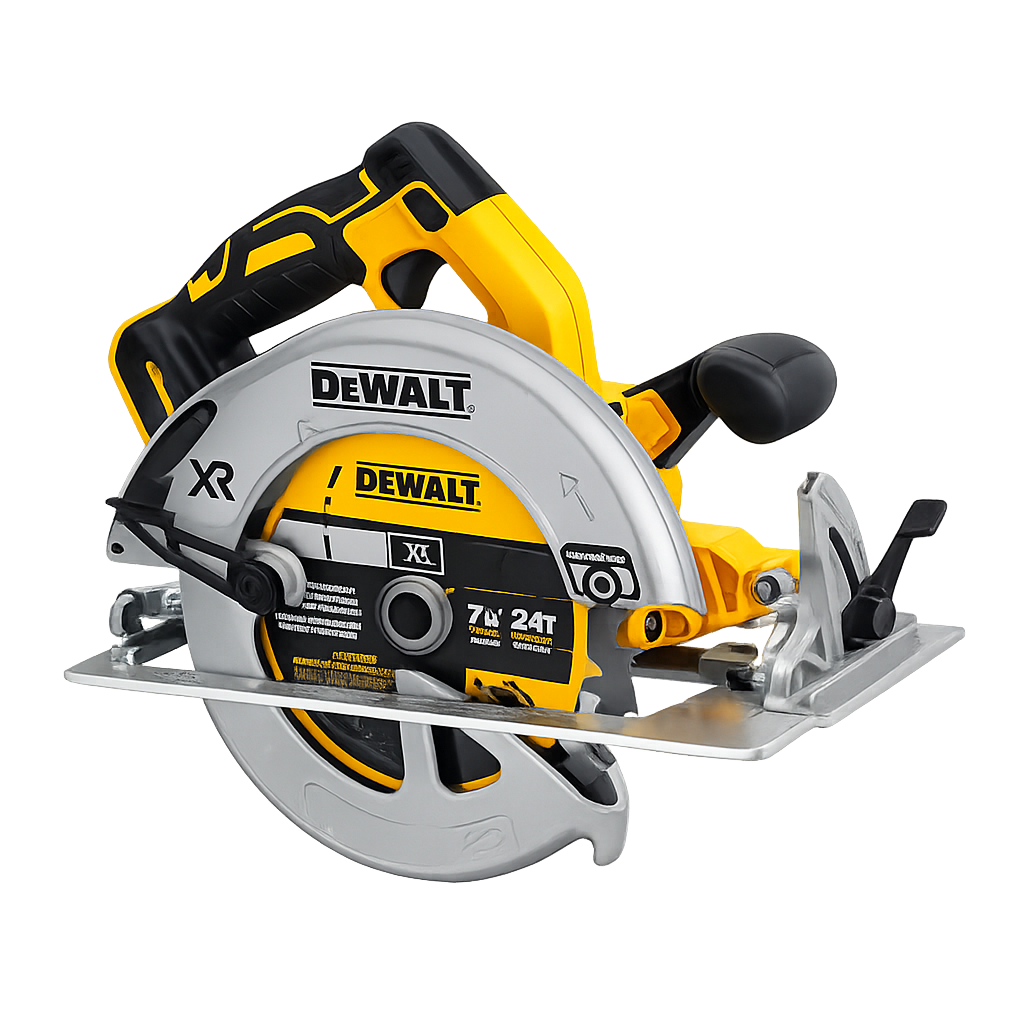
A track saw is itself a type of circular saw. Here, “track saw” means a saw designed to run on a compatible guide rail, usually with a plunge mechanism and enclosed blade housing. “Circular saw” means the familiar general-purpose handheld saw with a pivoting lower guard.
30-second decision table
| Your work | Start with | Main consideration |
|---|---|---|
| Framing, rough sizing and varied home repairs | Circular saw | Versatility and a manageable setup cost |
| Repeated long plywood cuts | Track saw system | Rail length, alignment and total system cost |
| A few plywood cuts with an existing saw | Circular saw with suitable guide | Correct shoe offset and secure support |
| Curved plywood shapes | Jigsaw | Neither straight-cut saw replaces curve-cutting ability |
| Interior sheet cutouts | Suitable plunge saw or other approved method | Follow the specific tool’s plunge-cut instructions |
What the guide rail changes
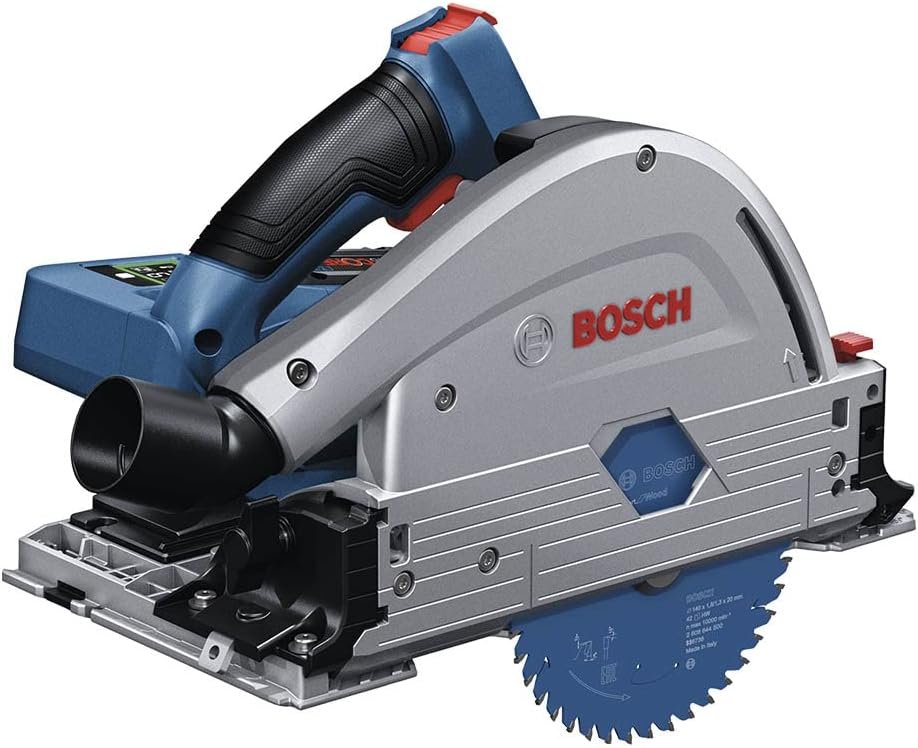
A compatible track guides the saw’s base along a set path. Many systems have a replaceable edge strip that helps show the cut line and support surface fibres. The fit between saw and rail, strip condition, blade and setup still influence the result.
Makita’s SP6000J documentation, for example, describes a plunge circular saw used with an optional guide rail. That “optional” matters: a saw-only box is not automatically the complete system shown in an advertisement. Confirm rails, clamps, connectors and compatible extraction equipment separately.
A straightedge can guide a conventional circular saw too. Usually you must allow for the distance between the blade and the edge of the saw’s shoe. Measure and test that offset rather than placing the fence directly on the finished cut line.
Cut quality: the tool is only part of the result
A track saw can simplify repeatable sheet-cut setup, but it cannot guarantee a clean edge with a damaged or unsuitable blade. Likewise, a conventional circular saw is not restricted to rough cuts. The blade, face orientation, support, feed and guide setup all affect the edge.
Before buying another saw to solve tear-out, check whether the existing blade is intended for your plywood and finish requirement. Manufacturers such as Diablo list finish blades for plywood and veneered plywood. Match diameter, arbor, permitted speed and other specifications to the saw’s manual; tooth count alone does not establish compatibility.
Where a circular saw remains the practical choice
A circular saw suits users moving among framing timber, rough sheet sizing and ordinary home projects. You can work from different edges without laying a long rail for every cut. Existing cordless batteries may also reduce the cost of adding one.
If you mostly make occasional garage shelves and construction cuts, the money for an entire track system might be better spent on support, a suitable blade and a reliable guide. Read our DCS570 review for one existing-platform circular-saw example and the circular-saw buying guide for broader choices.
Where a track saw earns its extra setup cost
Repeated cabinet panels and long straight sheet cuts make a guide-rail system more attractive. The value is in a workflow you will use repeatedly: positioning the rail, guiding the saw and managing dust with compatible equipment.
Consider where you work. A rail must have suitable support and extend as required by the manufacturer at the start and end of the cut. A short rail that barely matches the panel length may be insufficient. If joining rails, include compatible connectors and alignment checks in your plan.
For a wider tool-type decision, see which saw to buy for plywood.
Compare complete systems, not saw prices
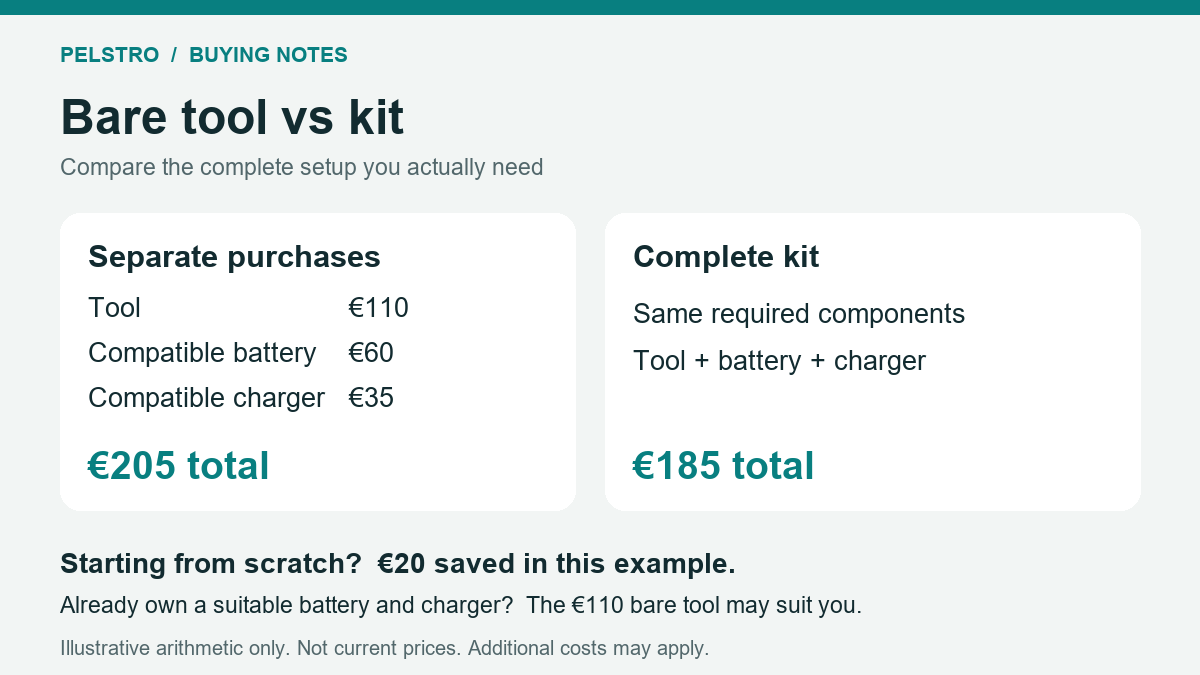
Compare the saw, suitable blade, guide or rails, clamps where needed, support, extraction accessories, and required power equipment. Add delivery and tax not already included. A corded system also needs a suitable electricity supply; a cordless system needs approved batteries and charger.
The graphic is illustrative arithmetic, not a track-saw quotation. Use the bare-tool versus kit checklist to compare actual packages. Do not assume a rail from another brand fits simply because both are called track-saw rails.
When neither is the right saw
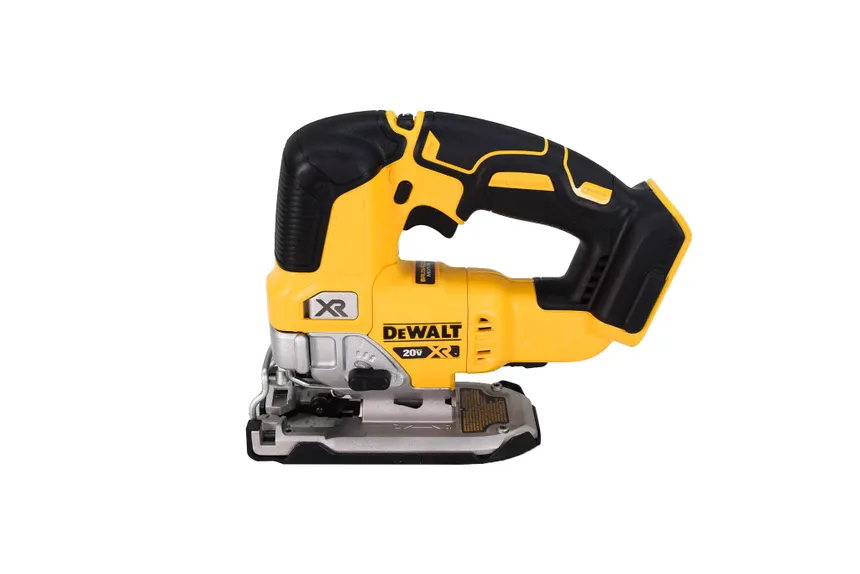
Curved shapes and small irregular cutouts are reasons to consider a jigsaw with the correct blade. For repeated identical short crosscuts, a different bench setup may be more convenient. Choose the cut you need first; avoid buying a track system because it looks more precise in every situation.
Buying mistakes to avoid
- Assuming every circular saw runs directly on every guide rail.
- Buying a rail that does not allow the required start and finish support.
- Trying to correct a wandering cut by twisting a running blade.
- Ignoring sheet support and allowing the kerf to pinch the blade.
- Treating an enclosed housing as permission to skip required dust controls or protective equipment.
Follow the saw and rail manuals, keep hands clear and support material appropriately. Our circular-saw tutorial covers the basic setup.
Frequently asked questions
Can a circular saw cut as straight as a track saw?
It can make straight cuts with a suitable guide and careful setup. A dedicated track system may make repeated alignment more convenient; accuracy is not guaranteed by the category name.
Can I turn any circular saw into a track saw?
No. Check a guide or adapter’s specific compatibility and operating instructions. A clamp-on straightedge is different from a matched plunge-saw rail system.
Is a track saw worth it for occasional DIY?
It depends on the project. Price the complete setup against using an existing circular saw and guide, hiring a saw, or using a retailer’s cutting service.
Final recommendation
Keep the circular saw for general versatility and occasional guided cuts. Buy into a track system when repeatable sheet cutting is central to your work and the complete package fits your budget and workspace. For curves, look at the jigsaw guide.
Sources and method
Category analysis based on manufacturer system information and practical buying requirements, not hands-on comparative testing.