
Research-based comparison · Updated October 9, 2026
Disclosure: Pelstro is a GRABO affiliate partner. We may earn a commission if you buy through our links, at no additional cost to you. We have not hands-on tested these tools. This comparison uses manufacturer specifications and instructions. Photos: GRABO.
The vacuum lifter vs suction cup decision starts with a naming problem: a professional manual suction cup is also a vacuum lifting tool. The useful comparison is between a cup you activate by hand and a powered tool that creates vacuum with an electric pump. Neither category wins every job.
Quick comparison · When manual makes sense · When powered is worth it · Choose by surface · Buying verdict
Vacuum lifter vs suction cup: quick comparison
| Question | Manual suction cup | Powered vacuum lifter |
|---|---|---|
| How does it attach? | A lever or hand pump creates the pressure difference. | An electric pump creates the pressure difference. |
| How is vacuum monitored? | Model dependent: professional pump cups may use a red-line indicator. | Model dependent: displays, gauges or warnings; some automatically restart the pump. |
| Best starting point | Compatible smooth, nonporous material and occasional handling. | Repeated handling and materials expressly approved for that model. |
| Battery needed? | No. | Yes; allow for charging and the correct battery kit. |
| Porous material? | Do not assume compatibility; many hand cups are specified for nonporous surfaces. | Only where approved. High-airflow models serve a different purpose from general lifters. |
| What determines capacity? | The specific cup, surface, orientation and manufacturer rating. | The specific tool, seal or plate, surface, orientation and manufacturer rating. |
“Manual” does not automatically mean weak, and “electric” does not automatically mean suitable. Compare the actual rating and intended application rather than the largest number on a product image.
When a manual suction cup makes sense
There is a large difference between a basic lever cup and a professional pump-operated hand cup. A pump cup can provide a visible vacuum indicator and a clearly specified application. That makes it a legitimate tool choice, not merely a temporary substitute for an electric model.
For example, Wood’s Powr-Grip lists its N4950 8-inch hand cup for flat, smooth, nonporous surfaces. Its published capacity is 125 lb (57 kg), and its red-line indicator signals significant vacuum loss. Those details describe that particular cup; they should not be applied to every manual suction handle.
A manual pump cup is worth considering when your material fits its specification, use is occasional, and you want a tool without a charging routine. Smooth glass is an obvious application to investigate, but coatings, surface condition and load orientation still matter. Follow the cup manufacturer’s compatibility instructions.
The trade-off is that vacuum generation is manual. You also need to watch its indicator as instructed. A tool that holds well initially should not be assumed to remain attached indefinitely.
When powered suction is worth paying for
A powered lifter becomes more compelling when you repeatedly attach, position and release material. An electric pump removes the hand-pumping step, while automatic vacuum maintenance on suitable models can restart the pump when pressure drops. That convenience may matter more than a headline capacity figure.

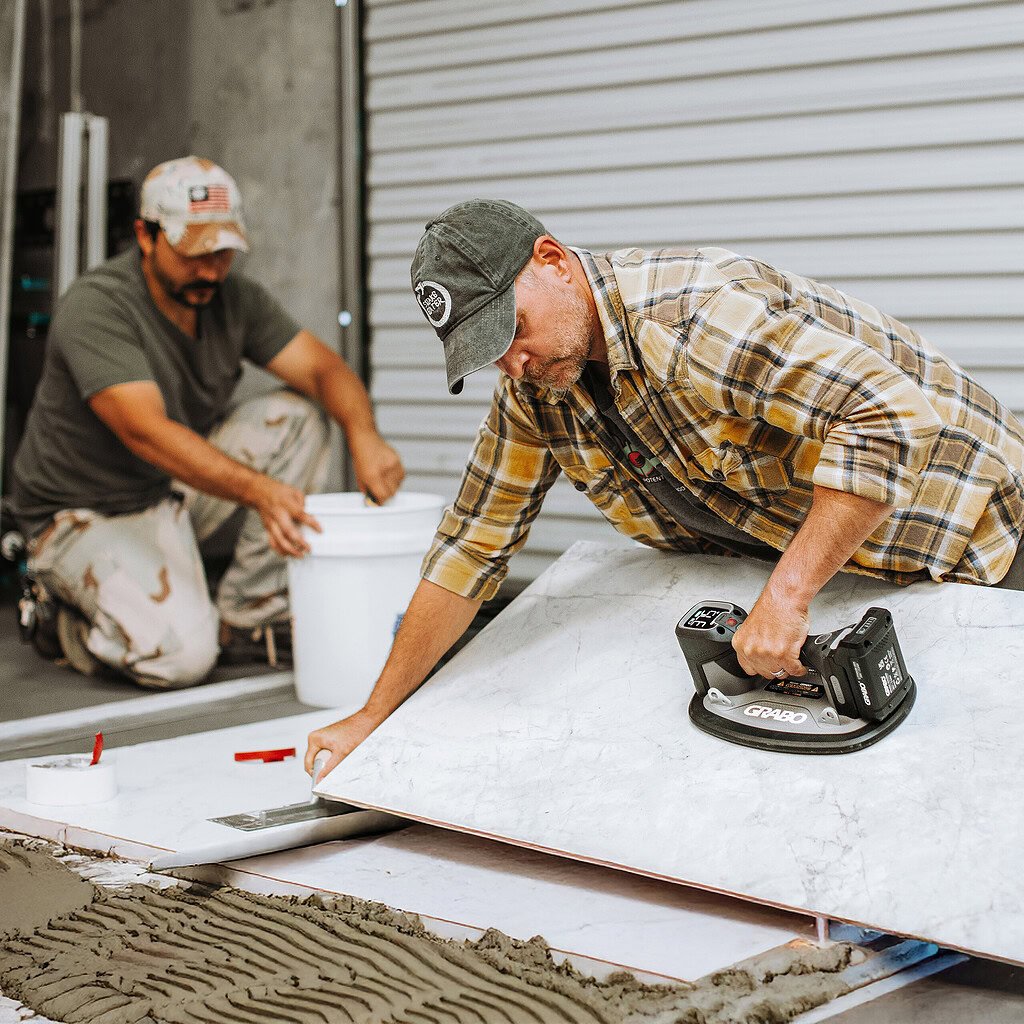
The GRABO Pro Brushless is one example. Its electric pump, pressure display and automatic pressure control are useful features to compare with a manual cup. The current official US store offer, checked October 9, 2026, is $259.99 tool only, excluding the battery and charger. Add the equipment you need when comparing it with a manual cup. The previous complete-kit URL no longer works.
That purchase only makes sense if the tool suits your materials and you use the convenience. A battery, charger, seal and filter also add things to manage. A powered lifter does not remove the need to inspect its contact surface or monitor the tool during handling.
Check Pro Brushless tool-only price
If you already want electric suction, our Pro Brushless vs Pro-Lifter 20 comparison explains the differences between two GRABO options.
Choose by surface before choosing by power source
Smooth glass and glazed tile
Start with a professional cup or lifter whose manufacturer approves the exact application. For occasional work, a suitable manual pump cup may meet the need. For frequent positioning, powered operation may justify its added cost and charging requirements. Do not assume all tiles behave alike: texture, grooves and surface condition can affect the seal.
Textured panels and stone
Read the individual tool’s material guidance. A surface that looks flat can still admit air or prevent the seal from seating properly. General claims such as “works on stone” are not enough to approve every finish or slab. Where suitability is unclear, ask the manufacturer about the specific material before buying.
Porous concrete pavers
This is where the simple manual-versus-electric comparison becomes insufficient. Air can pass through porous material, so pump airflow and plate design become central. GRABO markets the HighFlow specifically for porous materials; it is a different choice from the general-purpose Pro Brushless.
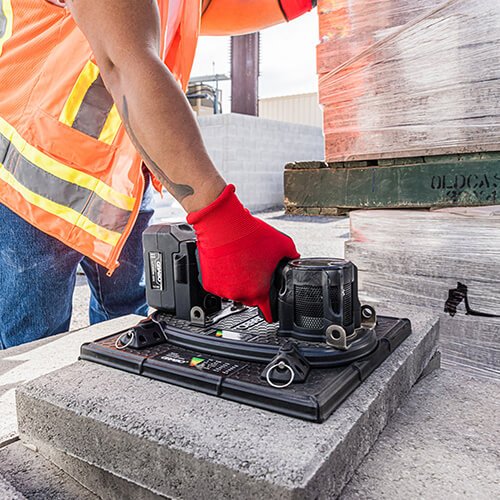
See our Pro Brushless vs HighFlow comparison before selecting a lifter for pavers. Do not transfer a glass rating to concrete or assume that a larger plate is included in every kit.
What to check before buying either type
- Material and finish: match the exact surface to the manufacturer’s approved uses.
- Orientation and rating: distinguish horizontal from vertical ratings and working load limits from maximum figures.
- Vacuum indication: understand how the tool shows a loss of vacuum and what the instructions require you to do.
- Complete setup: check the supplied case, seals, plates, battery and charger, plus replacement-part availability.
- Handling plan: account for the object’s size, balance and number of people needed, not just its weight.
Buying verdict: pay for the job you actually do
Choose a suitable professional manual pump cup if you mainly handle approved smooth, nonporous material occasionally and value a simple tool without batteries. Do not dismiss a well-specified manual cup just because an electric model has more features.
Choose a suitable powered lifter if repeated attachment and positioning make electric operation useful, or if a particular powered model is expressly designed for your material. For porous pavers, investigate a dedicated high-airflow tool rather than assuming a general lifter will work.
Our best vacuum lifters buying guide compares four powered options by application, kit contents and trade-offs.
Frequently asked questions
Is a suction cup a vacuum lifter?
Yes, a lifting suction cup uses a pressure difference to hold the material. In shopping comparisons, “vacuum lifter” often means a powered tool, but the categories overlap.
Are powered lifters always stronger?
No. Capacity belongs to the specific model and application. Compare equivalent surface and orientation ratings; power source alone does not establish lifting capacity.
Does automatic pumping mean I can ignore the gauge?
No. Automatic pressure control is a feature, not a substitute for the manufacturer’s monitoring and handling instructions.
Sources and methodology
We compared published manufacturer information, not hands-on test results. Sources checked September 27, 2026: Wood’s Powr-Grip N4950, GRABO Pro Brushless specifications, official Pro Brushless tool-only listing, and GRABO HighFlow specifications. Manufacturer photos illustrate the tools; they are not evidence of our own testing.