
PELSTRO TOOL REVIEW
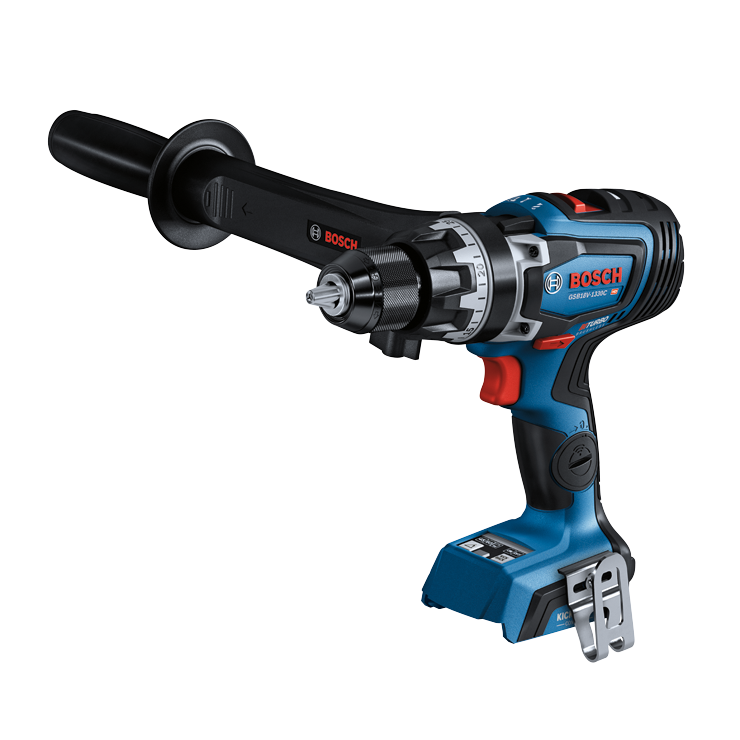
In this Bosch GSB18V-1330C review, we look at a PROFACTOR 18V hammer drill/driver built for high-load drilling, controlled fastening, and users who value electronic safety and setup features as much as raw output. Bosch rates it at up to 1,330 in-lbs of torque and 2,200 RPM, with KickBack Control, Electronic Angle Detection, 25 clutch settings, an all-metal chuck, and optional connected features through a separate module.
Heavy drilling, renovation, framing, accurate angled drilling, Bosch 18V users, and occasional masonry.
You want the shortest possible premium hammer drill or only need light household drilling.
9.2/10
Excellent
Review methodology: This is a research-based Pelstro review, not a claim of hands-on laboratory testing. We evaluate official manufacturer specifications and documentation, safety and control features, battery-platform fit, application range, and how the tool compares with current alternatives.
Bosch GSB18V-1330C at a Glance
| Tool type | Cordless hammer drill/driver |
| Platform | Bosch 18V PROFACTOR / CORE18V |
| Motor | BITURBO brushless |
| Maximum torque | 1,330 in-lbs |
| No-load speed | 0–550 / 0–2,200 RPM |
| Hammer rate | Up to 30,000 BPM |
| Chuck | 1/2-inch all-metal keyless chuck |
| Length | 8 inches |
| Listed weight | 4.6 lb |
What We Like
- High rated torque. Bosch lists up to 1,330 in-lbs for demanding drilling and driving work.
- Fast high gear. A 2,200-RPM top speed is competitive for a full-size high-output hammer drill.
- KickBack Control. The tool is designed to reduce sudden rotational reaction during a severe bind-up.
- Electronic Angle Detection. This can help users maintain a desired drilling angle for repeatable work.
- 25 clutch settings. The broad adjustment range gives the drill useful fastening control despite its high power.
- PROFACTOR system. The BITURBO motor is designed to work with CORE18V high-power batteries for demanding applications.
What We Don’t Like
- Not especially short. Bosch lists the tool at 8 inches long, so rivals such as the Milwaukee 2904-20 and DeWalt DCD805 are easier to place in tight spaces.
- Premium features add complexity. Buyers who only want a straightforward drill may not benefit from connected or angle-detection functions.
- Best performance depends on the battery. The PROFACTOR concept makes the most sense with compatible CORE18V high-power packs.
- Heavy-duty capability is unnecessary for casual jobs. Light household users can save money and weight with a smaller drill.
Bosch GSB18V-1330C Review: Power and Drilling Performance
Bosch rates the GSB18V-1330C at up to 1,330 in-lbs of torque with two speed ranges: 0–550 RPM for high-power work and 0–2,200 RPM for faster drilling. These figures come from Bosch’s official GSB18V-1330CN product page.
The combination places this model firmly in the high-output cordless hammer-drill category. Low gear is useful for larger bits and applications that demand torque and control, while 2,200 RPM in high gear gives the drill enough speed for smaller holes and general-purpose work.
Bosch positions the GSB18V-1330C inside its PROFACTOR line, which pairs BITURBO Brushless technology with CORE18V high-power batteries. The practical implication is that this drill is intended for users who expect more than occasional light drilling and are willing to pair the tool with batteries designed for demanding loads.
KickBack Control
A powerful drill can rotate violently if a large bit suddenly catches. Bosch’s KickBack Control is designed to recognize that kind of sudden rotational reaction and reduce the tool’s response, helping lower the risk of injury during a bind-up.
Electronic protection does not replace correct drilling posture, the auxiliary handle, appropriate bits, or the safety guidance in the manual. It does add a useful layer of protection on a drill with enough torque to make bind-ups a serious concern.
This is one of the clearest reasons to consider the Bosch over a simpler high-output model. Buyers who regularly use large bits in framing lumber or other demanding materials may value bind-up protection more than another small increase in published torque.
Electronic Angle Detection
The GSB18V-1330C also includes Electronic Angle Detection, a feature intended to help maintain accurate drilling at selected angles. Bosch supports additional customization through the PRO360 app when the optional connectivity module is installed.
That feature is more specialized than ordinary speed control, but it can be useful for repeat work where hole angle matters. Installers, carpenters, and users making repeated angled holes may get more value from it than a casual DIYer who simply needs a straight hole in a wall or board.
The important distinction is that Angle Detection is a control aid, not a substitute for layout and technique. It can make repeatable drilling easier, but the user still needs to position the tool correctly and choose the appropriate bit and mode.
Hammer-Drill Capability
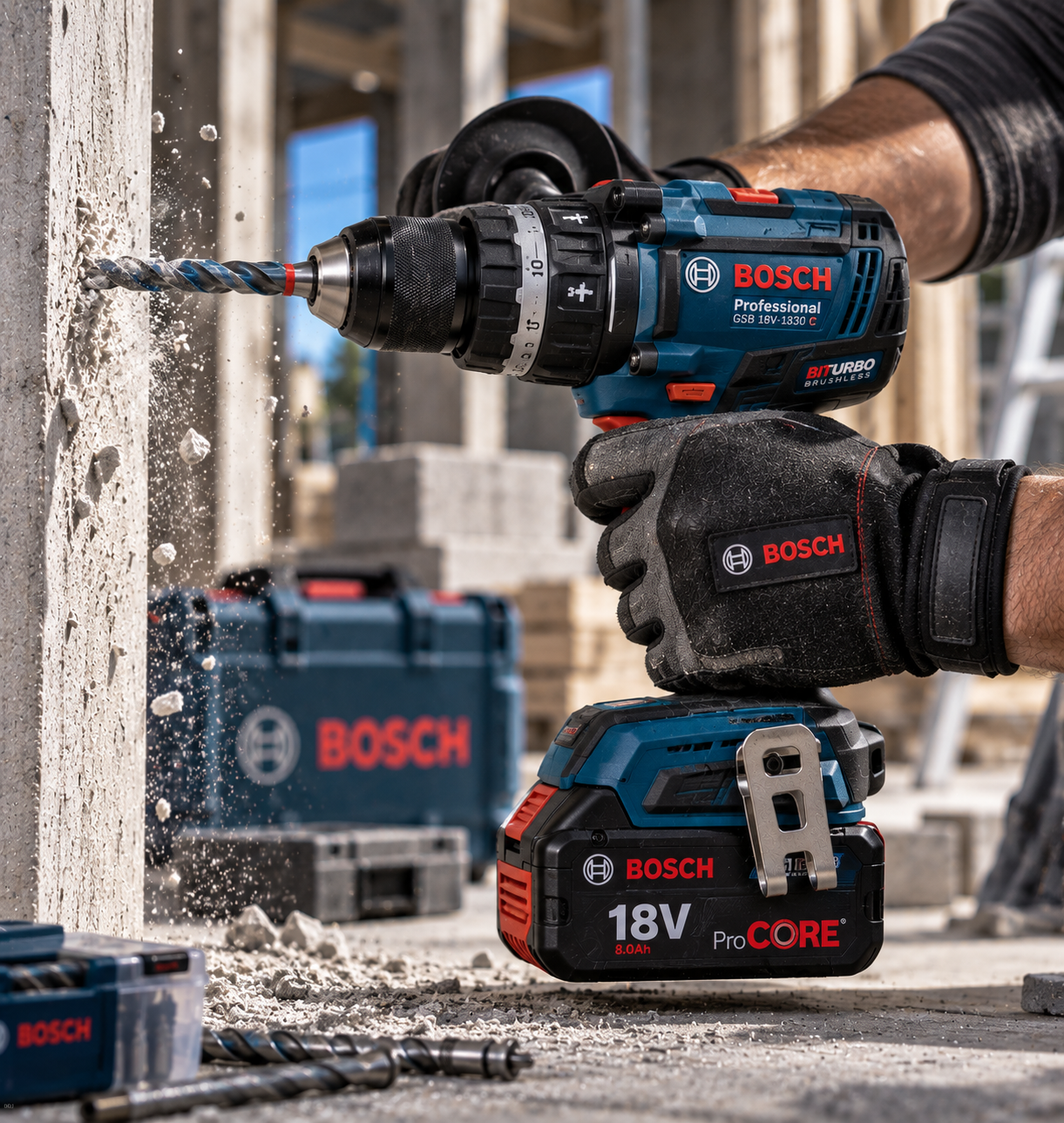
The GSB18V-1330C adds hammer action for masonry work and Bosch lists a maximum no-load hammer rate of 30,000 BPM. With the correct masonry bit, the tool can handle appropriate drilling in concrete, tile, asphalt, and similar hard materials.
As with other conventional hammer drills, it is most useful when masonry is one part of a broader workload. If your projects revolve around repeated concrete holes or larger masonry drilling, an SDS rotary hammer is the better category of tool.
Our Hammer Drill vs Regular Drill guide explains the difference between hammer and non-hammer drills, while our How to Use a Hammer Drill guide covers basic setup and technique.
Clutch, Chuck, and General Control
Bosch gives the drill 25 clutch settings for controlled fastening. That matters because a high-torque drill is not useful as a general-purpose driver if it cannot be dialed back for smaller fasteners or finished materials.
The all-metal 1/2-inch keyless chuck is appropriate for a premium high-load drill and is designed to provide durability under demanding use. A variable-speed trigger and mechanical two-speed gearbox give the user control over both motor speed and overall operating range.
These features make the GSB18V-1330C more versatile than its high torque number might suggest. It can work as a heavy drilling tool, but it still has the clutch and controls necessary for more ordinary fastening jobs.
Size and Ergonomics
The main physical compromise is length. Bosch lists the tool at 8 inches, which is not excessive for a full-size hammer drill but is clearly longer than several premium competitors. In cabinetry, between closely spaced framing members, or in other cramped spaces, an inch of extra tool length can matter.
Weight also depends heavily on battery choice. Bosch recommends CORE18V high-power packs for maximum PROFACTOR performance. Those batteries make sense for sustained demanding work, but they also increase total working weight compared with compact packs.
For users primarily working in open framing, workshops, or general renovation environments, the added size may not be a problem. Buyers who frequently work in tight spaces should compare dimensions carefully before choosing.
Bosch GSB18V-1330C vs Milwaukee 2904-20
Both tools target demanding drilling, but they emphasize different strengths. Milwaukee rates the 2904-20 at 1,400 in-lbs and packages it in a shorter 6.9-inch body with AutoStop bind-up control. Bosch rates the GSB18V-1330C at 1,330 in-lbs and adds KickBack Control plus Electronic Angle Detection.
Milwaukee has the advantage in compactness and slightly higher published torque. Bosch counters with a broader set of accuracy and connectivity-oriented features. Existing battery ownership should remain a major factor because both systems are designed around broader cordless ecosystems.
Bosch GSB18V-1330C vs DeWalt DCD805
The DeWalt DCD805 is a more compact 7-inch hammer drill aimed at users who want a strong all-around tool without moving to the largest heavy-duty models. The Bosch is the more feature-rich, higher-output option on published torque and adds KickBack Control and Angle Detection.
Choose the Bosch when high-output drilling and electronic control features are central to the decision. Choose the DeWalt when compactness, the 20V MAX ecosystem, and a more straightforward premium drill are more important.
Who Should Buy the Bosch GSB18V-1330C?
Buy it if: you already own Bosch 18V batteries, regularly use larger drill bits, value KickBack Control, need accurate angled drilling, or want a premium hammer drill that can handle demanding mixed-use work.
Consider something else if: tight-space access is your priority, you only perform light household drilling, or you do enough concrete work that a dedicated rotary hammer would be the more appropriate tool.
For a broader comparison, see our Best Hammer Drills and Best Cordless Drills guides.
Frequently Asked Questions
How much torque does the Bosch GSB18V-1330C have?
Bosch rates it at up to 1,330 in-lbs of maximum torque.
How fast is the GSB18V-1330C?
It has two no-load speed ranges: 0–550 RPM and 0–2,200 RPM.
Does the Bosch GSB18V-1330C have hammer mode?
Yes. Bosch lists a maximum hammer rate of 30,000 BPM for masonry drilling applications.
What is KickBack Control?
KickBack Control is Bosch’s electronic safety feature designed to help reduce sudden rotational reaction when the drill binds.
What is Electronic Angle Detection?
It is a feature designed to help users drill at selected angles more consistently. Additional customization is available through Bosch connectivity when the optional module is installed.
Does the GSB18V-1330CN include a battery?
No. The CN bare-tool package does not include a battery or charger. Bosch also sells kit configurations with CORE18V batteries.
The Pelstro Bottom Line
The Bosch GSB18V-1330C earns a 9.2/10 — Excellent from Pelstro. Its 1,330 in-lbs rated torque, 2,200-RPM top speed, KickBack Control, Electronic Angle Detection, 25 clutch settings, and PROFACTOR platform make it one of the more feature-rich high-output hammer drills in this group. Its main compromise is size: at 8 inches long, it gives up some tight-space maneuverability to shorter rivals.
Compare it with the broader field in our Best Hammer Drills guide.