
HAMMER DRILL BASICS
A hammer drill makes drilling into concrete, brick, and masonry much easier than using a standard drill alone. The key is choosing the correct masonry bit, engaging hammer mode only when the material calls for it, keeping the drill aligned, and letting the tool work without forcing it.
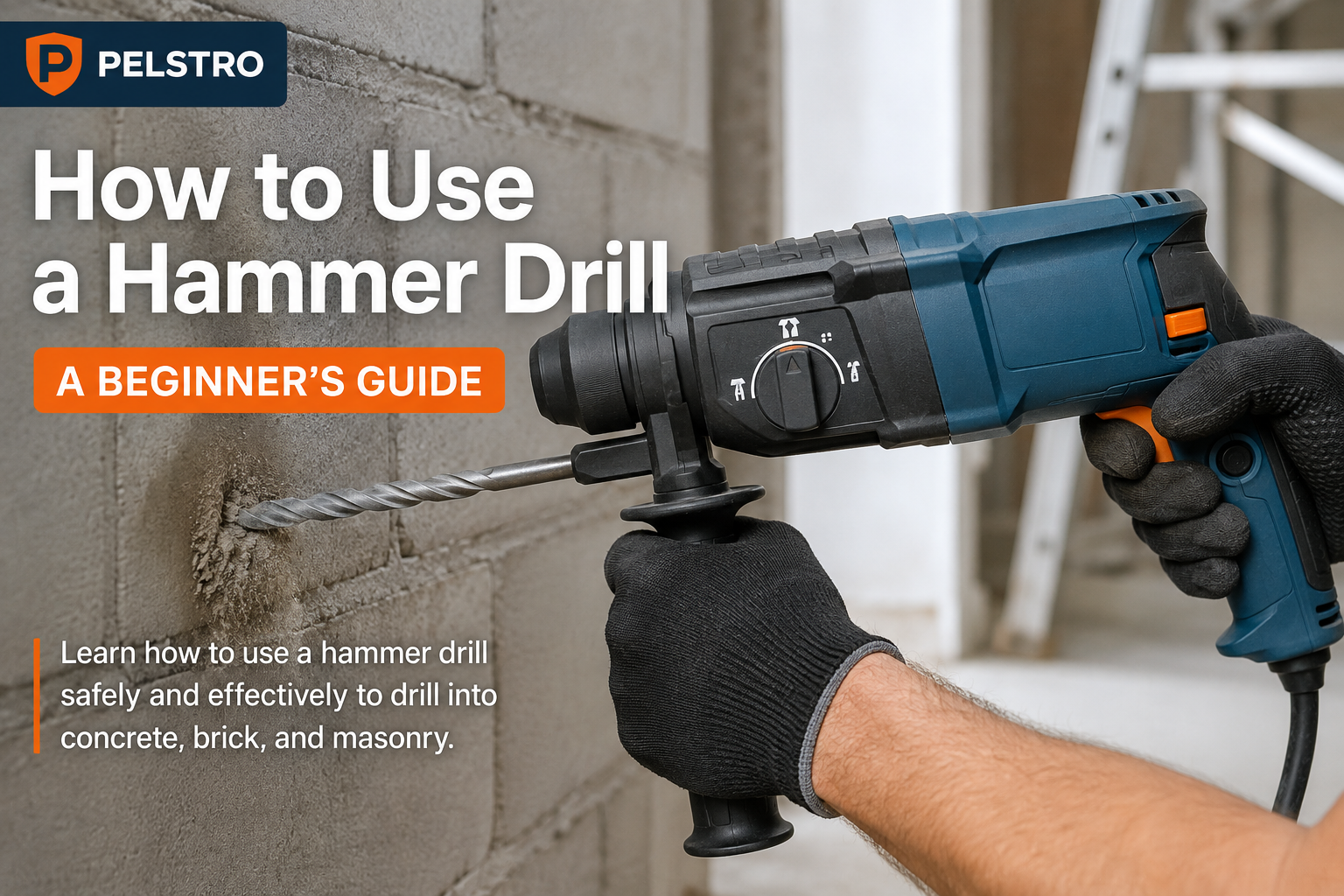
How to Use a Hammer Drill: Start With the Basics
A hammer drill combines normal drill rotation with a rapid forward-and-back hammering action. That percussion helps the bit break up hard masonry as it rotates, allowing the cutting edges to advance into materials such as concrete and brick.
Most combination hammer drills can switch between ordinary drilling and hammer drilling. That makes them useful for general DIY work as well as occasional masonry jobs. If you’re comparing motor types before buying, our brushless vs brushed drill guide explains the practical differences in runtime, durability, and cost.
If you are unsure how this differs from a conventional drill, our hammer drill vs regular drill comparison explains when each tool makes sense.
Know Your Hammer Drill
Chuck
The chuck holds the drill bit. Many hammer drills use a three-jaw keyless chuck, although designs vary. Make sure the bit is centered and securely clamped before starting.
Mode Selector
A combination hammer drill normally lets you select standard drilling or hammer drilling. Some models also include screwdriving settings. Use hammer mode for appropriate masonry applications, not for routine drilling in wood or metal.
Variable-Speed Trigger
Light trigger pressure starts the bit slowly and additional pressure increases speed. A controlled start helps keep the bit on your mark.
Forward/Reverse Selector
Forward is used for normal drilling. Reverse can help back the bit out or remove fasteners when the tool is being used in a non-hammer mode.
Auxiliary Handle
Many hammer drills include a side handle for additional control. Install and position it according to the manufacturer’s instructions, especially for demanding masonry work.
Depth Stop
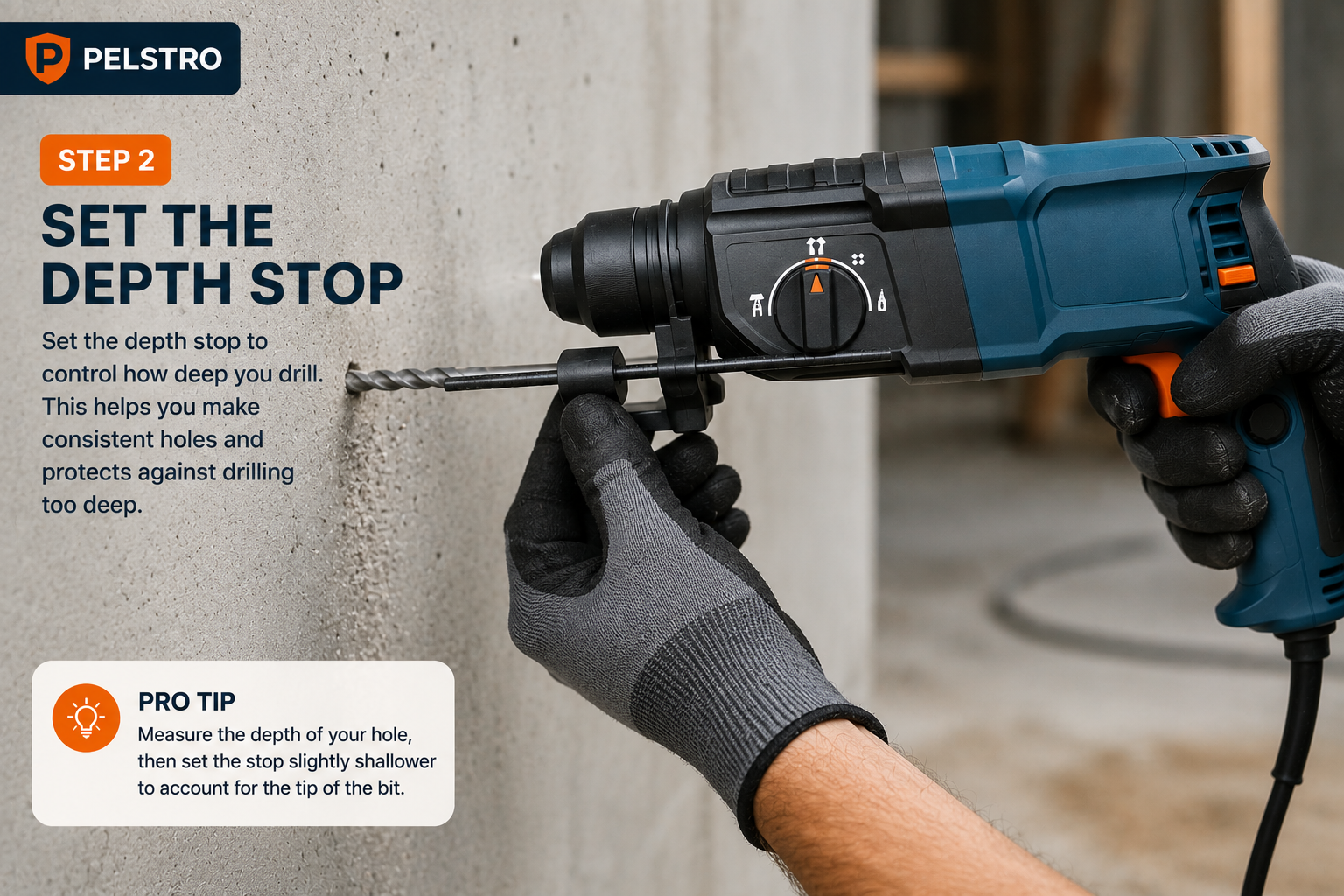
Some models include an adjustable depth rod. Set it to stop drilling at a repeatable depth when installing anchors or making several similar holes.
Battery or Power Cord
Cordless models use a battery pack while corded models draw power from an outlet. Make sure the battery is seated securely or keep the cord away from the drilling area.
Choose the Right Drill Bit
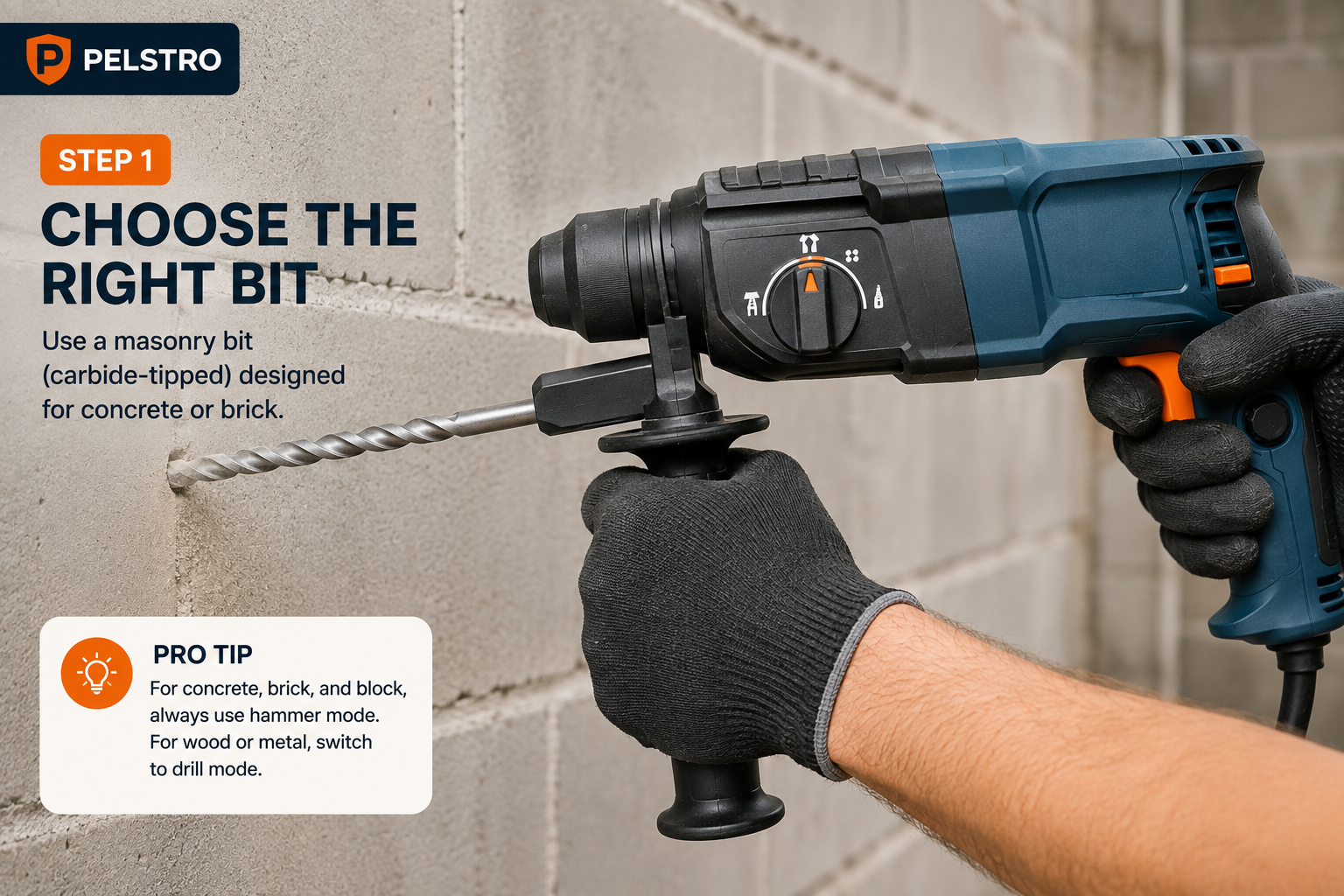
For concrete, brick, and similar masonry, use a masonry bit that is compatible with your hammer drill and suitable for the specific material. A typical masonry bit has a carbide cutting tip designed to tolerate the percussion action.
Check the required hole diameter for the anchor, plug, or fastener before choosing the bit. An oversized or undersized hole can prevent the fixing from working correctly.
Do not assume every drill bit can be used in hammer mode. Wood bits, standard twist bits, and other accessories may require normal rotary drilling instead. Follow the bit and tool manufacturers’ instructions.
How to Set Up a Hammer Drill
Step 1: Check the Drilling Area
Before drilling into a wall, consider what may be hidden behind the surface, including electrical wiring, plumbing, and other services. Use appropriate detection methods for the job.
Step 2: Mark the Hole
Measure carefully and make a clear drilling mark. If several holes must align, check their position with a level before starting.
Step 3: Disconnect Power for Setup
Remove the battery or unplug the tool before installing a bit or making adjustments close to the chuck.
Step 4: Install the Correct Bit
Insert the masonry bit straight into the chuck and tighten it securely. Confirm that the bit runs true and is not visibly damaged.
Step 5: Set the Required Depth
If your drill has a depth stop, adjust it to the required hole depth. Alternatively, follow an appropriate depth-marking method that does not interfere with safe operation.
Step 6: Select Hammer Mode
Set the mode selector to the hammer-drill symbol for suitable masonry. Make sure the selector is fully engaged rather than sitting between modes.
Step 7: Fit the Auxiliary Handle
Where supplied and appropriate, position the side handle so you can maintain a secure two-handed grip.
How to Drill Into Concrete With a Hammer Drill
Step 1: Position the Bit
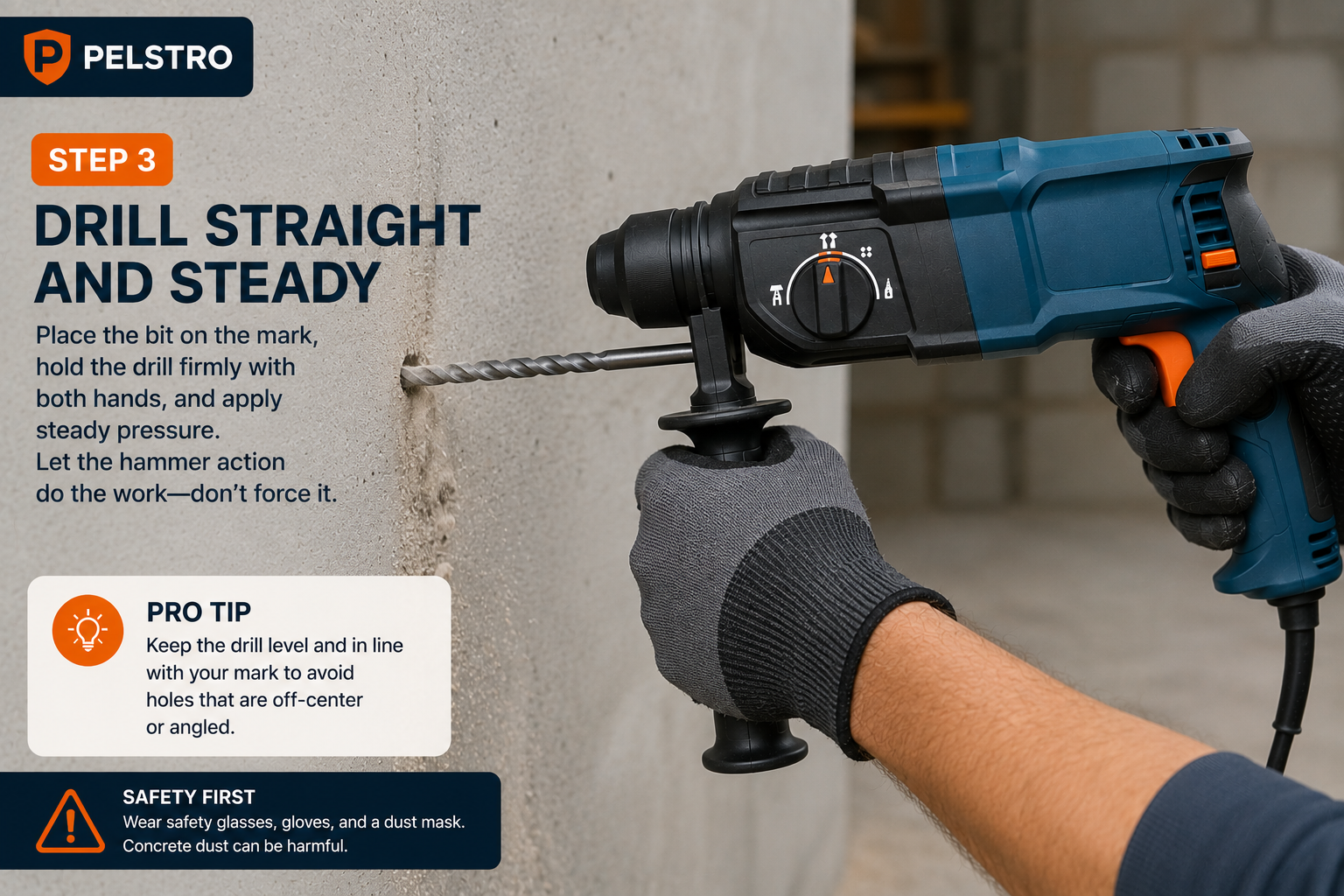
Place the tip directly on your mark. Hold the drill so the bit is aligned with the intended hole rather than tilted to one side.
Step 2: Start Slowly
Squeeze the trigger gently to establish the hole. Starting at full speed can cause the bit to wander across the surface.
Step 3: Increase Speed Gradually
Once the bit has established its position, increase speed as appropriate for the bit, material, and drill. You will feel and hear the hammer action working as the bit advances.
Step 4: Apply Steady Pressure
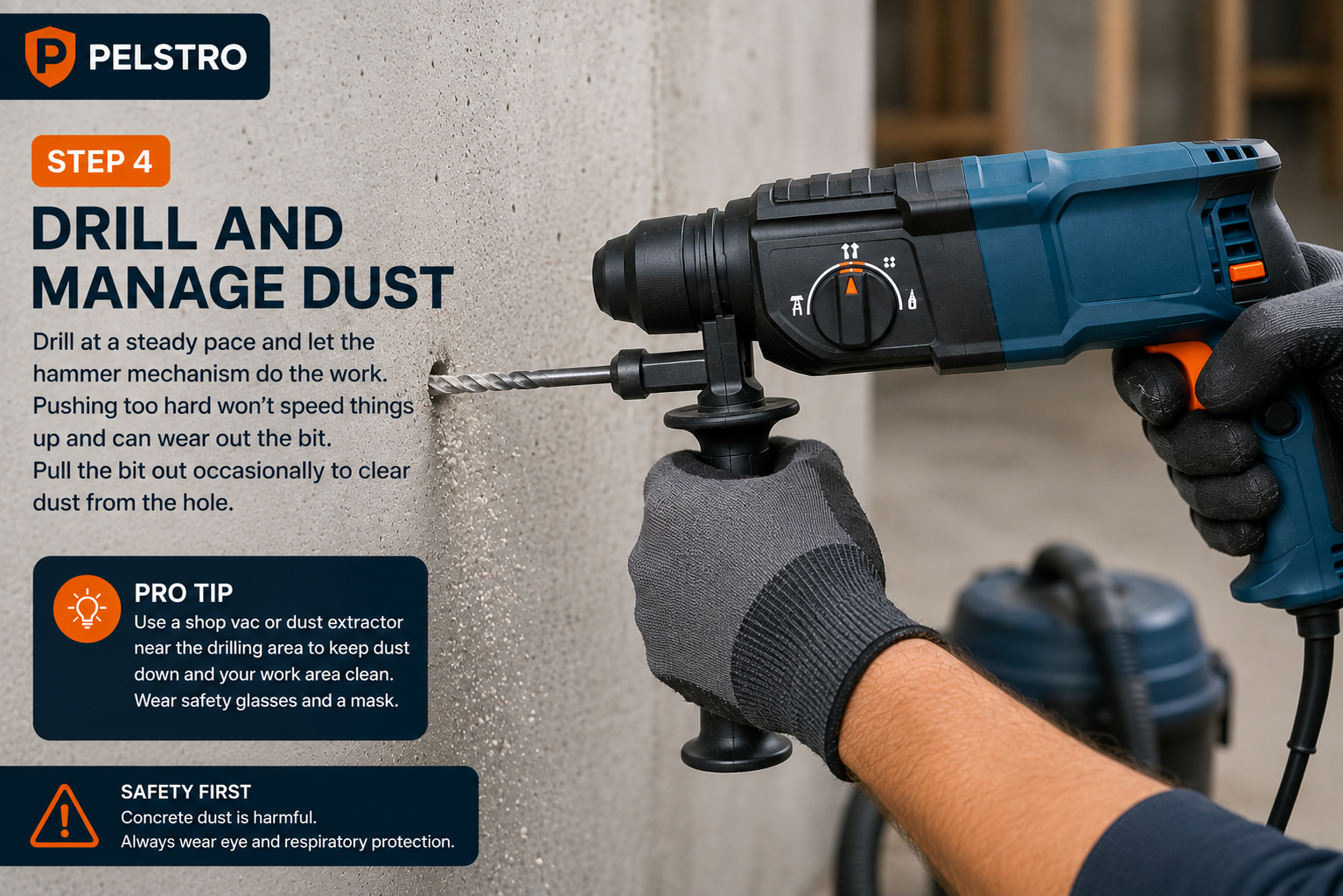
Use firm, controlled pressure, but do not lean excessively into the tool. Forcing the drill can increase heat and reduce your control without necessarily making the hole progress faster.
Step 5: Clear the Dust
For deeper holes, periodically ease the spinning bit back out of the hole to help clear accumulated masonry dust. Keep control of the drill while doing so.
Step 6: Watch Your Depth
Stop when the depth rod reaches the surface or when you reach the depth required by the fixing manufacturer. Drilling much deeper than necessary wastes time and can create unnecessary dust.
Step 7: Withdraw the Bit
With the drill under control, withdraw the bit straight from the hole. Allow the tool and bit to stop before setting the drill down.
How to Drill Into Brick
The same basic technique applies to brick, but the correct location depends on the fixing and the condition of the wall. Drilling into the brick itself versus the mortar joint can produce different holding strength and risks, so follow the anchor manufacturer’s instructions and consider the age and condition of the masonry.
Start slowly to prevent the bit wandering, maintain alignment, and avoid excessive pressure near edges or damaged masonry. Brittle or old brick may require extra care.
When Should You Turn Hammer Mode Off?
Hammer mode is not a universal power boost. Turn it off when the application requires ordinary rotary drilling, such as most drilling in wood or metal and many screwdriving tasks.
Using percussion with an accessory or material that is not designed for it can produce poor results and may damage the workpiece or accessory. Always match the mode to the bit and material.
For ordinary drilling and screwdriving technique, see our guide to using a cordless drill.
Hammer Drill vs Rotary Hammer
A hammer drill is a versatile option for general drilling and occasional holes in masonry. A rotary hammer uses a different, more powerful hammering mechanism and is generally better suited to larger holes, tougher concrete, and more frequent masonry work.
If your project involves repeated large-diameter holes or demanding concrete work, a rotary hammer may be the more appropriate tool. For typical homeowner anchor holes and lighter masonry drilling, a hammer drill can be a practical choice.
Common Hammer Drill Mistakes to Avoid
Using the Wrong Bit
A standard wood or metal bit is not a substitute for the correct masonry bit. Match the accessory to both the material and the tool mode.
Forgetting to Select Hammer Mode
If you are drilling suitable masonry and the tool is left in ordinary drill mode, progress can be much slower.
Using Hammer Mode Everywhere
The opposite mistake is treating hammer mode as the default. Switch back to normal drilling whenever the material or accessory requires it.
Pushing Too Hard
Excessive force reduces control and can overheat the bit. Apply enough pressure for the tool to work effectively without trying to force it through the wall.
Ignoring Masonry Dust
Dust accumulation can slow drilling. Clear the hole appropriately during deeper drilling and use suitable dust-control precautions.
Drilling Without Checking the Wall
Never assume the area behind a wall is empty. Consider concealed wiring, plumbing, and other hazards before drilling.
Allowing the Bit to Run at an Angle
A tilted drill creates an angled or enlarged hole and can make anchors fit poorly. Keep the tool aligned throughout the cut.
Hammer Drill Safety Tips
For broader portable-tool safety guidance, see OSHA’s hand and power tools overview.
- Wear eye protection. Masonry drilling can eject grit and fragments.
- Use hearing protection. Hammer drilling is loud, especially in enclosed rooms.
- Control masonry dust. Concrete, brick, and mortar dust can be hazardous. Use appropriate extraction, respiratory protection, and work practices for the material and local requirements.
- Check for hidden services. Take appropriate precautions before drilling into walls, floors, or ceilings.
- Use both hands when appropriate. A properly fitted auxiliary handle can improve control if the bit binds.
- Keep accessories in good condition. Do not use damaged, bent, or incompatible bits.
- Disconnect power before adjustments. Remove the battery or unplug the drill before changing bits or working around the chuck.
- Follow the manufacturer’s manual. Mode settings, speed ranges, bit capacities, and operating procedures differ by model.
Frequently Asked Questions
Can a hammer drill drill into concrete?
Yes. A hammer drill with an appropriate masonry bit can handle many common concrete drilling jobs, particularly smaller holes for anchors and fixings. More demanding concrete work may call for a rotary hammer.
Can a hammer drill remove tiles with a chisel?
Do not treat an ordinary three-jaw hammer drill as a chipping hammer. Tile removal calls for a tool and chisel approved for that task, with the correct non-rotating chiselling mode. Not every rotary hammer has that mode. For example, DeWalt’s rotary-hammer manual distinguishes chiselling from drilling and warns against using a chisel in drill or hammer-drill mode. Check your exact manual, accessory fit and dust-control requirements before choosing equipment.
Do I need a special bit for a hammer drill?
For hammer drilling into masonry, use a compatible masonry bit designed for percussion drilling. Do not use hammer mode with accessories that are not intended for it.
Can I use a hammer drill as a normal drill?
Most combination hammer drills can operate with hammer mode switched off, allowing them to perform many ordinary drilling tasks. Check your specific model’s modes and accessory requirements.
Should I drill fast or slow into concrete?
Start slowly so the bit does not wander, then increase speed according to the drill and bit manufacturer’s recommendations. More speed is not always better; control and correct technique matter more.
Why is my hammer drill not going through concrete?
Check that hammer mode is engaged, the bit is a suitable sharp masonry bit, the drill has adequate capacity for the hole, and you are clearing dust. Very hard concrete or large holes may exceed what a conventional hammer drill is designed to handle.
Can I use hammer mode for wood?
Normally, no. For standard wood drilling, switch the percussion action off and use an appropriate wood-drilling bit.
The Pelstro Bottom Line
Learning how to use a hammer drill is mostly about matching the setup to the material: use the right masonry bit, select hammer mode only when appropriate, keep the bit straight, and apply steady rather than excessive pressure. For occasional holes in brick and concrete, those habits make a hammer drill fast and manageable.
Still choosing a tool? See our Best Hammer Drills guide. You can also continue with our How to Use a Cordless Drill guide.
Pingback: How to Sharpen Drill Bits: Step-by-Step Guide | Pelstro
Pingback: How to Maintain Your Power Tools: A Complete Beginner’s Guide - Pelstro
Pingback: How to Store Power Tools Properly | Pelstro