
PELSTRO TOOL REVIEW
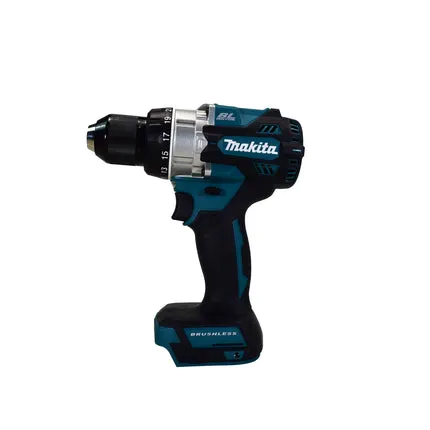
In this Makita XPH14Z review, we look at a high-output 18V LXT brushless hammer driver-drill designed for users who want serious torque while staying inside Makita’s long-established LXT platform. Makita rates it at 1,250 in-lbs of maximum torque, up to 2,100 RPM, and up to 31,500 BPM, with a compact 7-inch body and an all-metal 1/2-inch self-ratcheting chuck.
Serious DIY, renovation, Makita LXT owners, heavy drilling, fastening, and occasional masonry work.
You mainly do light household drilling or want the lightest possible compact drill for everyday tasks.
9.0/10
Excellent
Review methodology: This is a research-based Pelstro review, not a claim of hands-on laboratory testing. We evaluate official manufacturer specifications and documentation, application fit, battery-platform value, design, and how the tool compares with current alternatives.
Makita XPH14Z at a Glance
| Tool type | Cordless hammer driver-drill |
| Platform | Makita 18V LXT |
| Motor | BL brushless |
| Maximum torque | 1,250 in-lbs |
| No-load speed | 0–550 / 0–2,100 RPM |
| Hammer rate | 0–8,250 / 0–31,500 BPM |
| Chuck | 1/2-inch all-metal self-ratcheting |
| Length | 7 inches |
| Weight | Makita lists 6 lb with battery |
What We Like
- High rated torque. Makita lists 1,250 in-lbs, giving the XPH14Z plenty of headroom for demanding drilling and driving.
- Fast high gear. The 2,100-RPM top speed helps keep smaller drilling jobs moving quickly.
- Compact for its output. A 7-inch body makes the drill easier to manage than many older high-torque designs.
- All-metal chuck. The self-ratcheting 1/2-inch chuck is appropriate for a premium drill expected to handle heavy bits.
- Star Protection. Tool-and-battery communication helps protect against overload, over-discharge, and overheating.
- Large LXT ecosystem. Existing Makita users can buy the bare XPH14Z and use compatible batteries they already own.
What We Don’t Like
- Working weight can be substantial. Makita lists the drill at 6 lb with battery, so it is not a featherweight once fully equipped.
- More power than casual users need. Light household drilling does not require this much torque or hammer capability.
- No dedicated anti-kickback feature highlighted like some rivals. Buyers prioritizing electronic bind-up protection may prefer competitors that emphasize that function.
- Tool-only cost is only part of the equation. New Makita users need to account for batteries and charger.
Makita XPH14Z Review: Power and Performance
Makita rates the XPH14Z at 1,250 in-lbs of maximum torque and equips it with a two-speed transmission: 0–550 RPM in low and 0–2,100 RPM in high. These figures come from Makita’s official XPH14Z product page.
That combination gives the drill two distinct personalities. Low gear is intended for high-load work, larger bits, and controlled driving where maximum speed is not the goal. High gear is useful for smaller holes and drilling applications where speed matters more than raw torque.
Makita also lists drilling capacities of up to 3 inches in wood, 1/2 inch in steel, and 5/8 inch in masonry. Those manufacturer specifications reinforce the intended positioning: the XPH14Z is built as a serious all-purpose premium drill, not a light compact model with decorative specifications.
Hammer-Drill Performance
The XPH14Z produces up to 31,500 blows per minute in its higher hammer range. With the correct masonry bit, that gives the tool useful capability for drilling brick, block, and similar materials during renovation and general construction work.
The hammer function is convenient because it lets one tool cover wood, metal, fastening, and occasional masonry. It should not be confused with an SDS rotary hammer, however. If concrete drilling is frequent, large-diameter, or prolonged, a rotary hammer is usually the more efficient and appropriate choice.
Our Hammer Drill vs Regular Drill guide explains when hammer mode is worth paying for and when a standard drill/driver is enough.
Compact Design and Ergonomics
Makita lists the XPH14Z at 7 inches long and describes it as 14% shorter than the model it replaced. That is an important improvement because high-output drills can quickly become tiring when they are long, nose-heavy, or difficult to position between framing and cabinetry.
The compact body helps, but battery choice still matters. A larger LXT pack gives you more runtime and can better support demanding work, while a smaller compatible pack can improve balance for shorter jobs. Makita’s rubberized grip also helps with control during repetitive drilling.
The practical takeaway is that the XPH14Z is compact for a premium high-torque drill, not necessarily light in absolute terms. Users who spend long periods drilling overhead should weigh output against total working weight.
Chuck, Controls, and Durability
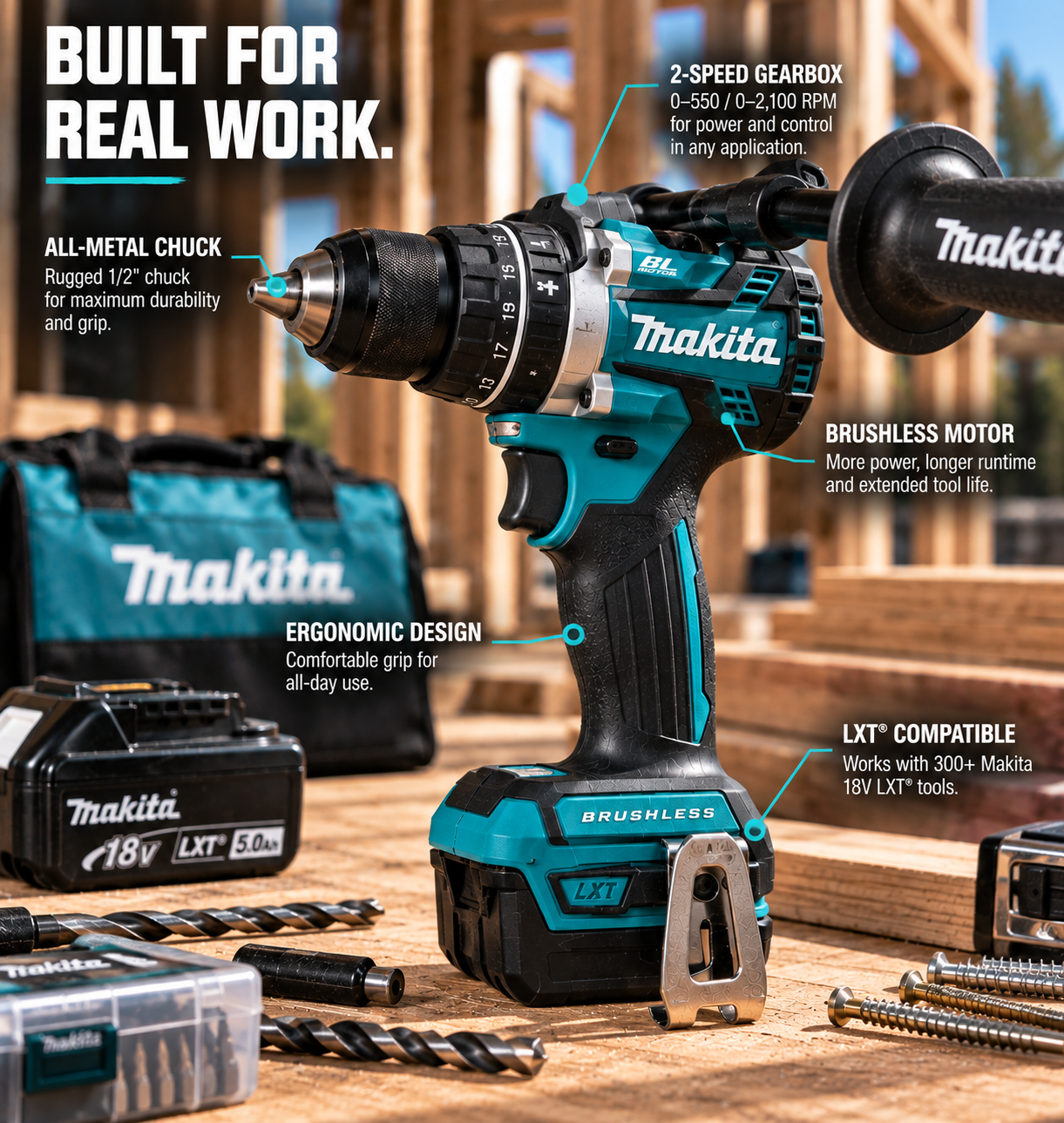
The 1/2-inch all-metal self-ratcheting chuck is one of the XPH14Z’s stronger hardware features. A robust chuck matters when a drill is expected to use larger bits under significant load, because poor bit retention can become frustrating quickly.
Makita also includes LED lighting and its XPT protection design, which is intended to improve resistance to dust and water exposure in demanding work environments. That does not make the tool waterproof, but it is useful engineering for a drill likely to be used on renovation and construction jobs.
For newer users, our How to Use a Hammer Drill guide covers the correct modes, bit installation, drilling technique, and basic safety practices.
Star Protection and the Makita LXT Platform
Makita’s Star Protection system allows compatible tools and batteries to exchange data and monitor operating conditions. When the system detects conditions that could overload, over-discharge, or overheat the tool or battery, it can stop operation to protect the system.
The XPH14Z also benefits from the size of Makita’s 18V LXT ecosystem. For an owner who already has LXT batteries and chargers, the bare tool is much easier to justify. For a first-time buyer, the decision should include the cost and usefulness of the broader platform rather than the drill alone.
Makita XPH14Z vs DeWalt DCD805
The DeWalt DCD805 is another compact premium hammer drill with a 7-inch head. The Makita emphasizes higher published maximum torque and a very established LXT platform, while the DeWalt offers a similarly compact format and a strong balance of drilling, fastening, and work-light features.
For buyers already committed to either battery system, platform ownership is likely to matter more than the specification-sheet differences. Starting from scratch, the better choice depends on total kit price, the other cordless tools you expect to buy, and whether Makita’s heavier high-output character or DeWalt’s XR approach suits your work better.
Makita XPH14Z vs Milwaukee 2904-20
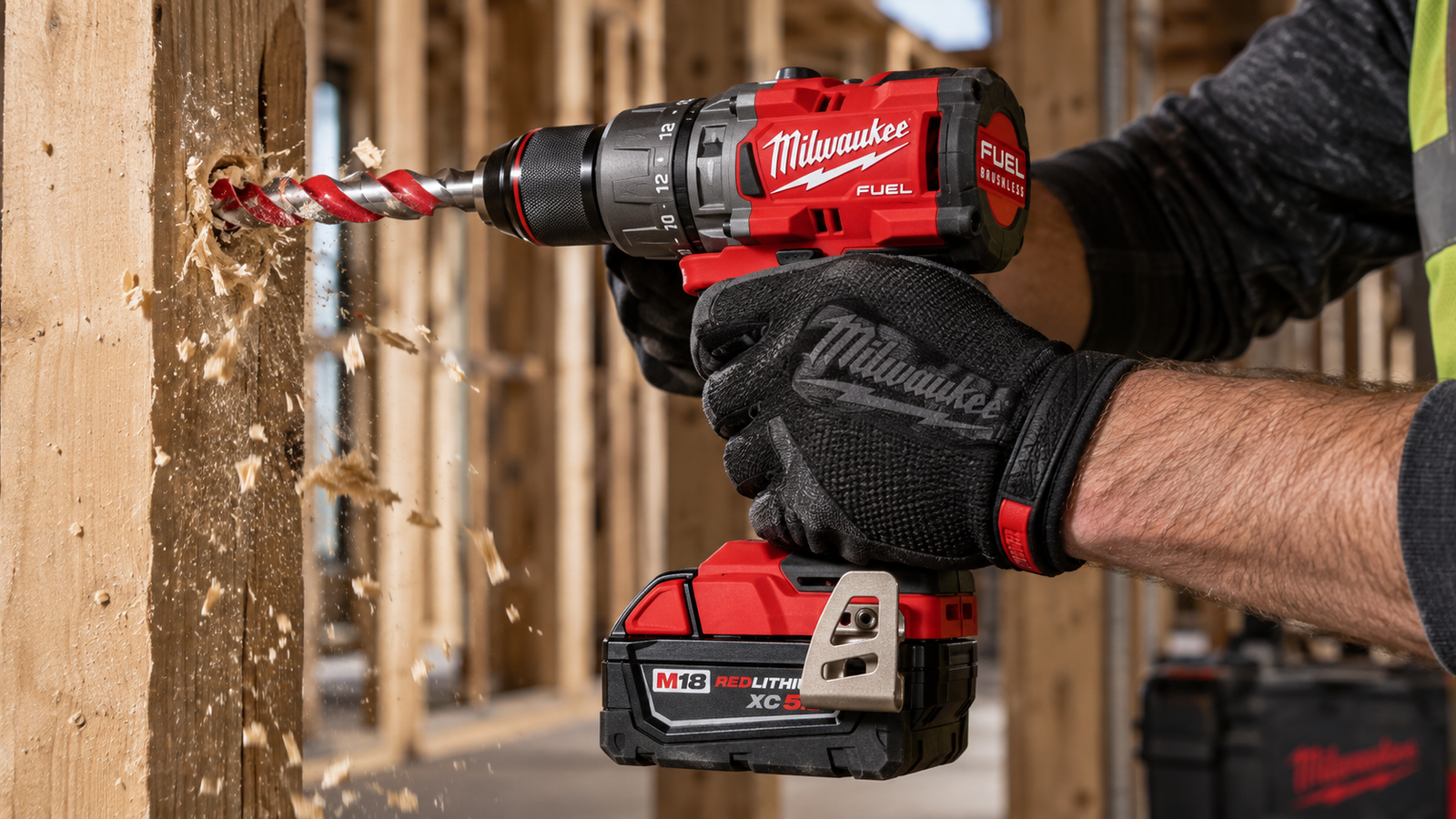
The Milwaukee 2904-20 pushes further on published torque at 1,400 in-lbs and adds AutoStop bind-up protection. The Makita XPH14Z counters with the mature LXT ecosystem, 1,250 in-lbs of rated torque, a 2,100-RPM top speed, and Makita’s Star Protection system.
Users prioritizing anti-rotation safety and maximum rated output may lean Milwaukee. Existing Makita users, or buyers who prefer the breadth and familiarity of the LXT system, have a strong reason to stay with the XPH14Z.
Who Should Buy the Makita XPH14Z?
Buy it if: you already own Makita 18V LXT batteries, want high torque for demanding wood and metal drilling, need occasional masonry capability, or want a premium all-purpose drill that can stay useful as your projects become more ambitious.
Consider something else if: you mainly assemble furniture, drill small holes, or value minimum weight more than high-load capability. Buyers who drill concrete frequently should also consider a dedicated rotary hammer.
For a wider comparison, see our Best Hammer Drills and Best Cordless Drills guides.
Frequently Asked Questions
How much torque does the Makita XPH14Z have?
Makita rates the XPH14Z at 1,250 in-lbs of maximum torque.
How fast is the Makita XPH14Z?
It has two no-load speed ranges: 0–550 RPM and 0–2,100 RPM.
Does the XPH14Z have hammer mode?
Yes. It is a hammer driver-drill and Makita lists up to 31,500 blows per minute in the high hammer range.
Does the XPH14Z come with a battery?
No. XPH14Z is the tool-only version. Makita also sells kit configurations that include batteries and a charger.
Can the Makita XPH14Z drill concrete?
Its hammer mode is intended for masonry drilling with the correct bit. For frequent or heavy concrete work, an SDS rotary hammer is the better choice.
Is the Makita XPH14Z good for beginners?
It can be, but it is a powerful premium drill. Beginners doing only light household work may be better served by a smaller, less expensive drill/driver.
The Pelstro Bottom Line
The Makita XPH14Z earns a 9.0/10 — Excellent from Pelstro. Its 1,250 in-lbs rated torque, 2,100-RPM top speed, 31,500-BPM hammer action, compact 7-inch body, all-metal chuck, and deep 18V LXT compatibility make it a strong premium option for demanding mixed-use drilling. Its main compromise is working weight, especially with larger batteries.
See where it fits against the broader field in our Best Hammer Drills guide.