
Research-based buying advice · Reviewed October 20, 2026
Best saw for cutting plywood: choose the cut first
A circular saw with a suitable blade and guide is a practical starting point for occasional straight plywood cuts. A track saw becomes more attractive for repeated long panel cuts. A jigsaw is the tool type to consider for curves and irregular shapes. There is no single saw that makes every plywood cut equally convenient.
This buying guide compares tool categories and complete setups. It is not a hands-on ranking of specific products. If you own a suitable saw already, check the blade, guide and support before buying another tool.
30-second decision table
| The cut you need | Start with | What else you need |
|---|---|---|
| Occasional long straight cuts | Circular saw | Compatible plywood blade, suitable guide and support |
| Repeated cabinet panels | Track/plunge saw system | Matched rails of sufficient length and appropriate accessories |
| Curved shapes | Jigsaw | Correct blade, support and realistic finish expectations |
| A few pre-planned straight pieces | Retailer cutting service | Dimensions and confirmed tolerance/finish |
| Repeated small precision parts | Consider a suitable workshop setup | Safe support and handling for the actual part sizes |
Option 1: circular saw for versatile straight cutting
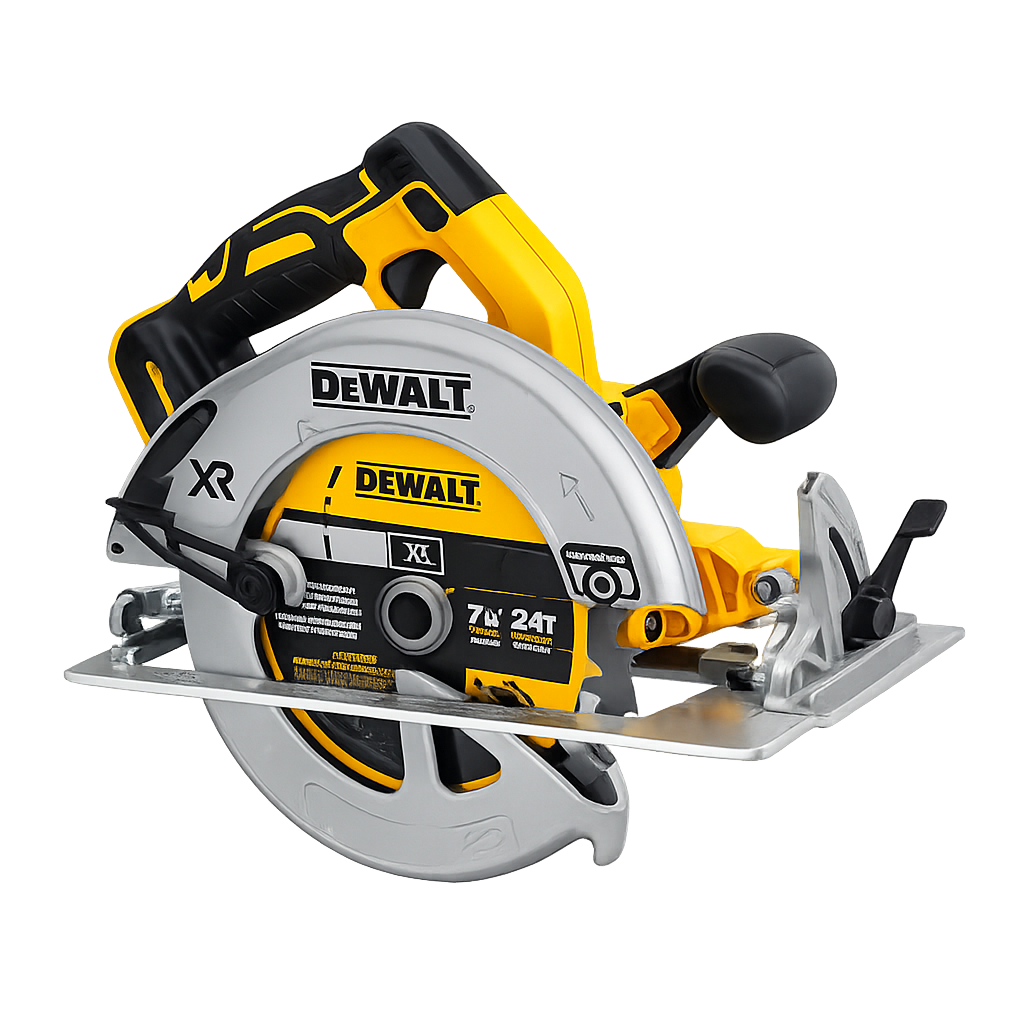
A conventional circular saw can handle straight plywood cuts as part of a broader DIY workload. It is especially worth considering if compatible batteries are already available or a corded saw suits your workspace.
The important purchase is the setup, not just the motor. Budget for a compatible blade suitable for plywood, a guide you can position accurately and stable material support. A plain framing blade may prioritize speed over the edge finish you want for a visible shelf.
Our circular-saw buying guide compares individual models. The DCS570 review explains the ownership-cost decision for one DeWalt example.
Option 2: track saw for a repeatable panel workflow
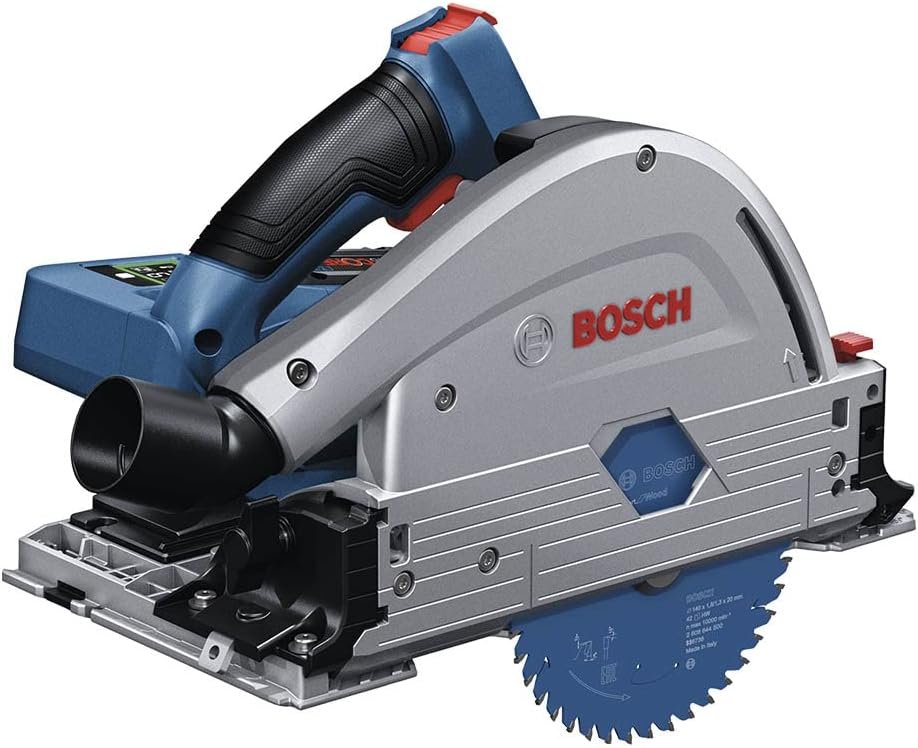
A matched track system guides the saw along a rail. It can make repeated long-cut alignment more convenient, particularly when sheet goods are a large part of your projects. Many systems combine a plunge mechanism, enclosed housing and provision for extraction.
The tradeoff is a larger list of components to buy and store. Check saw-to-rail compatibility, usable rail length, connectors if needed, clamps where required and extraction fittings. A saw-only price can make the system look cheaper than it will be when ready to work.
Makita’s SP6000J documentation is one example of a saw sold with an optional guide-rail system. Confirm the exact package; a similar model suffix can describe a different bundle. Our track saw vs circular saw comparison covers these tradeoffs.
Option 3: jigsaw for curves and irregular openings
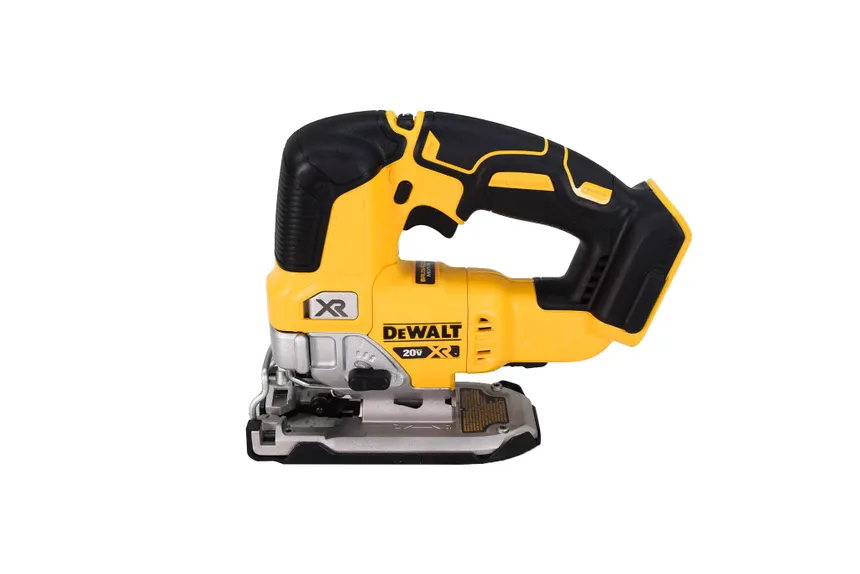
A jigsaw earns its place when the shape is the problem: arcs, rounded corners and other cuts a straight-cut saw cannot follow. Choose the blade for the material, thickness and finish, and follow the tool manufacturer’s instructions for settings and entry cuts.
Do not choose a jigsaw merely because the tool is small. A long straight edge, a square bevel and a curved outline are different requirements. Blade deflection can affect the edge, particularly in thicker material or when forcing the tool.
See the jigsaw buying guide and Pelstro’s jigsaw tutorial for the next step.
The blade can matter more than another saw
Before replacing a saw because of tear-out, inspect the blade choice and condition. Finish-oriented wood blades are available for plywood, but a high tooth count is not the whole specification.
Check diameter, arbor, kerf, allowed speed, material suitability and any requirements associated with the tool’s guarding or riving system. The blade must fit the saw’s approved specifications. Do not fit an oversized blade or improvise an arbor conversion.
Diablo’s D0760A page, for example, lists a 7-1/4-inch finish blade and plywood applications. That is an example of documented material suitability, not a recommendation that this blade fits every saw discussed here. Use our blade-changing guide alongside your manufacturer’s manual.
Support and guidance: the often-missed costs
A full sheet needs stable support through the entire cut. Poor support can let the material sag, close the kerf or move unexpectedly. Plan where both the retained piece and offcut will be supported without obstructing the blade path, following the saw manufacturer’s guidance.
For a conventional straightedge guide, account for shoe-to-blade offset. For a track system, verify rail engagement and required overhang. Both approaches need enough working space, good visibility and a safe route for any cable or hose.
Compare the complete project cost
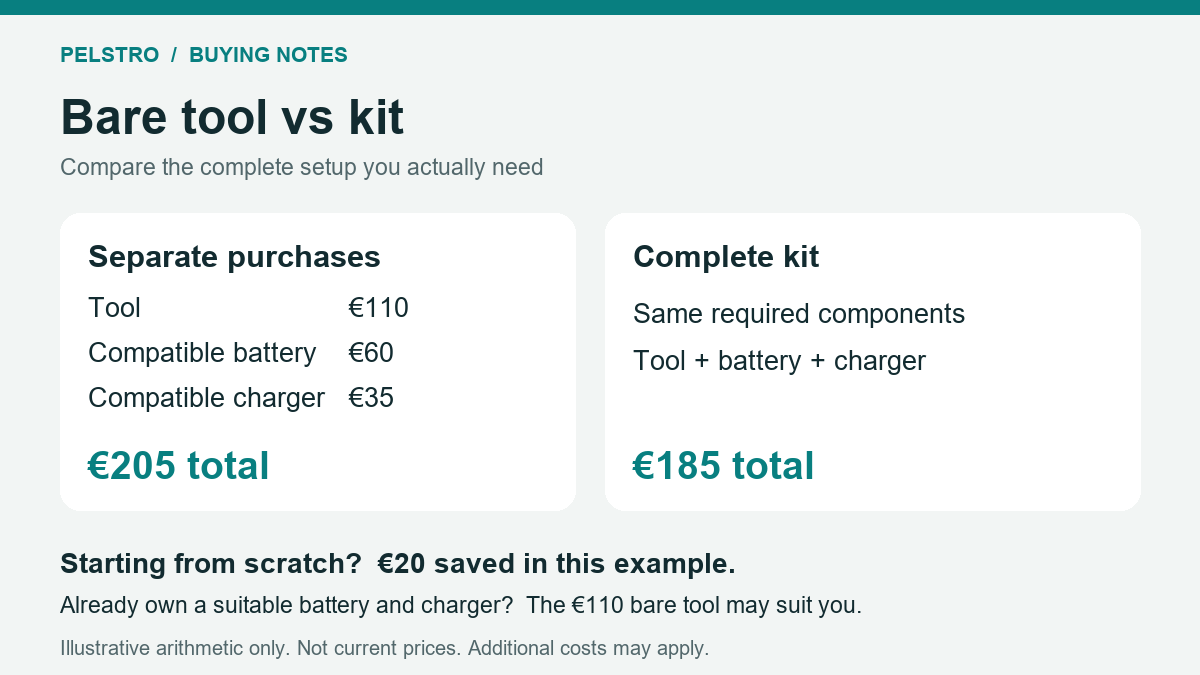
The cost graphic shows illustrative arithmetic rather than current prices. Make your own comparison in one currency and delivery market:
- Saw or kit price.
- Required compatible power equipment.
- Suitable blade.
- Guide or rail system and required accessories.
- Support and extraction equipment needed for the work.
- Delivery and tax not already included.
Use the bare-tool versus kit worksheet to compare packages. For one small project, add the cost of a cutting service or suitable tool hire as another option.
Write a cut list before choosing
| Question | Your answer |
|---|---|
| How many straight cuts and what lengths? | ________ |
| Any curves or internal openings? | ________ |
| What plywood thickness and facing? | ________ |
| Which edges remain visible? | ________ |
| What saws and power equipment do you already own? | ________ |
| What workspace, support and dust controls are available? | ________ |
| What is the complete project budget? | ________ |
The answers reveal whether you need a different saw, a better accessory setup or simply a more practical way to get a handful of pieces cut.
Common buying mistakes
- Buying the most powerful saw without deciding what cut is needed.
- Assuming a guide rail is included or universally compatible.
- Expecting a jigsaw to be the simplest way to produce every long straight edge.
- Spending the entire budget on the tool and overlooking support, a suitable blade and dust control.
- Assuming a pristine-looking demonstration image proves a tested finish.
Frequently asked questions
Do I need a track saw to cut plywood cleanly?
No. A suitable circular saw, blade, guide and supported setup can be a useful alternative. A track system may make repeated panel work more convenient.
Can I use the same blade for every plywood type?
Do not assume so. Check the blade manufacturer’s material listing and the finish you need, as well as saw compatibility.
What should a beginner buy first?
Start with the cut list and existing equipment. A cutting service, guided circular saw or jigsaw may each be appropriate depending on the project.
Final recommendation
For occasional straight cuts, investigate a suitable guided circular-saw setup first. For repeated sheet work, compare complete track systems. For curves, consider a jigsaw. Whichever route you choose, include the blade, support and safety requirements in the purchase.
Sources and method
Research-based category guidance using manufacturer descriptions and compatibility information, without physical finish or cutting-speed tests.