
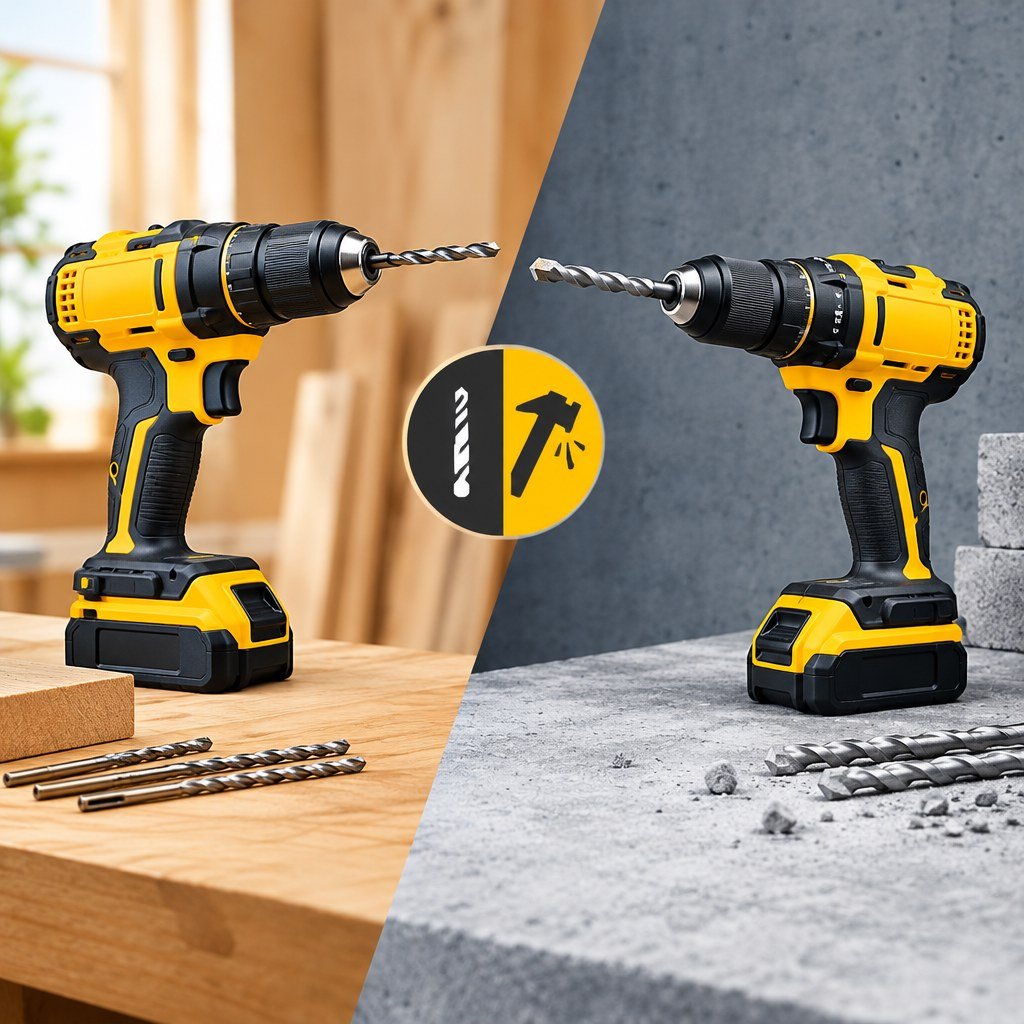
Executive Verdict: Which One Should You Buy?
Reviewed October 20, 2026. In the DeWalt DCD800 vs DCD805 decision, the question is simple: will you ever drill into brick, block, mortar, or concrete? If you won’t, buy the DCD800, the standard drill/driver. If you expect even occasional masonry holes for anchors, brackets, or conduit straps, the DCD805 is the safer buy because it adds a hammer mode while still working as a drill/driver.
Both are US-market 20V MAX XR brushless tools with a 1/2-inch chuck. The bare-tool versions (DCD800B and DCD805B) do not include a battery or charger. Beyond the hammer function, this is a choice about how you’ll use the drill, not about which tool is “better.”
Featured image: editorial illustration of generic drills, not a product photograph.
30-Second Decision Table
Find the row that matches your work. The table assumes the US bare-tool versions.
How We Approached This Comparison
This research-based comparison uses manufacturer documentation and practical buying analysis. Pelstro has not physically tested these drills or measured their runtime, drilling speed or durability.
- We checked DeWalt’s official product listings and launch documentation for the DCD800B and DCD805B.
- The comparison covers platform, motor type, chuck size, tool function and package contents.
- We built the buying advice from how drill/drivers and hammer drill/drivers are typically used on common jobs.
Scope matters too. This article covers US models only. DeWalt sells related tools in the UK and other markets under different model suffixes, voltage branding, and kit contents. Don’t assume a US bundle matches a UK listing, or the other way around.
What Hammer Mode Actually Does
In normal drill mode, the bit only spins. In hammer mode, a mechanism adds rapid forward pulses while the bit rotates. That chipping action helps a carbide-tipped masonry bit break up hard, brittle material like brick, concrete block, stone, and mortar. Suitability depends on the material and bit; some masonry bits permit rotation-only drilling. Follow the accessory and substrate guidance.
Hammer mode doesn’t help in wood, metal, plastic, or drywall. It can tear the edges of holes, and in tile, glass, or thin materials it can cause cracks. On the DCD805 you choose the mode on the selector collar. With hammer mode off, it works as a regular drill/driver.
Practical Tradeoffs
Both tools share the same 20V MAX XR brushless platform and 1/2-inch chuck. That means the tradeoffs are narrower than many shoppers expect.
Versatility
The DCD805 adds hammer mode alongside ordinary drilling and screwdriving. If you’ll only own one drill, that matters.
Size and Weight
Hammer mechanisms usually add some length and weight. Compare DeWalt’s listed dimensions if you work in tight cabinets or overhead.
Cost
The hammer version often costs more. Compare current listings, because prices and promotions change frequently.
Battery Platform
Both run on the same 20V MAX batteries. Choosing either one doesn’t affect batteries you already own.
Where the DCD800 Makes More Sense
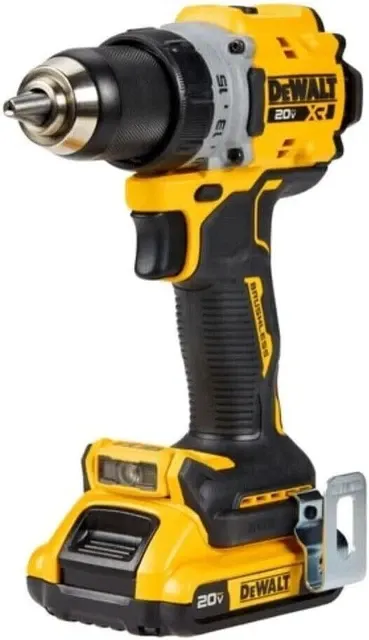
The DCD800 suits woodworkers, deck builders, cabinet installers, and anyone who mainly drives screws and bores holes in lumber or metal. If your house is mostly drywall over wood studs, you may never need hammer action. Our DeWalt DCD800 review covers this standard drill/driver in more depth.
Where the DCD805 Earns Its Place
The DCD805 pays off when masonry shows up, even rarely. Examples include suitable small anchor holes in brick or block, within the tool, bit and anchor manufacturer’s limits. Check the substrate and hidden services before drilling; mounting heavy objects needs an appropriate fixing design. Without hammer mode, those jobs often mean borrowing or buying a second tool. See our DeWalt DCD805 review for the full picture.
The Limits of Both
Neither tool replaces an SDS-plus rotary hammer. If you drill many holes in cured concrete, set larger anchors in foundations, or need chiseling, a hammer drill/driver will feel slow and work hard. For that kind of work, consider a dedicated tool as well. On the other end, if you mostly assemble furniture and hang pictures, both may be more drill than you need. Our best compact drills for home use guide compares compact options by platform.
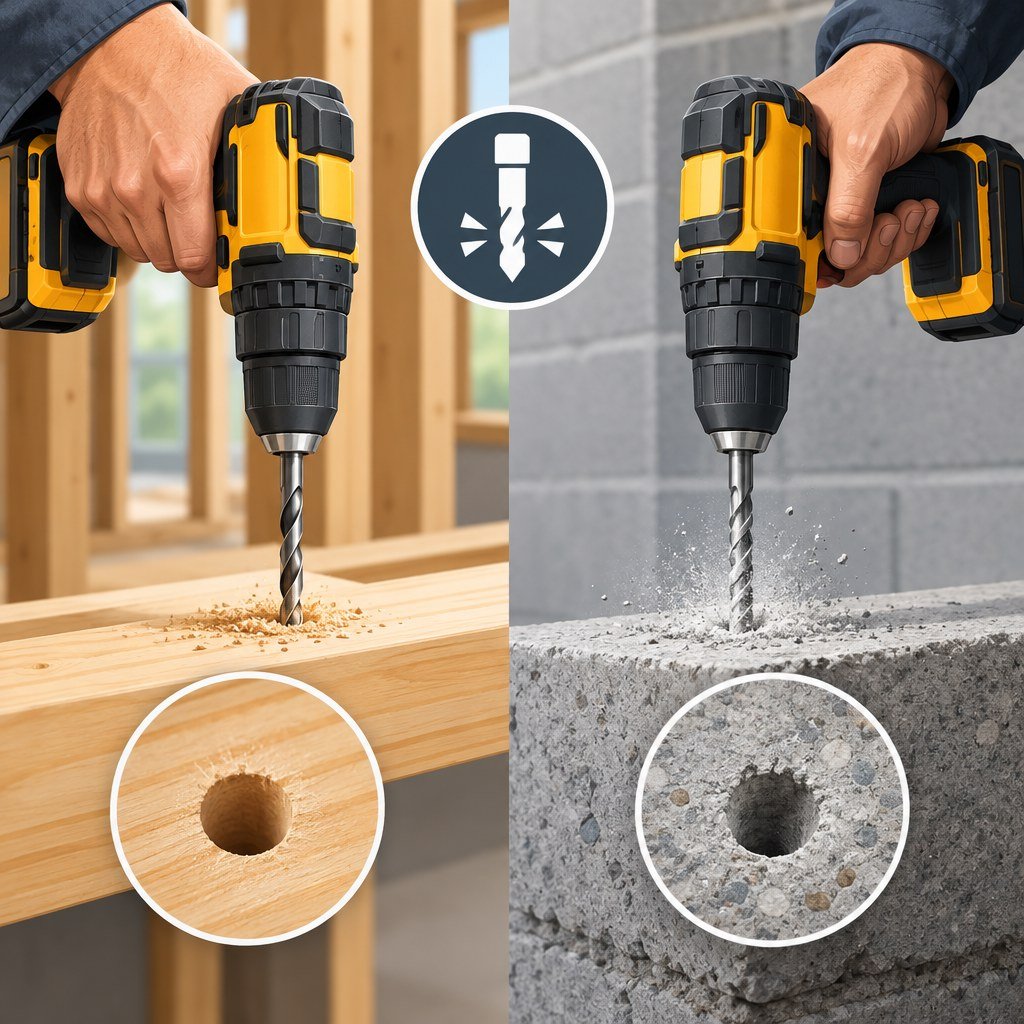
Check the DCD800B Tool-Only Offer
Battery and charger sold separately. Compare the delivered cost, seller, package contents and applicable warranty. Also compare DeWalt’s newer DCD801B before choosing an older DCD800 offer.
As an Amazon Associate I earn from qualifying purchases. Pelstro may earn a commission through this link at no extra cost to you. Prices and availability vary.
Buying Checklist
- List your last year of projects. If none involved brick, block, or concrete, the DCD800 is the better fit.
- Check your walls. Older homes, basements, garages, and exterior walls often hide masonry.
- Confirm the exact model number. DCD800B and DCD805B are bare tools. Kit versions use different suffixes and include different items.
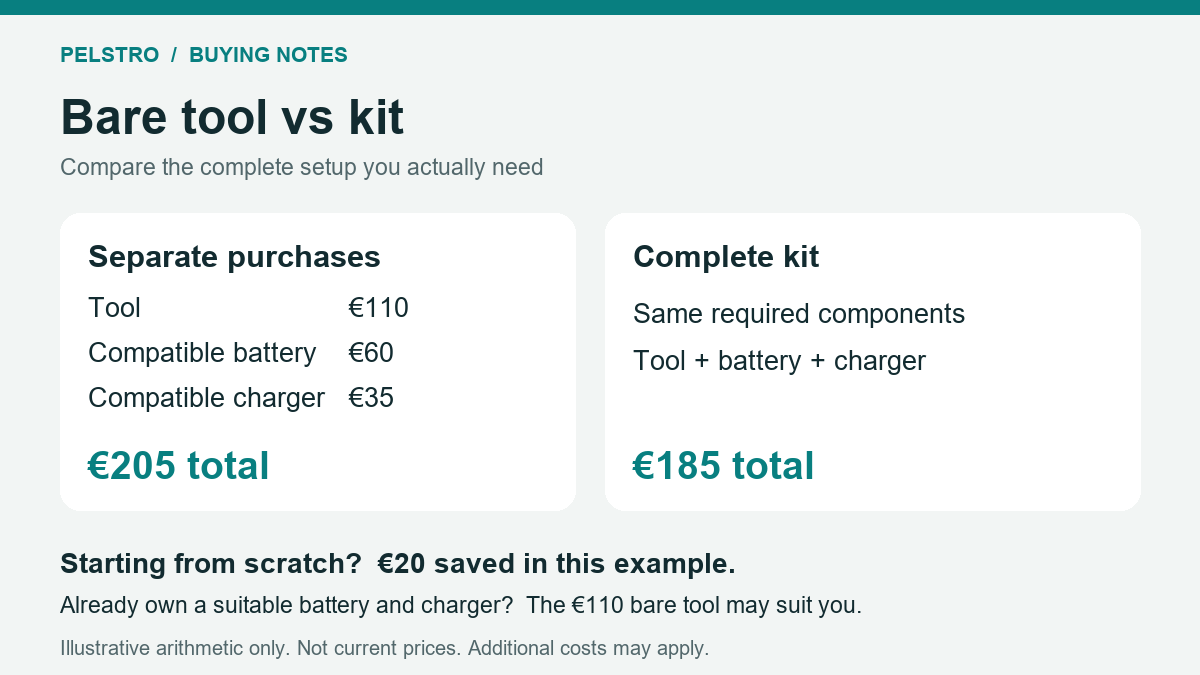
- Budget for power. If you don’t own 20V MAX batteries, add a battery and charger to the cost. Our bare tool vs kit guide explains when each option makes sense.
- Match battery size to your work. Compact packs keep the tool light, while larger packs suit longer sessions. The cordless tool battery guide walks through the choice.
- Buy proper bits. Masonry work needs carbide-tipped masonry bits. Driver bits and wood bits won’t work in brick.
- Check the region. Make sure the listing is for the US model if you’re buying in the US.
Common Mistakes to Avoid
- Paying for hammer mode you’ll never use. If your work is all wood and metal, the extra feature only adds cost and some bulk.
- Skipping hammer mode to save money, then needing it. Compare the price difference with borrowing or renting a suitable tool for an occasional masonry job.
- Expecting rotary-hammer performance. A hammer drill/driver handles light masonry. It is not built for heavy concrete work.
- Leaving hammer mode on for screws. This can strip screw heads and damage the material. Check the collar before every task.
- Assuming “B” includes a battery. It doesn’t. Both bare tools exclude the battery and charger.
- Comparing across regions. UK and other non-US listings may use different model codes and bundles.
If you’re new to drills, our how to use a cordless drill guide covers clutch settings, speed selection, and bit choice.
FAQ
Can the DCD805 drive screws as well as the DCD800?
Yes. With hammer mode off, the DCD805 works as a drill/driver. The main practical differences are hammer capability and any size or weight differences listed by DeWalt.
Can I drill brick with the DCD800 at all?
You can sometimes get a small hole through soft brick or mortar using a masonry bit, but it’s slow and hard on the bit. For regular masonry, hammer mode is the right tool.
Do these models come with batteries?
The DCD800B and DCD805B do not. Kit versions sold under other suffixes may include them. Always check the box contents on the listing.
Are the US and UK versions the same?
Don’t assume they are. Model codes, voltage branding, and bundle contents can differ by market. This guide covers only the US models.
Is hammer mode useful for tile?
No. Hammer action can crack tile. Use rotation only with a bit made for tile.
Final Recommendation
Choose the DCD800 if your work is mostly wood and metal, or if you already own a hammer drill. Choose the DCD805 if masonry is likely, even a few times a year, or if this will be your only drill and you want the most flexibility. For frequent concrete work, buy a rotary hammer in addition to either drill. For more options beyond these two models, see our best cordless drills roundup.
Related Articles
Sources
DeWalt’s official DCD800 and DCD805 launch documentation identifies the drill/driver and hammer-drill functions.
Official DeWalt US product pages, consulted for platform, motor type, chuck size, tool function, and box contents:
- DeWalt DCD800B: 20V MAX XR 1/2-inch brushless cordless drill/driver (tool only)
- DeWalt DCD805B: 20V MAX XR brushless cordless 1/2-inch hammer drill/driver (tool only)
Specifications and availability can change. Check the manufacturer page before you buy.
Still Comparing Drills?
See how these models compare with other cordless drill/drivers.