
PELSTRO TOOL REVIEW
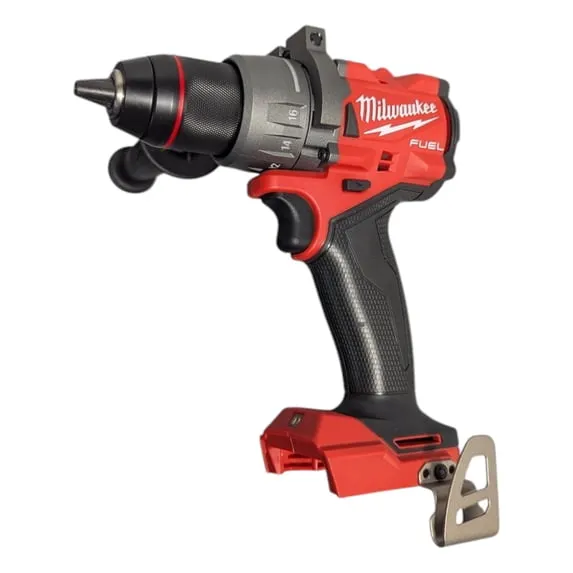
In this Milwaukee 2904-20 review, we look at an M18 FUEL 1/2-inch hammer drill/driver built for users who want flagship-level drilling power without moving to a dedicated specialty drill for every demanding job. Milwaukee rates it at 1,400 in-lbs of torque and up to 2,100 RPM, while keeping the tool body to a compact 6.9 inches long and adding AutoStop control for bind-up protection.
Heavy DIY, renovation, framing, large-hole drilling, fastening, and occasional masonry work.
Your work is mostly furniture assembly, small pilot holes, or light screwdriving where a smaller drill is easier to justify.
9.3/10
Excellent
Review methodology: This is a research-based Pelstro review, not a claim of hands-on laboratory testing. We evaluate official manufacturer specifications and documentation, platform fit, safety features, application range, design, and how the tool compares with current alternatives.
Milwaukee 2904-20 at a Glance
| Tool type | Cordless hammer drill/driver |
| Platform | Milwaukee M18 |
| Motor | POWERSTATE brushless |
| Maximum torque | 1,400 in-lbs |
| No-load speed | 0–500 / 0–2,100 RPM |
| Hammer rate | Up to 33,000 BPM |
| Chuck | 1/2-inch all-metal ratcheting chuck |
| Length | 6.9 inches |
| Bare-tool weight | 3.3 lb |
What We Like
- Serious output. Milwaukee rates the 2904-20 at 1,400 in-lbs of torque, putting it firmly in heavy-duty territory.
- Compact body. At 6.9 inches long, it is notably short for a drill with this level of output.
- AutoStop control. The electronic bind-up protection is designed to reduce dangerous over-rotation if a bit suddenly jams.
- All-metal chuck. Carbide teeth and a ratcheting design are appropriate for a drill expected to handle demanding bits and high loads.
- Mechanical clutch. It gives predictable fastening control instead of making this a drilling-only powerhouse.
- M18 compatibility. Existing Milwaukee users can add the bare tool without investing in a second battery system.
What We Don’t Like
- More drill than many homeowners need. The power and side-handle-ready design are unnecessary for occasional light work.
- Heavy once paired with a large battery. A high-capacity M18 pack improves runtime but makes the tool less nimble.
- Hammer mode has limits. It can handle appropriate masonry drilling, but frequent concrete work still favors an SDS rotary hammer.
- Platform cost matters. Buyers without M18 batteries should compare kit pricing rather than focusing on the bare-tool price.
Milwaukee 2904-20 Review: Power and Drilling Performance
Milwaukee lists the 2904-20 at 1,400 in-lbs of torque with a two-speed transmission rated at 0–500 RPM in low and 0–2,100 RPM in high. The company also states that the drill can handle demanding applications such as large-diameter hole boring and a 2-9/16-inch self-feed bit in engineered lumber. Those figures come from Milwaukee’s official 2904-20 product page.
In practical buying terms, that specification set tells you this is not intended as a compact entry-level drill. Low gear is there for controlled high-load work and larger bits, while the 2,100-RPM high range gives the drill useful speed for smaller holes. Users who frequently move between framing lumber, larger spade or auger bits, general fastening, and ordinary drilling are the audience Milwaukee is targeting.
Peak torque figures should not be treated as a universal measure of drilling speed, because bit type, battery, material, gearing, and electronic control all matter. Even so, 1,400 in-lbs gives the 2904-20 substantial rated headroom for demanding cordless drilling.
AutoStop Safety Control
One of the 2904-20’s most important features is AutoStop Control Mode. A powerful drill can rotate the operator’s wrist or arm if a large bit catches abruptly. Milwaukee designed AutoStop to detect that bind-up condition and stop the tool before excessive rotation develops.
That does not replace correct technique, a stable stance, the side handle when appropriate, or reading the tool manual. It does, however, add a meaningful layer of protection on a drill powerful enough to be used with large bits. There is also a dedicated AutoStop indicator light so the user can tell when the protection system has activated.
If you are newer to high-torque drills, our How to Use a Hammer Drill guide covers setup, bit choice, safe drilling posture, and when hammer mode makes sense.
Hammer-Drill Capability
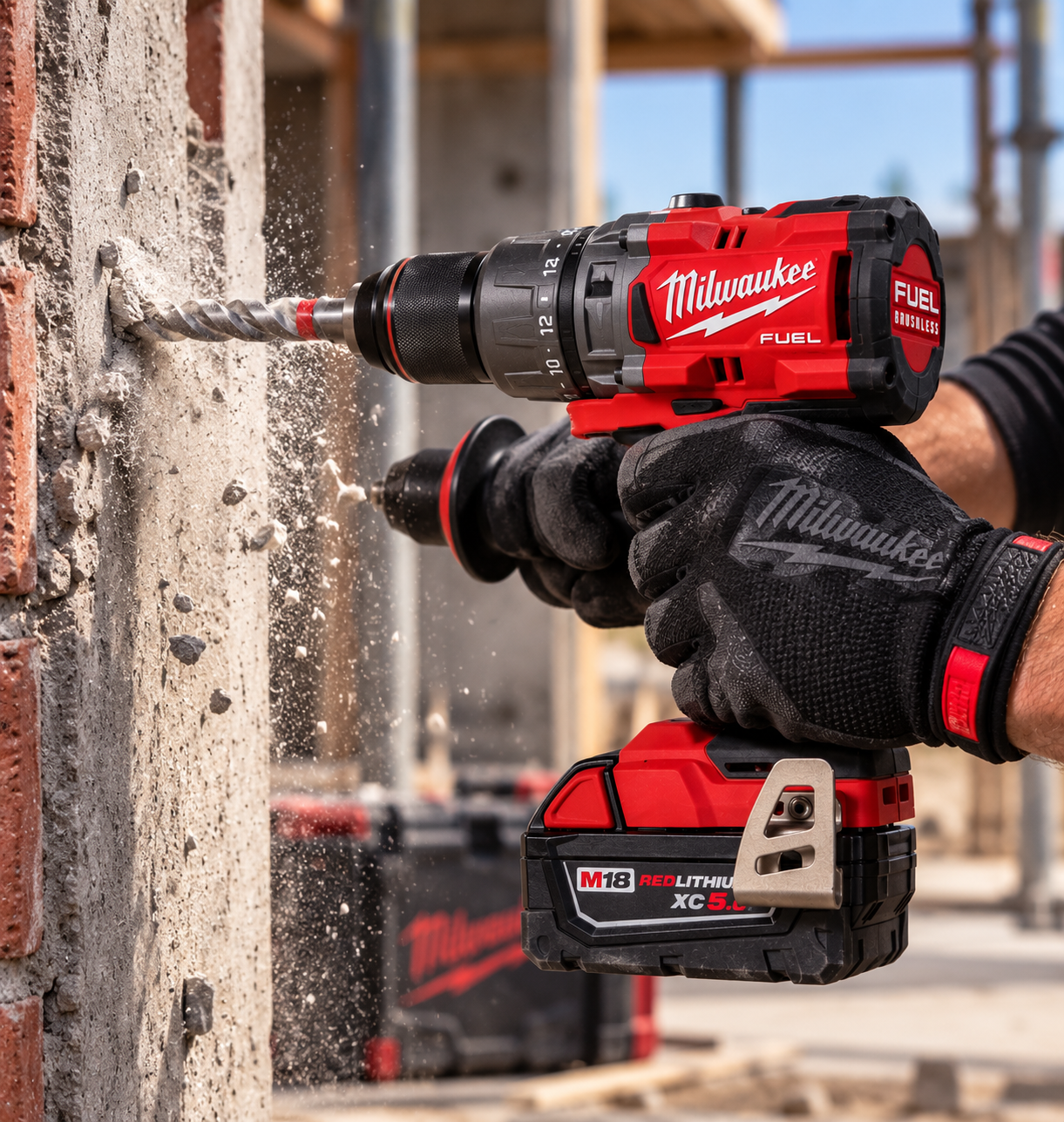
The 2904-20 adds a hammer setting for drilling appropriate masonry materials such as brick, block, and concrete with a masonry bit. Milwaukee lists a hammer rate of up to 33,000 blows per minute.
That makes the tool convenient for renovation and general construction where masonry holes are part of the job but not the whole job. The usual limitation still applies: a conventional hammer drill produces vibration through a different mechanism than an SDS rotary hammer. For repeated larger holes or sustained concrete work, the rotary hammer is the more appropriate tool.
If you are deciding whether hammer mode is necessary for your work, see our Hammer Drill vs Regular Drill comparison.
Size, Handling, and Chuck
At 6.9 inches long, the 2904-20 is compact relative to its output. That matters inside framing cavities, between joists, around cabinets, and anywhere a longer high-torque drill becomes awkward. Milwaukee lists the bare tool at about 3.3 lb, so the battery you choose has a major effect on total working weight and balance.
The 1/2-inch all-metal ratcheting chuck uses carbide teeth to improve durability and bit grip. This is an important detail on a powerful drill because high-load bits can expose weak chucks quickly. The included side handle is also worth using when the application calls for it, especially with larger bits.
For lighter general work, a smaller M18 battery keeps the drill more manageable. For sustained high-load drilling, a larger battery may make more sense despite the additional weight.
M18 Battery Platform
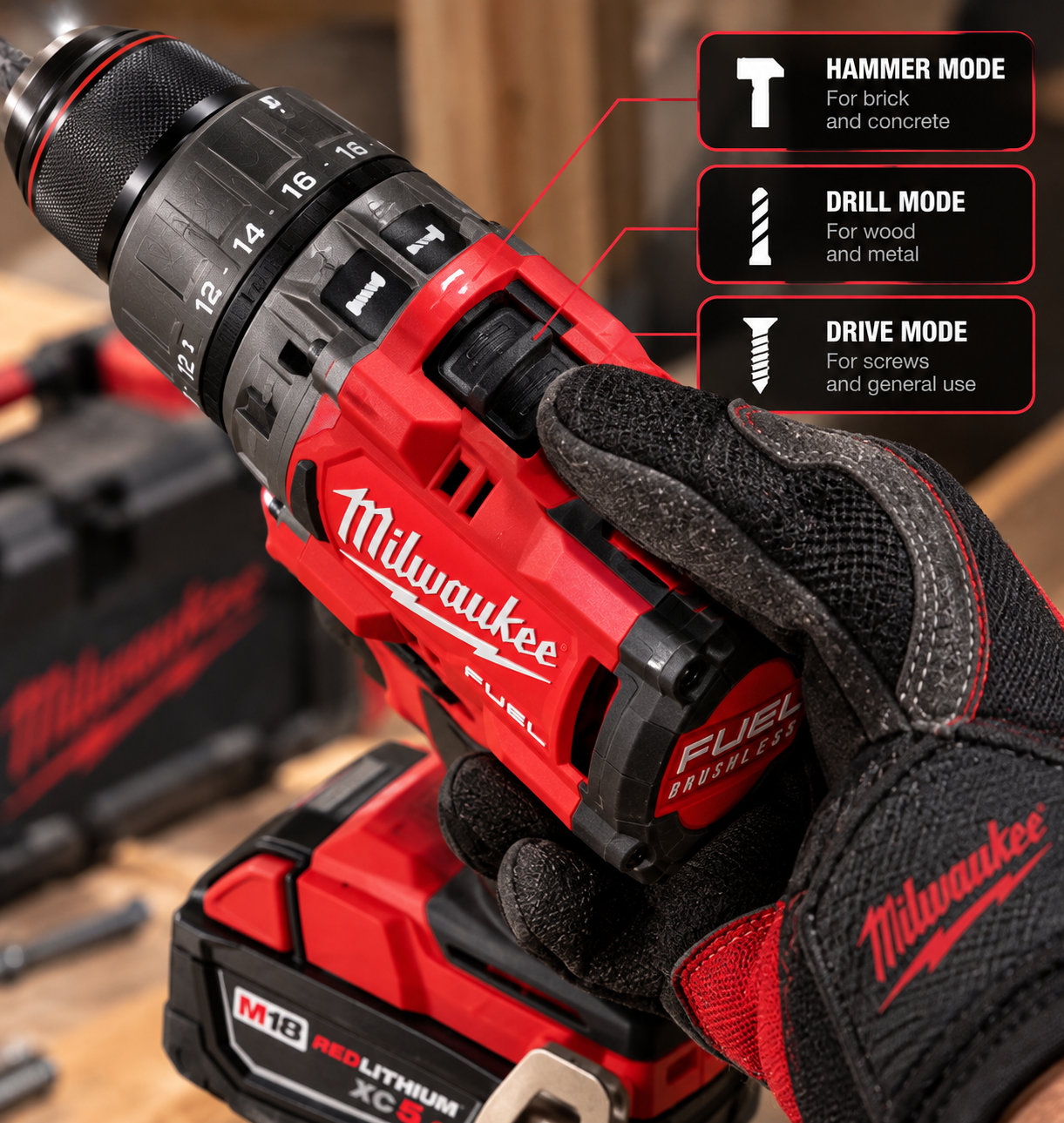
The 2904-20 uses Milwaukee’s M18 battery system. For an existing M18 owner, that compatibility is one of the strongest arguments for the tool because the bare version can slot into an established collection of batteries and chargers.
For someone starting from zero, the calculation is different. Compare the complete cost of tool, battery, and charger against rival systems. Battery ecosystems are long-term buying decisions, and a marginal difference between two bare-tool prices matters less than which system contains the other tools you expect to own.
Milwaukee 2904-20 vs DeWalt DCD805
The DeWalt DCD805 takes a somewhat different approach. It is a compact premium hammer drill with a 7-inch head and a strong balance of drilling, fastening, and portability. The Milwaukee 2904-20 is the more aggressively positioned high-output option on published torque and adds AutoStop bind-up protection.
Choose the Milwaukee when high-load drilling, large bits, and the M18 ecosystem are central to the decision. Choose the DeWalt when you value its compact XR format and already own 20V MAX batteries. For many buyers, platform ownership is more important than small specification differences.
2904-20 vs a Lighter Drill/Driver
The biggest reason not to buy the 2904-20 is simple: you may not need it. Someone drilling small pilot holes, assembling furniture, hanging shelves, and driving ordinary screws can get better day-to-day comfort from a lighter drill/driver.
The Milwaukee makes the most sense when its extra capability will actually be used. If your work includes large holes, remodeling, framing, structural screws, and occasional masonry, the power and safety features justify the added size and cost far more easily.
Who Should Buy the Milwaukee 2904-20?
Buy it if: you already own M18 batteries, regularly use larger drill bits, want one hammer drill for demanding wood/metal work plus occasional masonry, or value AutoStop protection on a high-torque drill.
Consider something else if: your jobs are mainly light household drilling, you want the smallest possible tool, or concrete drilling makes up a large share of your work and an SDS rotary hammer would be more appropriate.
For a wider category comparison, see our Best Hammer Drills and Best Cordless Drills guides.
Frequently Asked Questions
How much torque does the Milwaukee 2904-20 have?
Milwaukee rates the 2904-20 at up to 1,400 in-lbs of torque.
How fast does the Milwaukee 2904-20 spin?
Its two no-load speed ranges are 0–500 RPM and 0–2,100 RPM.
Does the 2904-20 have hammer mode?
Yes. It is a hammer drill/driver and Milwaukee lists a hammer rate of up to 33,000 BPM.
What is AutoStop on the Milwaukee 2904-20?
AutoStop is Milwaukee’s electronic control designed to stop the drill during a severe bind-up before excessive tool rotation develops.
Does the 2904-20 include a battery?
The 2904-20 designation is the bare-tool version. Milwaukee also sells kit configurations that include batteries, charger, and case or bag depending on the package.
Can the Milwaukee 2904-20 drill concrete?
Its hammer mode is intended for appropriate masonry drilling with the correct bit. Frequent or heavy concrete drilling is better handled by a rotary hammer.
The Pelstro Bottom Line
The Milwaukee 2904-20 earns a 9.3/10 — Excellent from Pelstro. Its 1,400 in-lbs rated torque, 2,100-RPM top speed, compact 6.9-inch body, all-metal chuck, mechanical clutch, and AutoStop bind-up protection form a unusually complete package for demanding cordless drilling. It is best for serious DIYers, remodelers, and M18 users who will actually use the extra output.
Before buying, compare it with the rest of the field in our Best Hammer Drills guide.