
JIGSAW BASICS
A jigsaw is one of the easiest power saws to pick up—and one of the easiest to use badly. The difference usually comes down to the blade, the settings, and how you guide the saw. This Pelstro guide walks you through the process from setup to your first clean cut.
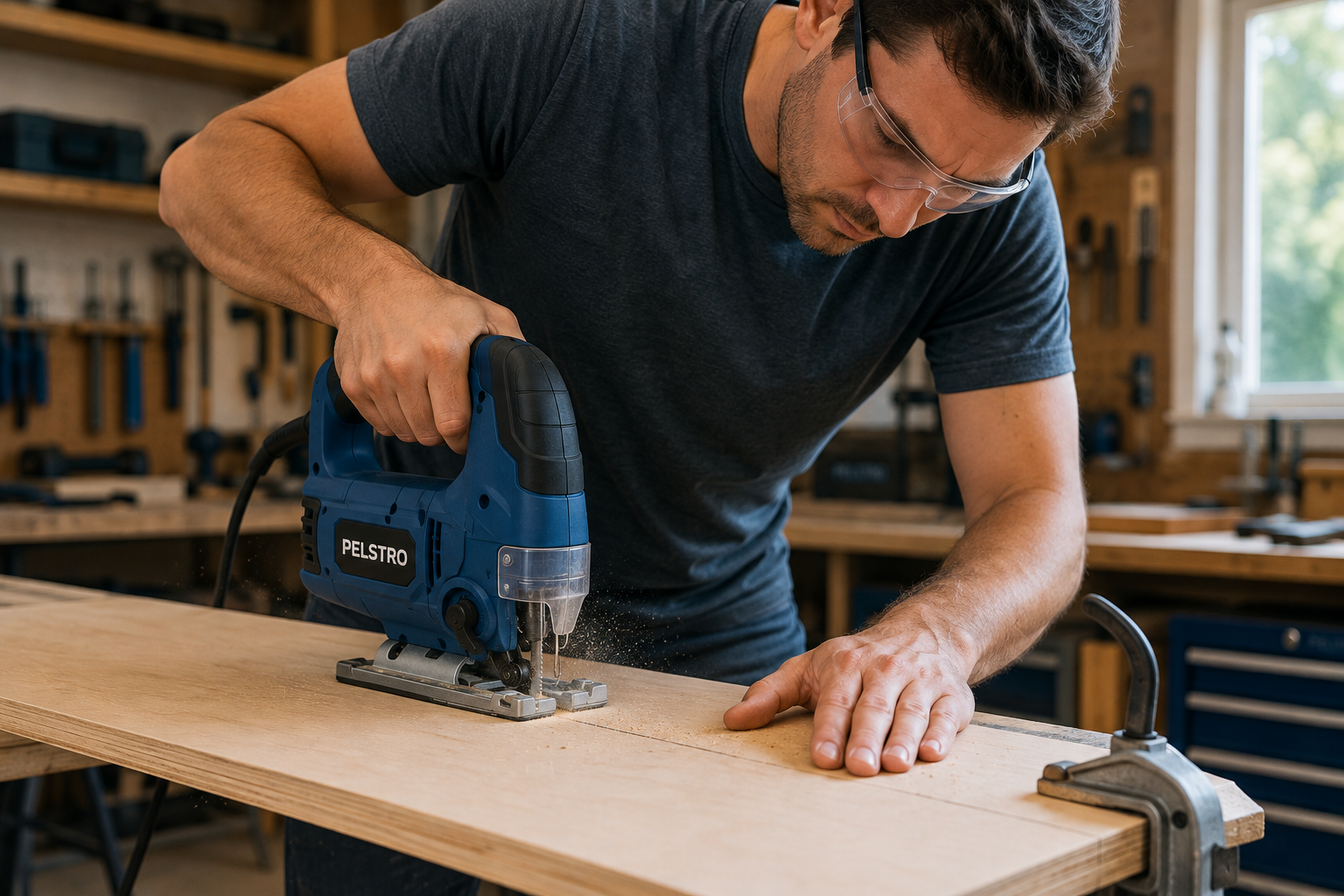
How to Use a Jigsaw: Start With the Basics
A jigsaw uses a narrow reciprocating blade, which gives it much more freedom to turn than a circular saw. That makes it especially useful for curved cuts, irregular shapes, interior cutouts, notches, and shorter straight cuts. OSHA’s handheld saw safety guidance is also a useful reference for portable saw hazards and guarding.
For long, dead-straight rip cuts, a circular saw and guide are usually the better choice. Think of the jigsaw as the saw you reach for when the cut needs to turn, start inside a panel, or follow a shape.
Know These Parts Before You Start
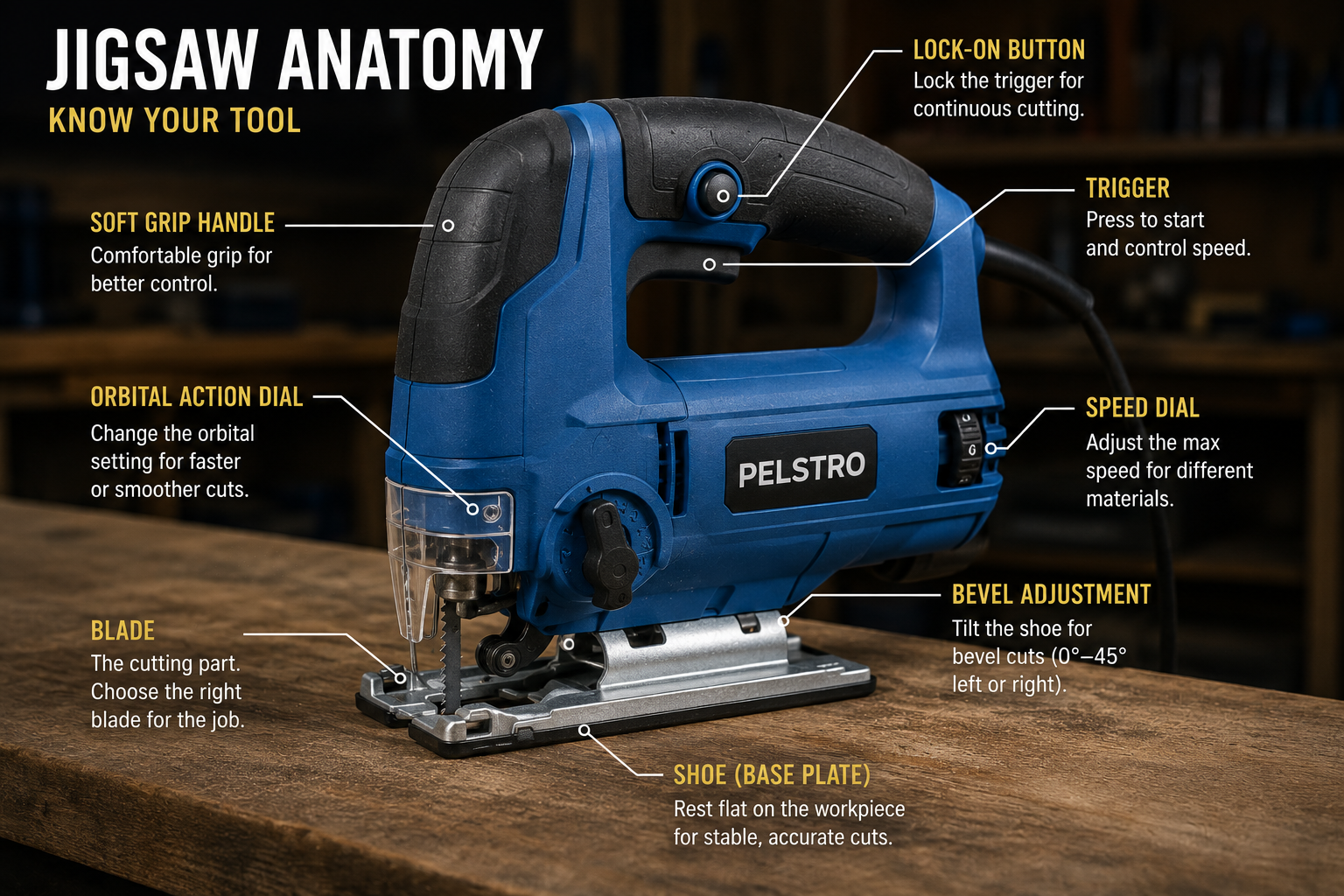
The cutting edge. Blade type has a major effect on speed, finish, and the materials you can cut.
The flat plate that rides on the workpiece and keeps the saw supported.
Lets you change stroke speed for different materials and levels of control.
Adds forward-and-back blade movement. More orbit generally cuts wood faster but more aggressively.
Before You Cut: Set Up the Jigsaw Correctly
1. Choose the right blade
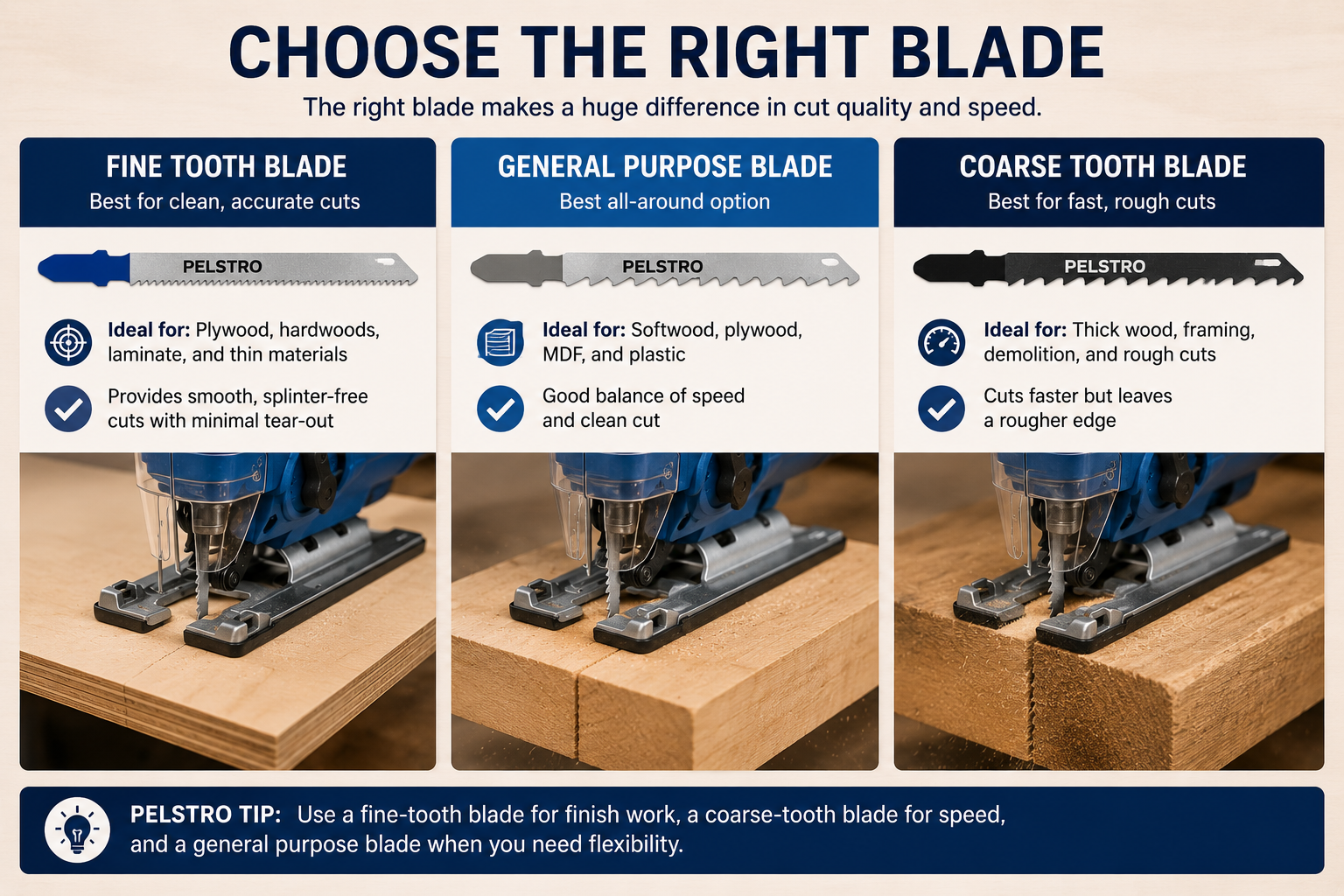
Don’t treat the blade as an afterthought. A coarse wood blade removes material quickly but leaves a rougher edge. A finer-tooth blade cuts more slowly and is usually the better choice when the visible finish matters. Metal, laminate, plastic, and tile require blades designed for those materials.
| Job | Blade direction |
|---|---|
| Fast cuts in wood | Coarser wood-cutting blade |
| Cleaner finish in wood | Finer-tooth / clean-cut blade |
| Sheet metal | Fine-tooth metal blade |
| Laminate or delicate surfaces | Fine or reverse-tooth blade suited to the material |
2. Secure the workpiece
Clamp the material so it cannot vibrate or shift. Make sure the blade’s path hangs clear of the bench, sawhorse, clamps, screws, and anything else you do not want to cut.
3. Mark a line you can actually see
Use a pencil and straightedge for straight cuts or a template for curves. Good visibility matters because a jigsaw is guided by hand. If your saw has a dust blower, use it to keep the line visible.
4. Set speed and orbital action
There is no universal dial number because jigsaws vary. As a practical starting point, use more orbital action for fast, rough cuts in wood and reduce or switch it off for tight curves, cleaner cuts, and materials where aggressive blade movement is undesirable. Test unfamiliar settings on scrap first.
How to Use a Jigsaw: Step by Step
Step 1: Position the saw
Place the front of the shoe flat on the workpiece with the blade just clear of the edge. Keep the blade aligned with the waste side of your marked line.
Step 2: Start the jigsaw before entering the material
Pull the trigger and allow the blade to begin moving before feeding it into the workpiece. Starting with the blade already pressed into the edge can make the tool jump or damage the start of the cut.
Step 3: Keep the shoe flat
Maintain firm, even contact between the shoe and the material. Lifting or rocking the saw reduces control and can change the angle of the cut.
Step 4: Guide—don’t force—the saw
Move forward at a pace the blade can handle. If you have to shove the saw, something is wrong: the blade may be dull, the tooth pattern may be unsuitable, or your feed rate may simply be too aggressive.
Step 5: Finish before lifting
Complete the cut, release the trigger, and let the blade stop before setting the tool down or moving your hands near the cutting area.
How to Make Straight Cuts With a Jigsaw
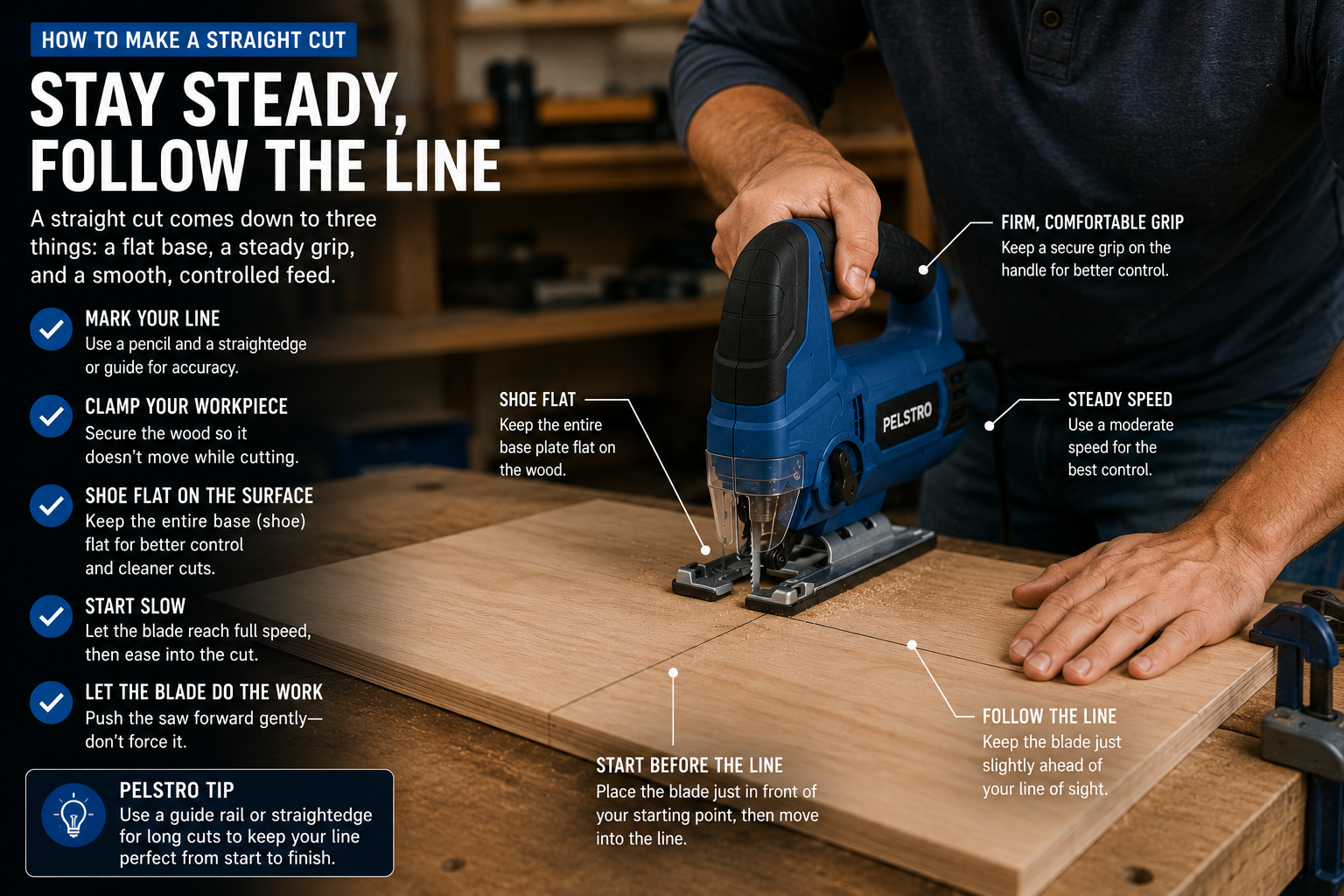
A jigsaw can follow a straight line, but it is not naturally as rigid as a circular saw. For a short cut, follow a clearly marked line slowly. For a longer straight cut, clamp a straightedge parallel to the cut and run the edge of the shoe against it. If straight cutting is your main priority, see our circular saw vs jigsaw comparison.
If the top looks straight but the bottom edge wanders, that is usually blade deflection. A fresh, appropriate blade and slower feed rate can help. For precision-critical long cuts, use a tool better suited to the job.
How to Cut Curves
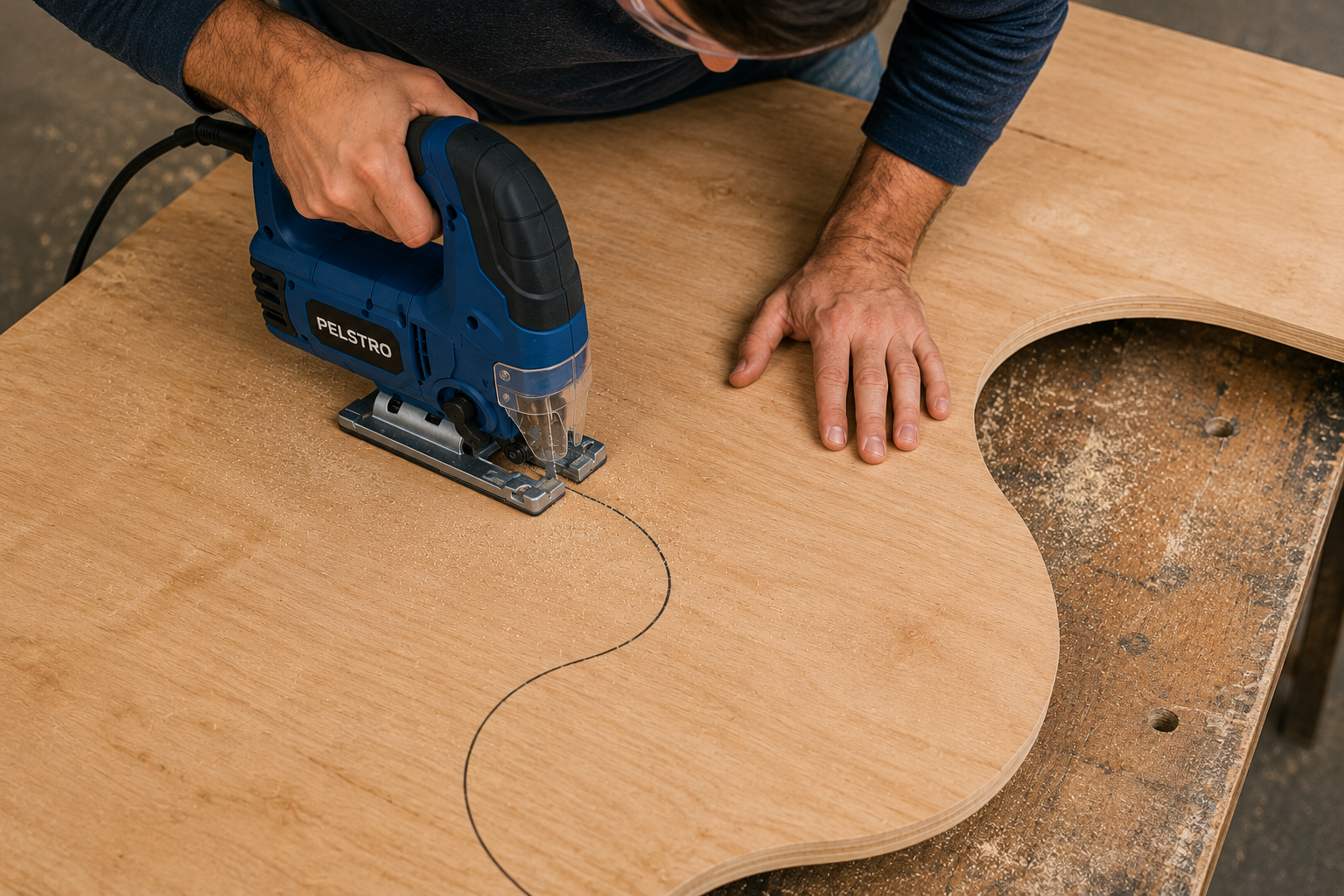
Curves are where a jigsaw earns its place in the workshop. Use a narrower blade intended for scrolling or curves, turn orbital action down or off, and guide the tool gradually. Do not twist the saw sideways to force the blade around a corner.
For a tight curve, make relief cuts into the waste area. As you follow the main curve, small waste sections can fall away instead of binding against the blade. If you are choosing between a jigsaw for controlled cuts and a reciprocating saw for rougher work, see our reciprocating saw vs jigsaw comparison.
How to Make an Interior Cutout
If the cut does not begin at an outside edge—such as a sink opening, vent, or cable pass-through—the beginner-friendly method is to drill a starter hole large enough for the jigsaw blade. Insert the stopped blade into the hole, place the shoe flat, then start the saw and follow your marked outline.
Some jigsaws can make plunge cuts, but starting from a drilled hole is easier to control and generally the better technique for a beginner.
How to Reduce Splintering
First, use a sharp blade designed for a clean cut. Standard upward-cutting blades tend to produce more tear-out on the top face, so consider which face will be visible and whether a reverse-tooth or material-specific blade is appropriate. Supporting the material well and slowing your feed rate can also improve the edge.
Painter’s tape over the cut line can sometimes help with surface fibers and gives you an easy surface to mark, but it cannot compensate for a dull or unsuitable blade.
5 Mistakes That Make Jigsaw Cuts Worse
- Forcing the saw. It encourages wandering and blade deflection.
- Using one blade for everything. Wood, metal, laminate, and specialty materials have different blade requirements.
- Turning too sharply. The blade needs room to follow the curve without twisting.
- Letting the shoe lift. Keep the base supported against the workpiece.
- Ignoring a dull blade. Burning, slow cutting, excessive vibration, and poor tracking can all be signs that it is time to change it.
Jigsaw Safety Checklist
- Wear eye protection and appropriate hearing and dust protection.
- Disconnect power or remove the battery before changing or touching the blade.
- Keep hands clear of the blade path and remember the blade extends below the workpiece.
- Clamp the material securely.
- Check the cut path for fasteners and obstructions.
- Let the blade stop before putting the tool down.
- Follow the safety instructions supplied with your specific jigsaw and blade.
Frequently Asked Questions
Is a jigsaw good for beginners?
Yes. Its maneuverability makes it useful for learning many DIY cuts, provided the workpiece is secured and the user follows the tool manufacturer’s safety instructions.
Can a jigsaw cut straight?
Yes, especially over shorter distances. A straightedge guide can improve consistency, but a circular saw is generally better for long, precision straight cuts.
Why does my jigsaw blade wander?
Common causes include excessive feed pressure, a dull or inappropriate blade, cutting material that is too thick for the setup, or trying to turn too tightly.
Should orbital action be on or off?
It depends on the cut. Higher orbital action favors faster, more aggressive cutting in suitable wood applications. Low or zero orbital action generally gives more control for tight curves and cleaner work.
Can I cut a 2×4 with a jigsaw?
A suitable jigsaw and long enough wood blade can cut a 2×4, but blade deflection becomes more important in thicker stock. For routine crosscuts in dimensional lumber, a miter saw may produce faster and squarer results. See our miter saw vs jigsaw comparison if you are deciding which fits your projects better.
The Pelstro Bottom Line
Good jigsaw technique is less about muscle and more about setup. Match the blade to the job, support the material, keep the shoe planted, choose conservative settings when finish matters, and let the blade determine your feed rate. Get those basics right and the jigsaw becomes one of the most useful problem-solvers in a DIY toolkit.
Need the tool itself? See our 7 Best Jigsaws of 2026 for our current recommendations.
Pingback: How to Use a Circular Saw: A Beginner’s Guide - Pelstro
Pingback: How to Maintain Your Power Tools: A Complete Beginner’s Guide - Pelstro
Pingback: How to Store Power Tools Properly: A Complete Guide - Pelstro