
POWER TOOL STORAGE
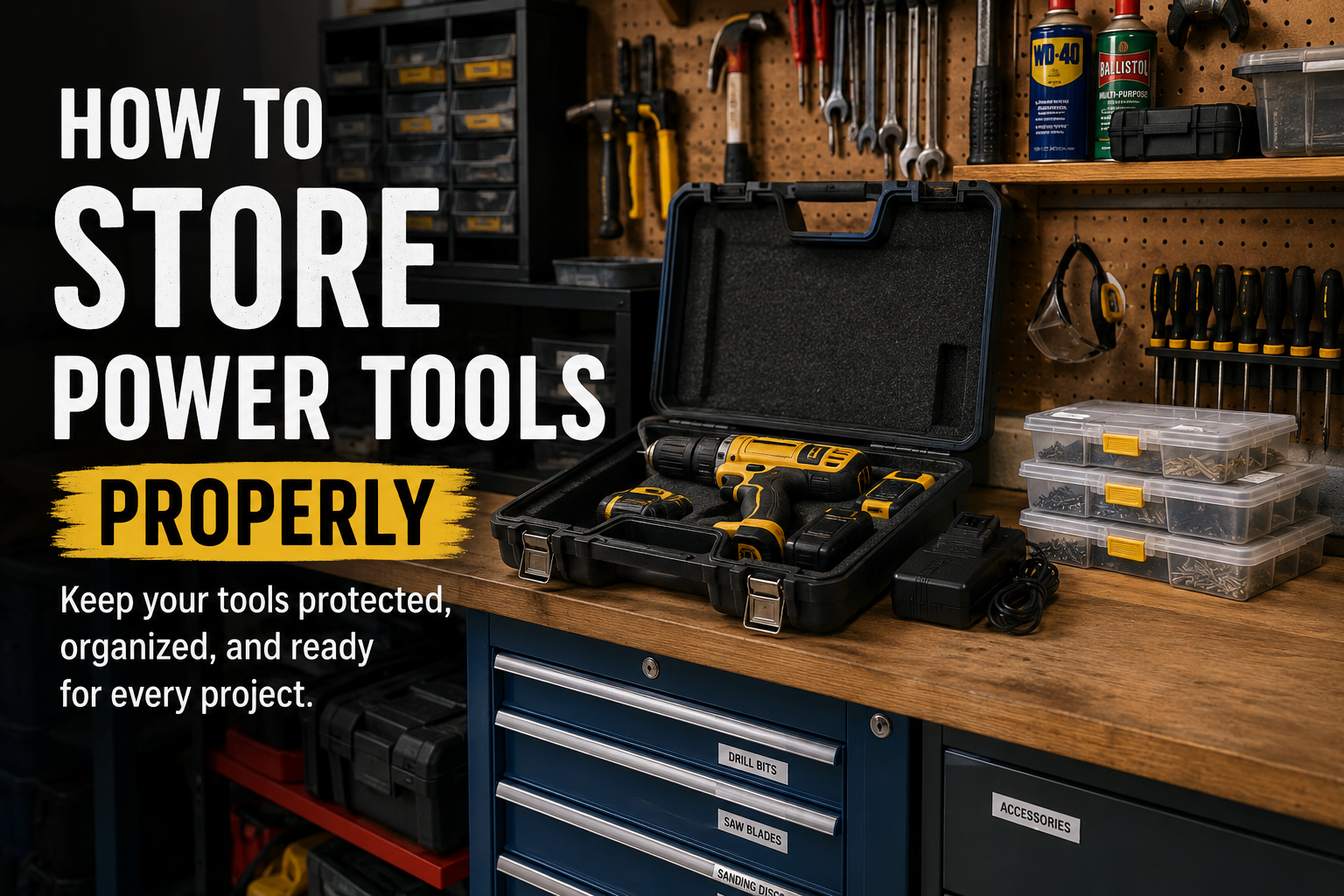
Knowing how to store power tools properly is about more than keeping your workshop tidy. Moisture, dust, extreme temperatures, impacts, tangled cords, and poorly stored batteries can all shorten the useful life of your tools or leave them unsafe to use.
The good news is that you do not need an elaborate workshop. A dry location, sensible organization, and a few basic storage habits can protect everything from cordless drills and circular saws to batteries, blades, and accessories.
How to Store Power Tools Properly: Why It Matters
Even a tool that is used correctly can deteriorate when stored badly. Damp environments encourage corrosion, abrasive dust can accumulate around vents and mechanisms, and careless stacking can damage housings, guards, cords, blades, and adjustment parts.
Storage is therefore part of routine maintenance. OSHA’s hand and power tool safety guidance also emphasizes keeping tools in safe condition and protecting them from hazards. If you have not already built a maintenance routine, see our complete power tool maintenance guide.
Power Tool Storage Checklist
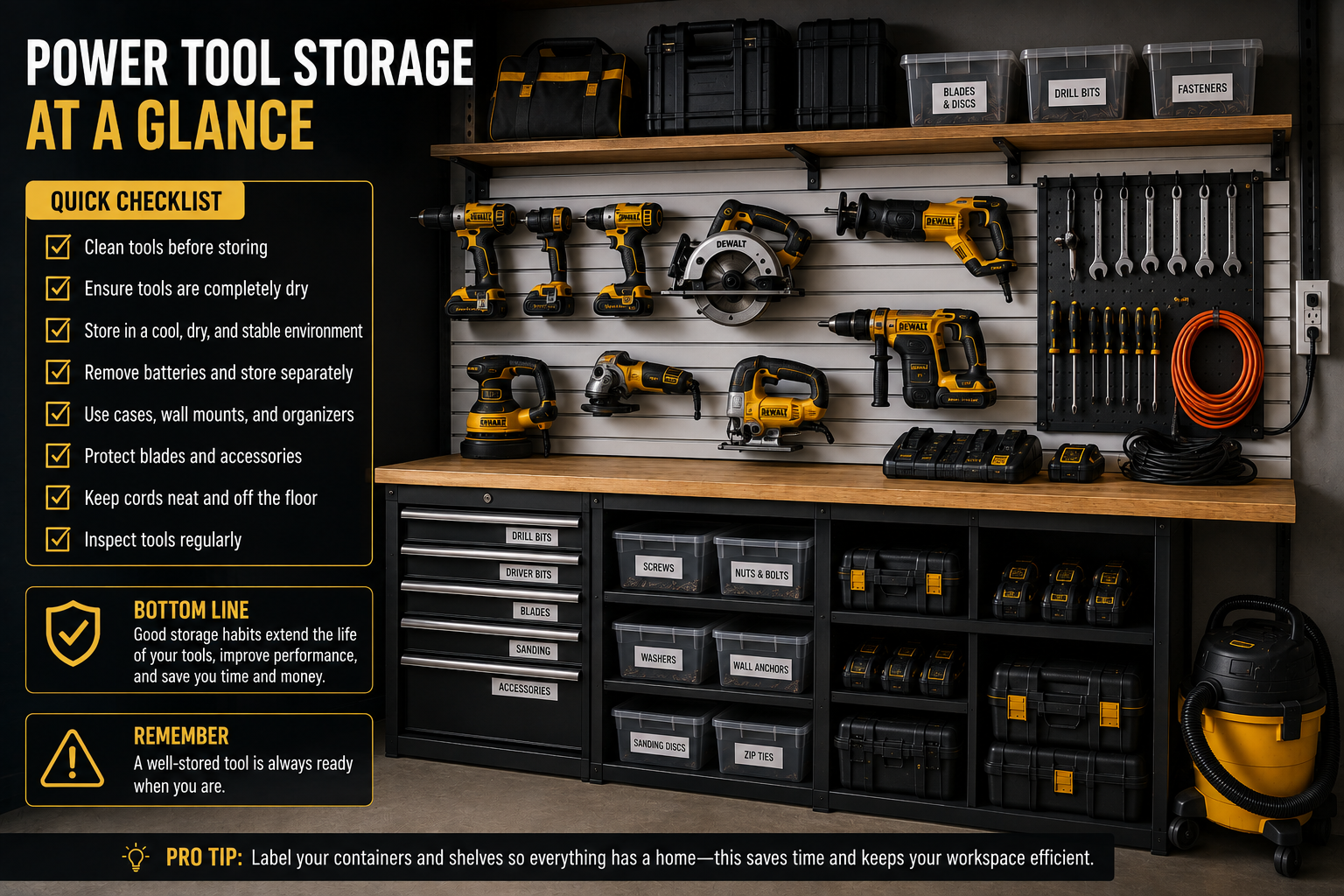
- Clean loose dust and debris before storage.
- Inspect the tool for damage or unusual wear.
- Choose a clean, dry storage location.
- Protect tools from rain, condensation, and excessive humidity.
- Avoid extreme heat and cold.
- Store cords without tight bends or strain.
- Protect blades, bits, discs, and other sharp accessories.
- Follow manufacturer guidance for cordless batteries.
- Keep tools secure so they cannot fall or be crushed.
- Keep stored tools inaccessible to children and unauthorized users.
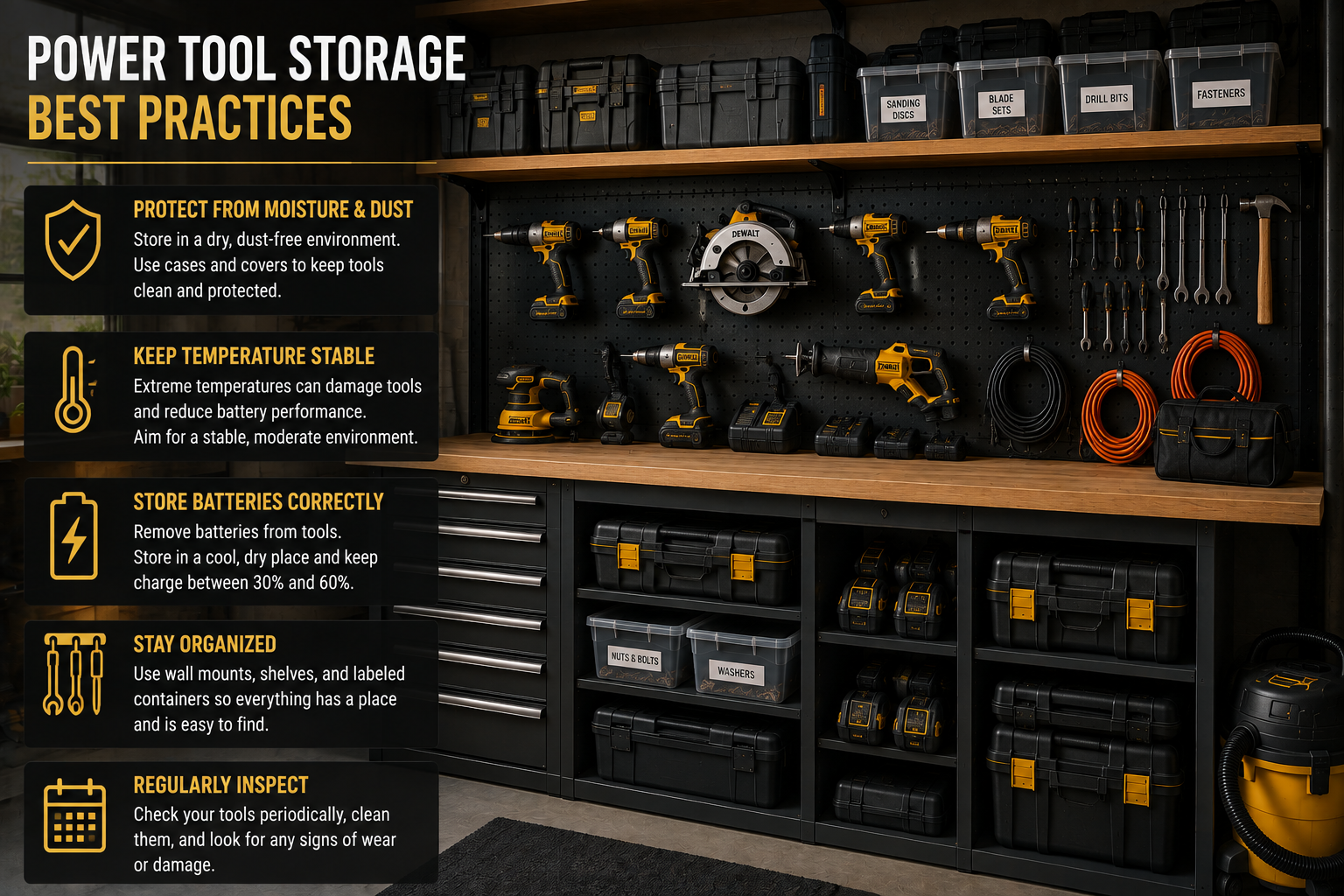
1. Clean Your Tools Before Putting Them Away
Do not put a tool straight into a case or cabinet while it is covered in sawdust, masonry dust, metal particles, or other debris. Disconnect it from power first, then clean the exterior and ventilation areas using the method recommended by the manufacturer.
A quick clean after each project prevents debris from being carried into cases, drawers, and cabinets where it can accumulate over time.
2. Choose a Dry Storage Location
Moisture is one of the biggest storage concerns for tools containing steel parts, electrical components, bearings, fasteners, blades, and accessories. A dry indoor cabinet, shelf, drawer system, or tool chest is generally preferable to an exposed area.
Garages and sheds can work, but conditions vary dramatically. Check whether the space experiences roof leaks, condensation, flooding, high humidity, or large temperature swings before relying on it for long-term tool storage.
3. Avoid Extreme Temperatures
Do not assume that any enclosed storage space is automatically suitable. Cars, uninsulated sheds, attics, and some garages can become extremely hot or cold.
Check the operating and storage temperature ranges in the tool and battery manuals. Battery packs deserve particular attention because lithium-ion cells can be affected by unsuitable temperatures and should not be stored near heat sources or in direct sunlight.
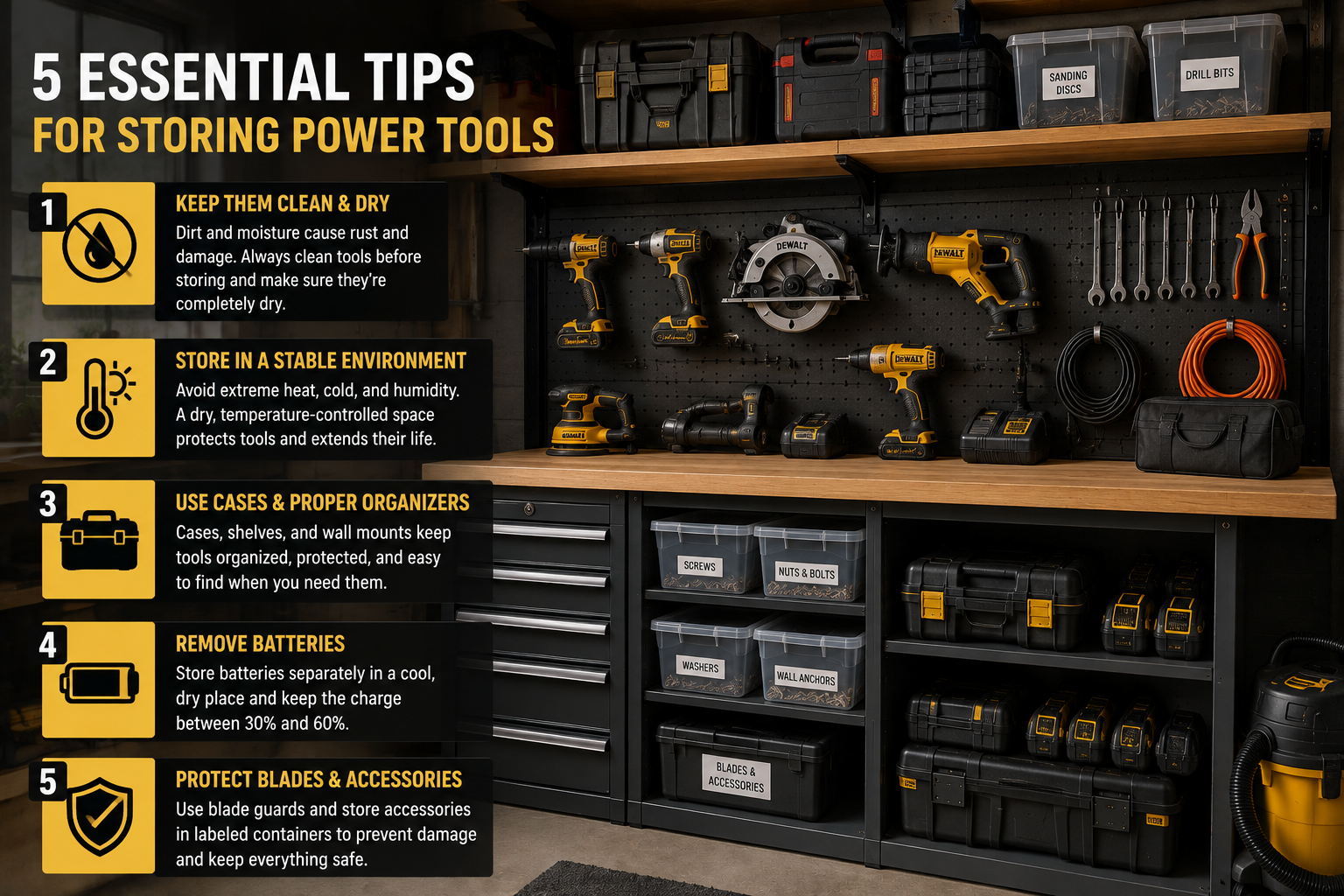
4. Use Cases, Cabinets, Shelves, or Drawers
The best storage system depends on how many tools you own and how often you use them.
Tool Cases
Manufacturer cases and compatible storage boxes are useful for protecting individual tools during transport and keeping accessories together. Make sure the tool is clean and dry before closing it inside.
Cabinets and Tool Chests
Enclosed cabinets help protect tools from workshop dust and make it easier to separate power tools from loose hardware and sharp accessories.
Open Shelving
Shelves provide quick access but offer less protection from airborne dust. Heavy tools should be placed securely and should not overhang shelf edges.
Wall Storage
Purpose-designed racks and holders can save bench space, provided they are securely installed and rated for the tool’s weight. Avoid improvised hanging methods that place stress on cords, guards, battery interfaces, or other parts not designed to support the tool.
5. Store Corded Power Tools Without Damaging the Cord
A power cord should not be wrapped tightly around the tool body if doing so creates sharp bends or strain near the cord entry point. Instead, loosely coil the cord and secure it without crushing or sharply folding it.
Inspect cords periodically for cuts, flattened sections, exposed conductors, damaged plugs, or strain near the tool. A damaged cord is a repair issue, not something to hide inside a storage case until the next project.
6. Store Cordless Batteries Correctly
Battery storage deserves its own routine. Remove packs from tools when appropriate for storage and follow the battery manufacturer’s instructions for temperature, charge level, and long-term storage.
Keep battery contacts clean and dry, and prevent terminals from contacting screws, nails, keys, loose bits, or other conductive metal objects that could create a short circuit.
Never Store a Damaged Battery
Do not return a swollen, cracked, leaking, unusually hot, or otherwise damaged battery to your normal tool cabinet. Stop using and charging it, isolate it as directed by the manufacturer, and follow applicable manufacturer and local guidance for handling and disposal.
7. Protect Blades, Bits, Discs, and Sharp Accessories
Loose accessories can damage each other and create a cut hazard when you reach into a drawer or case. Keep saw blades, drill bits, router bits, jigsaw blades, grinder discs, and similar accessories in suitable holders, cases, organizers, or original packaging.
For circular saw blades, storage is also a good time to inspect for cracks, warping, damaged teeth, or excessive wear. When replacement is needed, follow our guide on how to change a circular saw blade safely.
8. Should You Remove Blades and Bits Before Storage?
There is no universal rule for every power tool. Follow the manufacturer’s storage instructions and consider how the tool will be handled.
Removing sharp accessories can reduce accidental contact and makes inspection easier. If an accessory remains installed, ensure the tool is disconnected from power and that the cutting edge is protected from accidental contact or damage.
For drills, removing the bit after a project is a simple habit that also gives you a chance to inspect the chuck and bit. Our cordless drill beginner’s guide covers correct bit installation and removal.
9. Keep Tools Off Damp Floors
A tool case sitting directly on a garage or basement floor can be vulnerable to condensation, spills, minor flooding, and impact. Shelving or cabinets can provide better separation from floor-level moisture.
If you use a tool chest or cabinet in a garage, place it where water from vehicles, doors, windows, or plumbing cannot easily reach it.
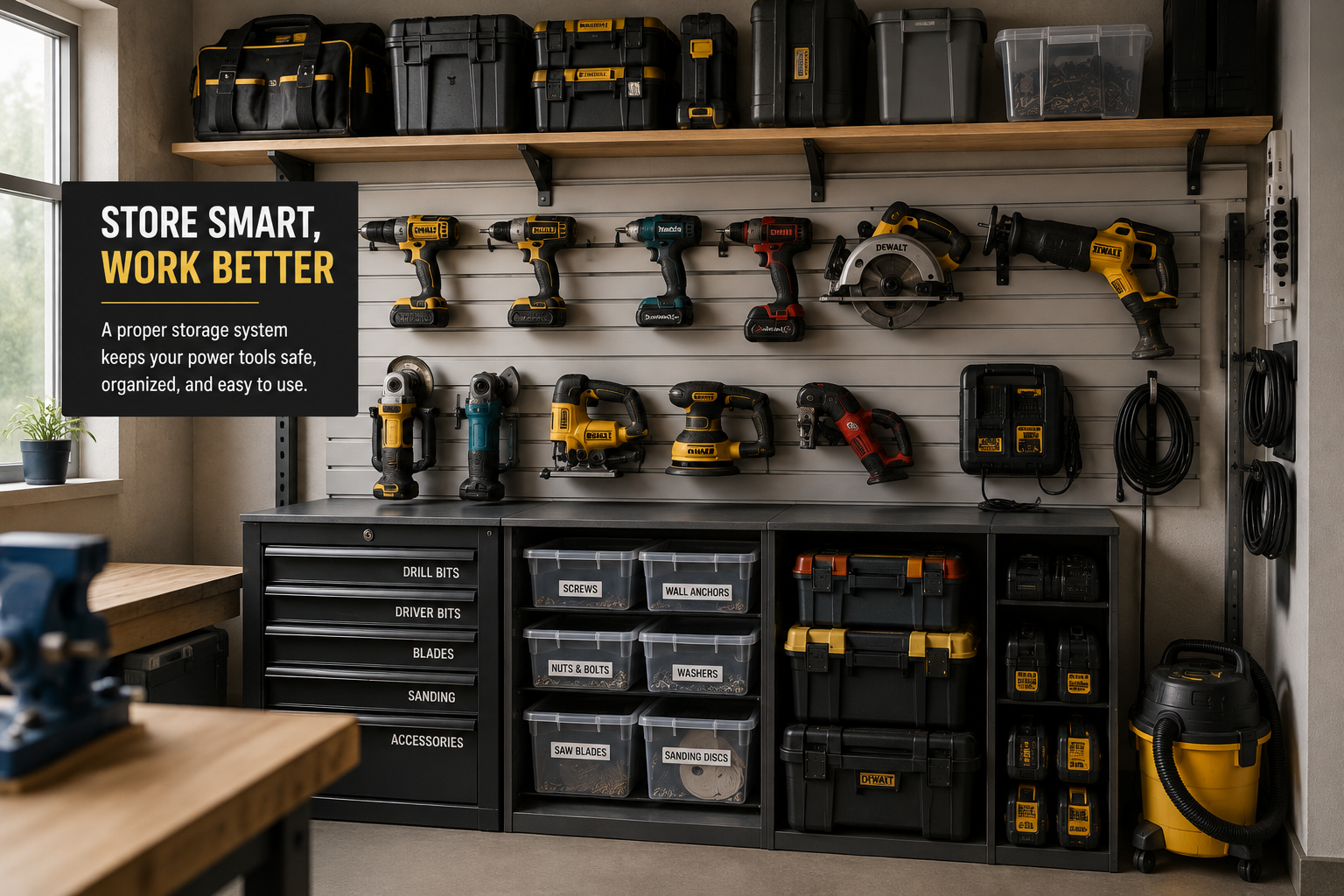
10. Organize Tools by How You Use Them
Good organization reduces unnecessary handling and makes it easier to notice missing or damaged equipment. Frequently used tools can stay in accessible locations, while specialty tools can occupy less prominent storage.
Keep related accessories nearby without mixing sharp blades, batteries, loose metal hardware, and fragile components into one unorganized drawer.
How to Store Common Power Tools
Cordless Drills and Impact Drivers
Remove bits, wipe away debris, inspect the chuck or bit holder, and store the tool securely so it cannot fall. Treat batteries according to their manufacturer’s storage guidance. If you’re still learning the differences between these tools, see our impact driver guide.
Circular Saws
Clean accumulated sawdust, inspect the blade and lower guard, and store the saw where the base plate and guard cannot be bent or struck. Do not leave the tool balanced precariously on a shelf. Our circular saw guide covers safe setup and operation.
Jigsaws
Remove or protect the blade as appropriate, clean around the shoe and blade area, and store the saw where the shoe cannot be bent. See our jigsaw beginner’s guide for setup and blade basics.
Sanders
Empty or clean dust collection components according to the manual and avoid storing the tool with debris packed around extraction ports. Protect the sanding pad from deformation.
Angle Grinders
Inspect the guard and accessory before storage. Keep grinding and cutting discs protected from moisture, impact, and conditions prohibited by the accessory manufacturer.
Hammer Drills
Remove masonry dust from the exterior, inspect the chuck and auxiliary handle, and organize masonry bits separately. Our hammer drill guide explains correct setup and drilling technique.
Long-Term Power Tool Storage
If a tool will not be used for several months, perform a more thorough inspection before putting it away. Clean it, check for damage, organize accessories, and consult the owner’s manual for any model-specific long-term storage instructions.
For cordless systems, pay particular attention to battery recommendations. Do not assume every lithium-ion battery should be stored at the same charge percentage; manufacturer instructions take priority.
When taking a tool back out of long-term storage, inspect it before reconnecting power. Look for corrosion, damaged cables, pest damage, moisture, cracked housings, stuck guards, or anything else that may have changed while the tool was unused.
Common Power Tool Storage Mistakes
Leaving Tools Covered in Dust
Dirty tools transfer debris into storage and make it harder to inspect vents, guards, and housings.
Storing Tools in a Damp Shed or Basement
An enclosed room can still have high humidity or condensation. Pay attention to actual conditions rather than simply whether the space has a roof.
Wrapping Cords Too Tightly
Tight wrapping can create repeated bends and strain, particularly near plugs and cord entry points.
Throwing Batteries in a Drawer With Metal Hardware
Battery terminals should be protected from conductive objects that could bridge the contacts.
Stacking Heavy Tools Unsecurely
Tools can fall, damage each other, or injure someone retrieving equipment from below.
Forgetting About Stored Tools
Long-term storage does not eliminate the need for inspection. Check stored equipment periodically, particularly if the environment is prone to humidity or temperature changes.
Frequently Asked Questions
Can I store power tools in a garage?
Yes, if the garage provides conditions within the manufacturer’s storage requirements and protects tools from moisture, condensation, extreme temperatures, and physical damage. Conditions vary by garage and climate.
Can I store power tools in a shed?
A shed may be suitable if it remains dry and within acceptable temperature and humidity conditions. Uninsulated sheds can experience significant temperature swings and condensation, so assess the actual environment first.
Should batteries be left in cordless tools during storage?
Follow the tool and battery manufacturer’s instructions. For longer storage, many systems are better managed with batteries removed, but the specific manufacturer guidance should determine your routine.
Should I store power tools in their original cases?
Original or manufacturer-designed cases can provide useful protection and organization as long as the tool is clean and dry before the case is closed.
How do I prevent power tools from rusting in storage?
Keep tools clean and dry, control moisture in the storage environment, and follow manufacturer recommendations for corrosion protection. Avoid applying oils or chemicals indiscriminately to electrical tools or surfaces where the manufacturer does not recommend them.
The Pelstro Bottom Line
The best storage system is not necessarily the most expensive one. Keep tools clean, dry, protected from extreme temperatures, securely organized, and separated from conditions that can damage cords, batteries, blades, and electrical components. A few minutes of care at the end of a project makes the next project easier and helps you spot problems before you switch the tool back on.
Storage works best as part of a complete maintenance routine. Continue with our Power Tool Maintenance Guide.
Pingback: DeWalt DCF845 Review (2026): Is It Worth It?
Pingback: How to Sharpen Drill Bits: Step-by-Step Guide | Pelstro