
PELSTRO TOOL REVIEW

The DeWalt DCF860 is a high-output 20V MAX XR brushless impact driver built for users who prioritize serious fastening performance. DeWalt rates it at up to 2,500 in-lbs of maximum fastening torque, 3,800 RPM, and 4,500 impacts per minute, with three speed settings and nine built-in LEDs.
Heavy fastening, structural screws, demanding construction work, professional remodeling, and existing DeWalt 20V MAX users.
You prioritize the shortest possible impact driver for cabinetry, installations, and confined spaces.
Research-based verdict
See buyer fit and tradeoffs below; no measured score
Review methodology: This is a research-based Pelstro review, not a claim of hands-on laboratory testing. We evaluate official manufacturer documentation, published specifications, platform compatibility, design, application fit, and the product’s position against current alternatives.
Which DCF860 package should you compare?
- US, existing battery owner: the official DCF860B tool-only listing is the starting point; battery and charger are separate.
- UK, starting the platform: the official DCF860E2T-GB kit listing includes two 1.7Ah POWERSTACK batteries, a charger and TSTAK box. It is an 18V XR regional kit, not the US bare-tool package.
- Comparing a sale or combo kit: record the full suffix, battery models, seller and delivered total before deciding it is cheaper. Manufacturer information is not a live retailer price or stock guarantee.
Use our bare-tool versus kit worksheet, or compare DCF850 versus DCF860 if tight-space access is the deciding factor.
DeWalt DCF860 at a Glance
| Tool type | Cordless 1/4-inch hex impact driver |
| Platform | DeWalt 20V MAX XR |
| Motor | Brushless |
| Maximum fastening torque | 2,500 in-lbs |
| No-load speed | 0–1,800 / 0–2,500 / 0–3,800 RPM |
| Impacts per minute | Up to 4,500 IPM |
| Speed control | 3-speed selector + variable-speed trigger |
| Length | 4.8 inches |
| Tool weight | 2.4 lb |
| Lighting | 9 built-in LEDs with work-light setting |
What We Like
- Excellent rated torque. DeWalt specifies up to 2,500 in-lbs, putting the DCF860 firmly into high-output impact-driver territory.
- Very fast top speed. Mode 3 reaches 3,800 RPM, while the impact mechanism runs up to 4,500 IPM.
- Three useful speed ranges. The selector provides 1,800, 2,500, and 3,800 RPM maximum no-load speeds.
- Outstanding work lighting. Nine built-in LEDs surround the work area, and DeWalt includes a 20-minute work-light setting.
- 20V MAX ecosystem compatibility. Existing DeWalt owners can use compatible batteries they already own.
- Tool Connect ready. A separately sold Tool Connect chip can support asset tracking and management.
What We Don’t Like
- Less compact than the DCF850. At 4.8 inches long, the DCF860 gives up some tight-space access for higher output.
- More performance than many DIYers need. Routine furniture assembly and light fastening rarely require its maximum capability.
- Battery choice affects the experience. Larger high-output packs can make the complete tool noticeably heavier.
- Tool-only buyers need a battery and charger. The DCF860B does not include either.
DeWalt DCF860 Review: Fastening Performance
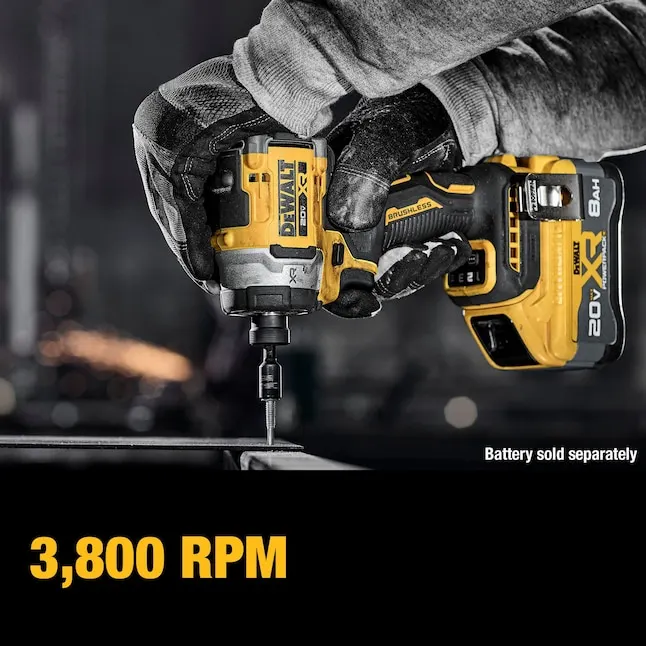
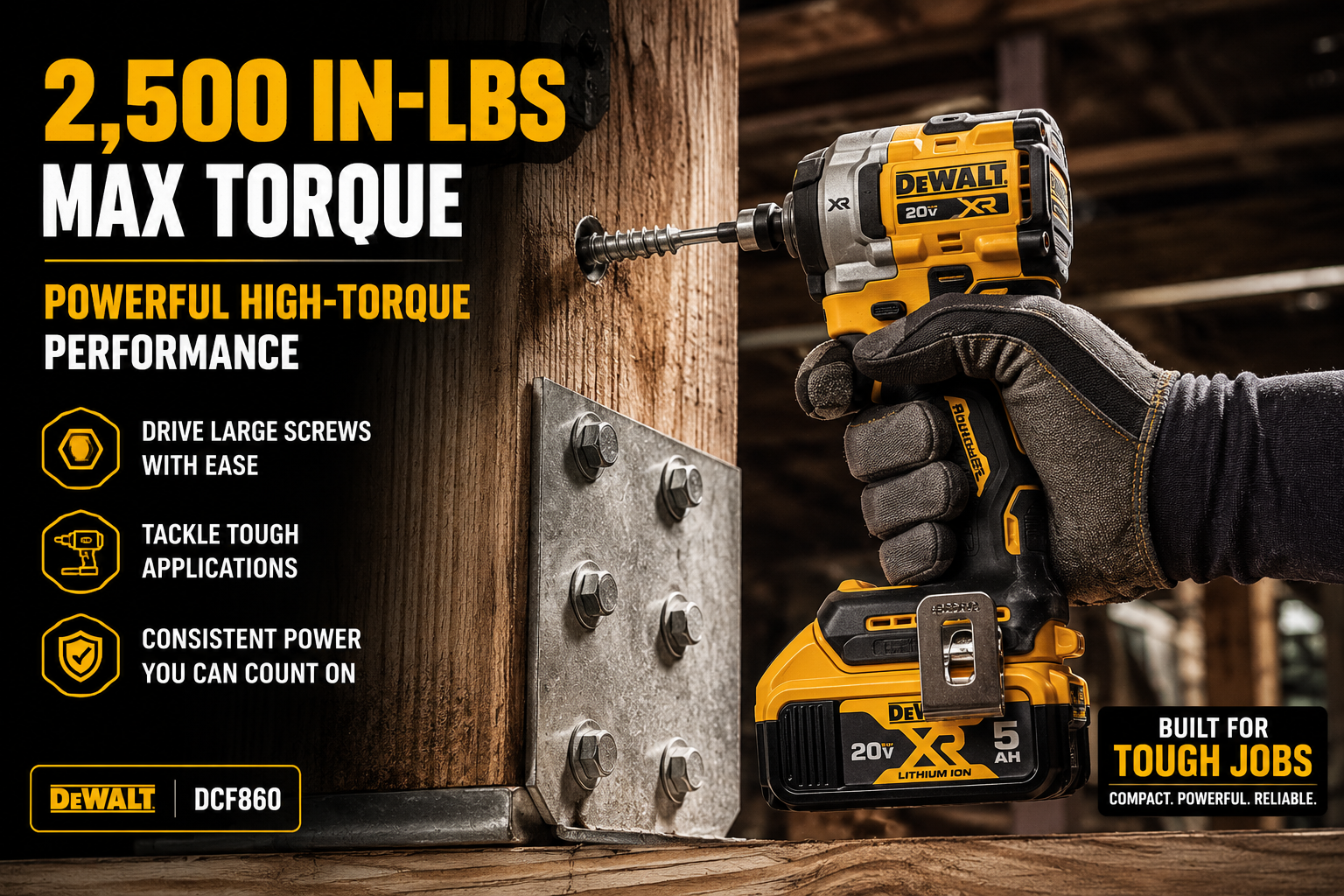
In this DeWalt DCF860 review, the headline performance figure is 2,500 in-lbs of maximum fastening torque in high speed. DeWalt’s manual also lists 2,150 in-lbs in medium and 1,250 in-lbs in low. That stepped output makes the tool more versatile than simply giving the user maximum impact force every time.
Its 3,800 RPM top speed and 4,500 IPM ceiling reinforce the same positioning: this is a performance-focused impact driver. It is particularly compelling for long structural screws, larger construction fasteners, repeated framing and remodeling work, and applications where faster driving can materially improve productivity.
If you are still deciding whether you need an impact driver at all, see our cordless drill vs impact driver comparison.
Three-Speed Control
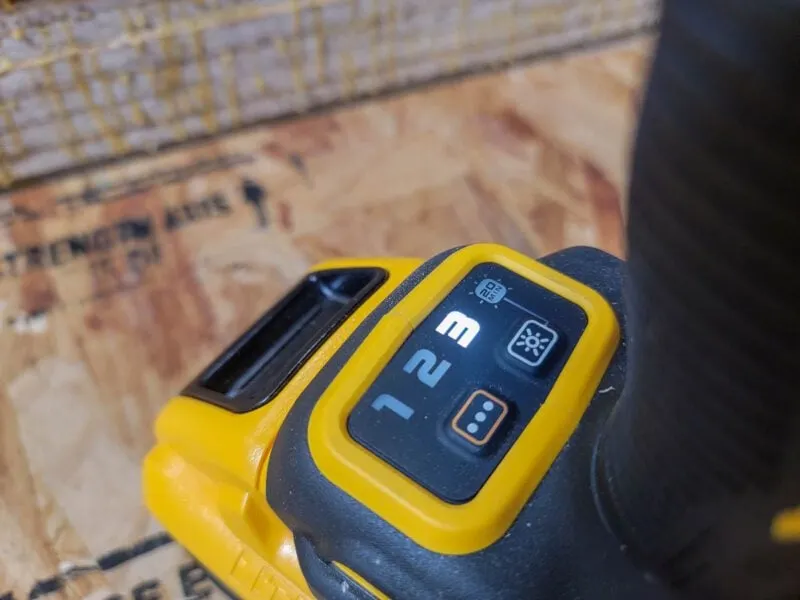
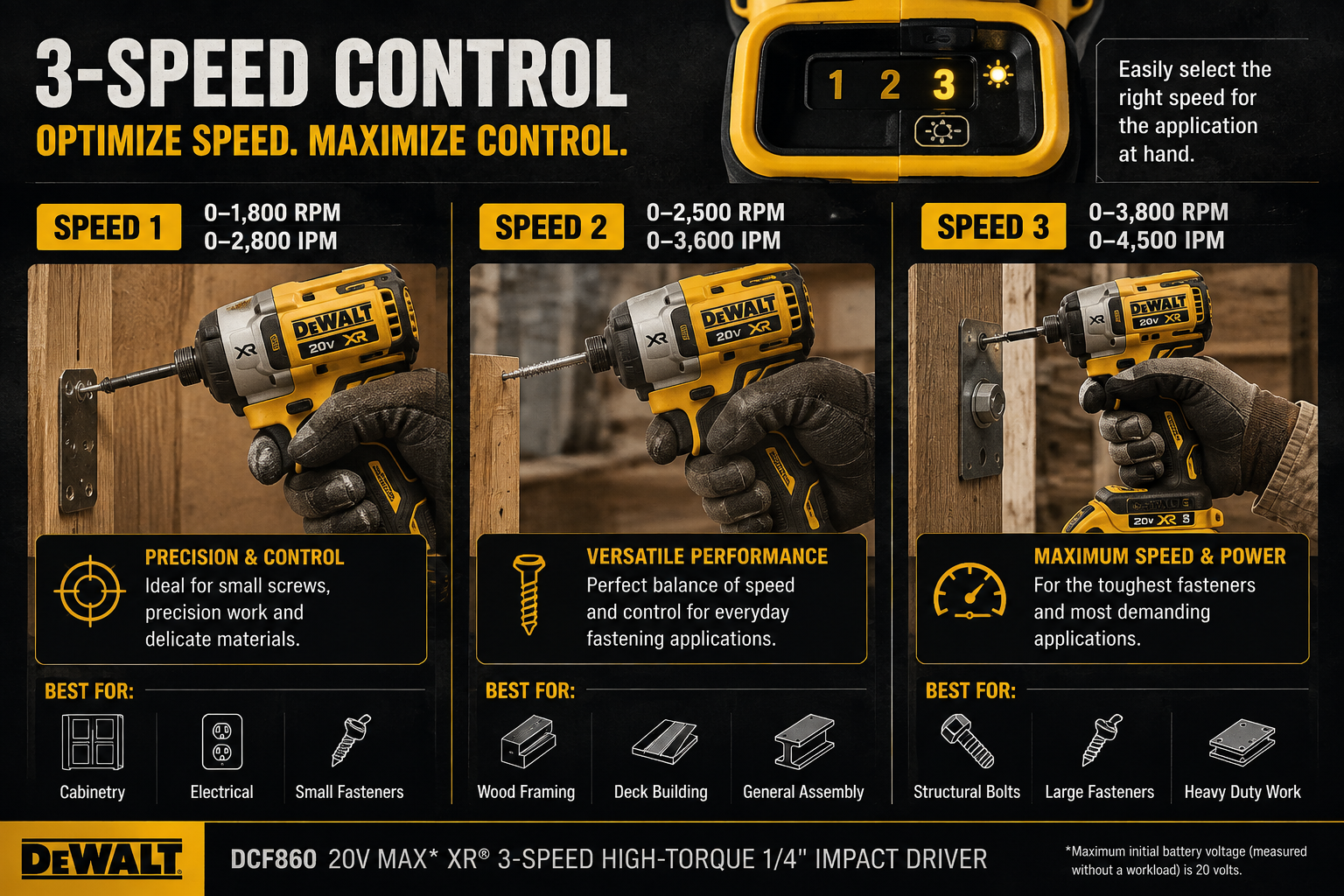
The DCF860 has three selectable speed ranges: up to 1,800 RPM in Mode 1, 2,500 RPM in Mode 2, and 3,800 RPM in Mode 3. The variable-speed trigger then lets you modulate speed within the selected range.
This matters because maximum output is not appropriate for every fastener. Lower modes give you a more manageable ceiling for smaller screws and controlled installation, while Mode 3 unlocks the tool’s maximum rated performance. DeWalt specifically notes that Speeds 1 and 2 are optimized around installation speeds used by common self-drilling and tapping screws, although correct installation still depends on the fastener manufacturer’s requirements.
Size, Weight, and Ergonomics
According to DeWalt’s manual, the DCF860 measures 4.8 inches long and weighs 2.4 lb without a battery. Those figures are reasonable for the performance level, but they highlight the main difference between this tool and DeWalt’s compact ATOMIC DCF850.
The DCF860 is not cumbersome, but it is designed around higher output rather than achieving the shortest possible head. For open framing, deck construction, structural fastening, and general jobsite work, that compromise makes sense. Inside narrow cabinets or equipment, the shorter DCF850 can be easier to position.
1/4-Inch Quick-Connect Chuck
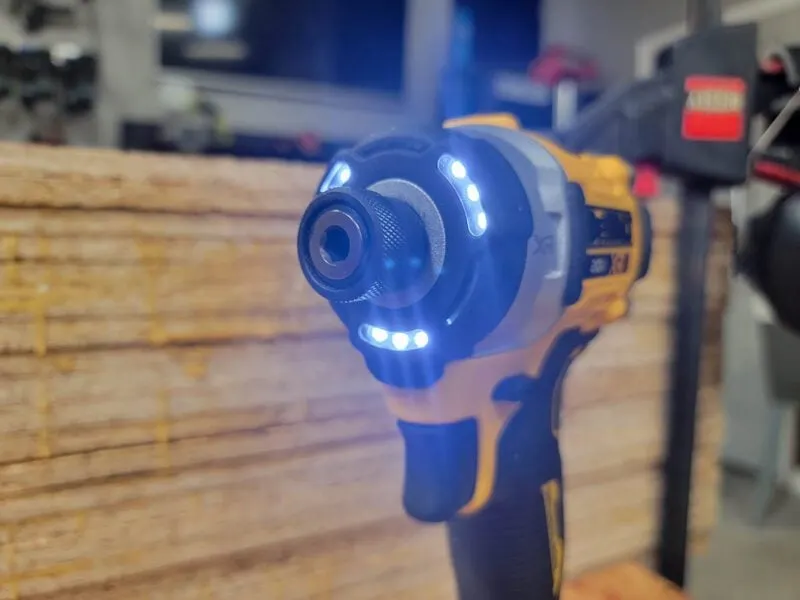
The DCF860 uses a 1/4-inch quick-connect hex chuck for impact-rated accessories. This is the standard interface expected from a professional impact driver and supports common driver bits, nut setters, extensions, and other compatible impact accessories.
Our How to Use an Impact Driver guide covers bit installation, fastener alignment, trigger control, and basic impact-driver technique.
Nine-LED Work Light
Lighting is one of the DCF860’s standout secondary features. DeWalt equips the tool with nine built-in LEDs and a 20-minute work-light setting. For users working inside framing cavities, mechanical spaces, dark corners, or poorly lit jobsites, that is considerably more useful than treating the LED as an afterthought.
Good lighting also matters when controlling a high-output driver. Clearly seeing the fastener head and surrounding surface makes it easier to maintain alignment and judge progress before the fastener seats.
20V MAX XR Battery Platform
Check the battery capacity and compatibility guide, then use our bare-tool versus kit cost checklist to compare the complete setup you need.
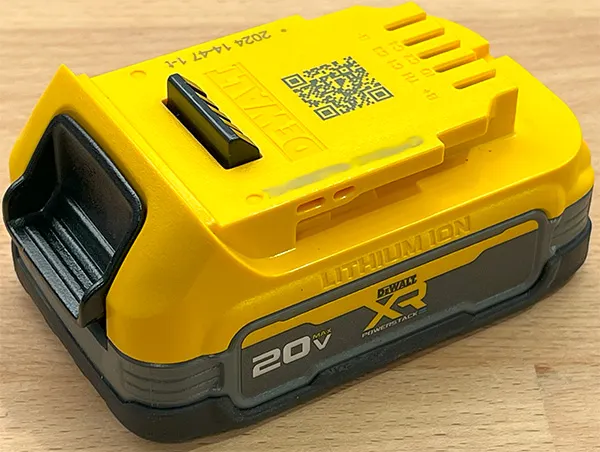
The DCF860 is part of DeWalt’s 20V MAX XR lineup. The DCF860B is the bare-tool version, while kit configurations pair the driver with a battery, charger, belt hook, and bag. DeWalt also offers kits with different battery capacities.
For existing DeWalt owners, the bare tool is therefore the obvious configuration to consider first. New buyers should compare kit pricing because the battery and charger can materially change the total cost of entering the platform.
DCF860 vs DeWalt DCF850
The DCF850 prioritizes compact access; the DCF860 offers higher manufacturer-rated torque and different lighting. Compare the features against your actual jobs and current battery ownership. These specifications are not a Pelstro head-to-head test.
Read our full DCF850 vs DCF860 buying comparison for the differences, regional kit choices and upgrade decision.
DCF860 vs DeWalt DCF845
The DCF845 remains a capable XR impact driver, but the DCF860 sits above it as DeWalt’s high-torque option. Buyers considering both should focus on whether the additional performance of the DCF860 will actually benefit their work.
For frequent structural fastening and demanding professional use, the DCF860 is the more compelling choice. For more moderate fastening where price, weight, or an existing deal matters more than maximum output, the DCF845 can still make sense. Read our DeWalt DCF845 review for the full comparison point.
DCF860 vs Milwaukee 2953-20
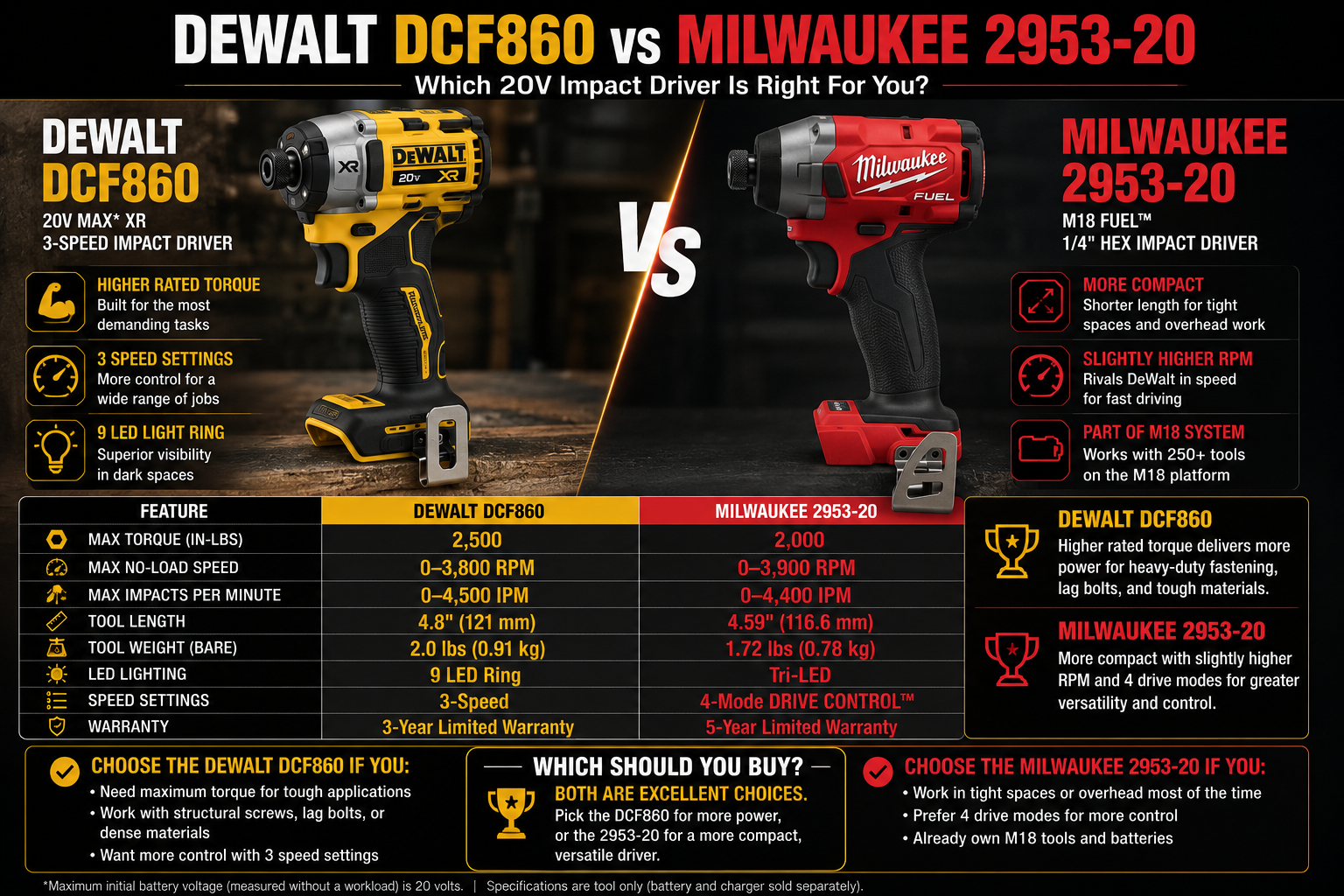
Milwaukee’s 2953-20 M18 FUEL is one of the DCF860’s most relevant cross-platform competitors. The DeWalt has the stronger published maximum torque figure, while Milwaukee combines strong output with a very compact body and its mature M18 ecosystem.
For buyers starting from zero, both deserve consideration. For anyone already invested in either 20V MAX or M18 batteries, switching ecosystems purely for an impact driver is harder to justify. See our Milwaukee 2953-20 review for the full breakdown.
Who Should Buy the DeWalt DCF860?
The DCF860 makes the most sense for contractors, remodelers, carpenters, deck builders, serious DIYers, and existing DeWalt users who regularly drive demanding fasteners. Its high rated torque and fast impact mechanism are most valuable when fastening is a substantial part of the job rather than an occasional task.
It is also a strong choice for someone who wants one premium DeWalt impact driver and would rather have excess performance available than prioritize minimum dimensions.
Who Should Skip It?
Skip the DCF860 if compact access is your main concern. The DCF850 exists precisely for users who need a shorter head around cabinets, equipment, framing pockets, and other confined spaces.
Light-duty DIY users may also get poor value from paying for high-output performance they rarely use. A less expensive impact driver can handle ordinary screws, furniture, and household fastening without requiring the DCF860’s full capability.
Is the DeWalt DCF860 Worth It in 2026?
Yes—especially for users who can exploit its performance. Our DeWalt DCF860 review finds that its published specifications support its high-output positioning: 2,500 in-lbs maximum fastening torque, 3,800 RPM, 4,500 IPM, three speed ranges, and nine LEDs. You can verify these figures on DeWalt’s official DCF860 product page.
The important question is whether you need that output. If your work revolves around demanding fastening, the DCF860 is one of the strongest reasons to stay within or enter DeWalt’s 20V MAX ecosystem. If your priority is tight-space access, the DCF850 remains the more specialized choice.
For more alternatives, see our Best Impact Drivers guide.
Frequently Asked Questions
How much torque does the DeWalt DCF860 have?
DeWalt specifies up to 2,500 in-lbs of maximum fastening torque in high speed.
How fast is the DCF860?
Its three no-load speed ranges reach up to 1,800, 2,500, and 3,800 RPM.
How many impacts per minute does it deliver?
DeWalt’s manual specifies up to 4,500 impacts per minute.
How long and heavy is the DCF860?
The manual lists a length of 4.8 inches and a tool weight of 2.4 lb without the battery.
Does the DCF860B include a battery?
No. The DCF860B is sold as a tool-only configuration. DeWalt also sells kit versions with batteries and chargers.
DCF860 or DCF850: which should I buy?
Choose the DCF860 for higher rated torque and demanding fastening. Choose the DCF850 when its much shorter head will make tight-space work easier.
The Pelstro Bottom Line
Pelstro’s recommendation is qualitative and research-based; no measured performance score is assigned. Its 2,500 in-lbs of maximum fastening torque, 3,800 RPM top speed, three-speed control, nine-LED lighting system, and 20V MAX XR compatibility make it a compelling high-output impact driver. Buy it when performance is the priority; choose the DCF850 instead when compact access matters more.
Compare the broader field in our Best Impact Drivers guide.
Pingback: DeWalt DCF850 Review (2026): Is It Worth It?
Pingback: DeWalt DCF845 Review (2026): Is It Worth It?
Pingback: Bosch GDR18V-1950CN Review: Is It Worth It in 2026? - Pelstro