
PELSTRO TOOL REVIEW
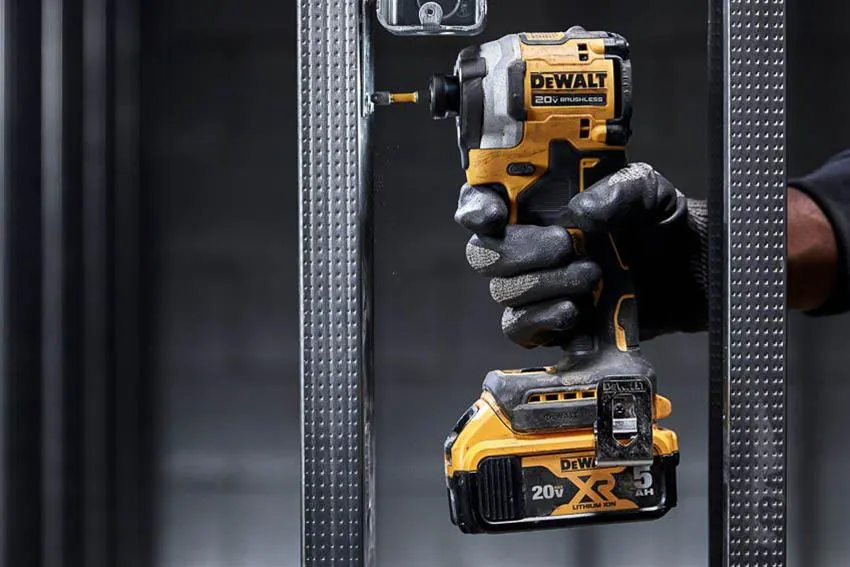
The DeWalt DCF850 is an ultra-compact 20V MAX brushless impact driver built for users who want full-size fastening capability in a remarkably short body. It combines 1,825 in-lbs of rated torque, up to 3,250 RPM, three speed settings, and a three-LED work light in a tool measuring under four inches from front to back.
Cabinetry, installation work, remodeling, tight framing spaces, overhead fastening, and existing DeWalt 20V MAX users.
You mainly want DeWalt’s highest-output impact driver or need more specialized electronic fastening modes.
Compact access specialist
Best suited to existing DeWalt battery owners working in confined spaces
Review methodology: This is a research-based Pelstro review, not a claim of hands-on laboratory testing. We evaluate official manufacturer documentation, published specifications, platform compatibility, design, application fit, and the product’s position against current alternatives. We have not measured fastening speed, runtime or long-term durability.
DCF850 tool only or kit: which should you buy?
Shortlist the DCF850 when access around the fastener matters and its battery platform suits you. Its compact format and three-speed controls are reasons to investigate it; they do not establish the fastest fastening or best comfort for your job. Pelstro has not measured its fastening speed or runtime.
| Purchase option | When it makes sense | Check first |
|---|---|---|
| DCF850B tool only | You own a suitable compatible battery and charger | Exact contents, seller, warranty and total usable cost |
| DCF850 kit | You need batteries or a charger too | Full model suffix, battery quantity and charger in the regional listing |
| Drill-and-impact combination | You need both drilling and repeated fastening | The exact two tools and included batteries, not just the bundle discount |
If drilling holes is your main task, start with a suitable drill. See our DCD805 hammer-drill review and drill versus impact-driver comparison before deciding. Price the complete setup and confirm contents with the seller; no current price is assumed here.
DeWalt DCF850 at a Glance
| Tool type | Cordless 1/4-inch hex impact driver |
| Platform | DeWalt 20V MAX |
| Series | ATOMIC Compact Series |
| Motor | Brushless |
| Maximum torque | 1,825 in-lbs |
| Maximum speed | 3,250 RPM |
| Speed control | 3-speed selector + variable-speed trigger |
| Head length | Under 4 inches front to back |
| Work light | 3 LEDs around the chuck |
What We Like
- Exceptionally compact head. The under-four-inch body is the DCF850’s defining advantage and makes it unusually easy to position in confined work areas.
- Strong output for the size. DeWalt rates the brushless motor at 1,825 in-lbs of maximum torque and up to 3,250 RPM.
- Three-speed control. You can reduce output for smaller fasteners or move up for heavier driving rather than controlling everything through the trigger alone.
- Excellent work lighting. Three LEDs surround the chuck area, helping reduce shadows directly around the fastener.
- 20V MAX compatibility. Existing DeWalt users can pair the bare tool with batteries they already own.
- Quick-release 1/4-inch chuck. Standard impact-rated hex accessories install quickly and suit the tool’s fastening-first design.
What We Don’t Like
- Not DeWalt’s maximum-output option. Buyers chasing the strongest current DeWalt impact driver should compare the DCF850 with the XR high-torque models.
- Fewer specialized modes than some rivals. Three-speed control is useful, but competitors such as Makita offer more application-specific electronic fastening programs.
- The bare tool includes no battery or charger. First-time DeWalt buyers need to budget for the battery platform.
- A larger battery can undermine the compact feel. The short head remains useful, but a bulky pack changes the balance and overall footprint.
DeWalt DCF850 Review: Fastening Performance
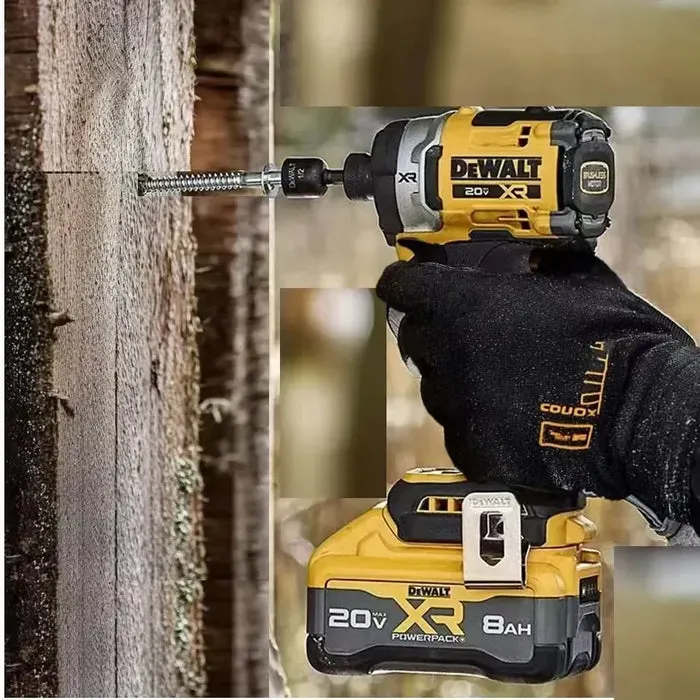
In this DeWalt DCF850 review, the performance numbers make sense in the context of its compact design. DeWalt rates the DCF850 at 1,825 in-lbs of maximum torque and up to 3,250 RPM. Those figures give it enough rated output for the large screws and everyday construction fasteners expected from a serious 20V-class impact driver while preserving the unusually short body that defines the ATOMIC model. DeWalt’s official DCF850 specifications confirm the under-four-inch design, 1,825 in-lbs maximum torque, 3,250 RPM, three-speed control, and integrated three-LED work light.
The key is to judge that performance in context. The DCF850 is not designed simply to post the biggest torque figure in DeWalt’s range. It trades some headline output for maneuverability. For deck screws, structural screws within the tool’s intended range, cabinetry, hardware installation, remodeling, and general fastening, that compactness can be more useful than carrying extra performance you rarely need.
If you are deciding whether an impact driver is the right tool at all, see our cordless drill vs impact driver comparison.
Why the Sub-4-Inch Head Matters
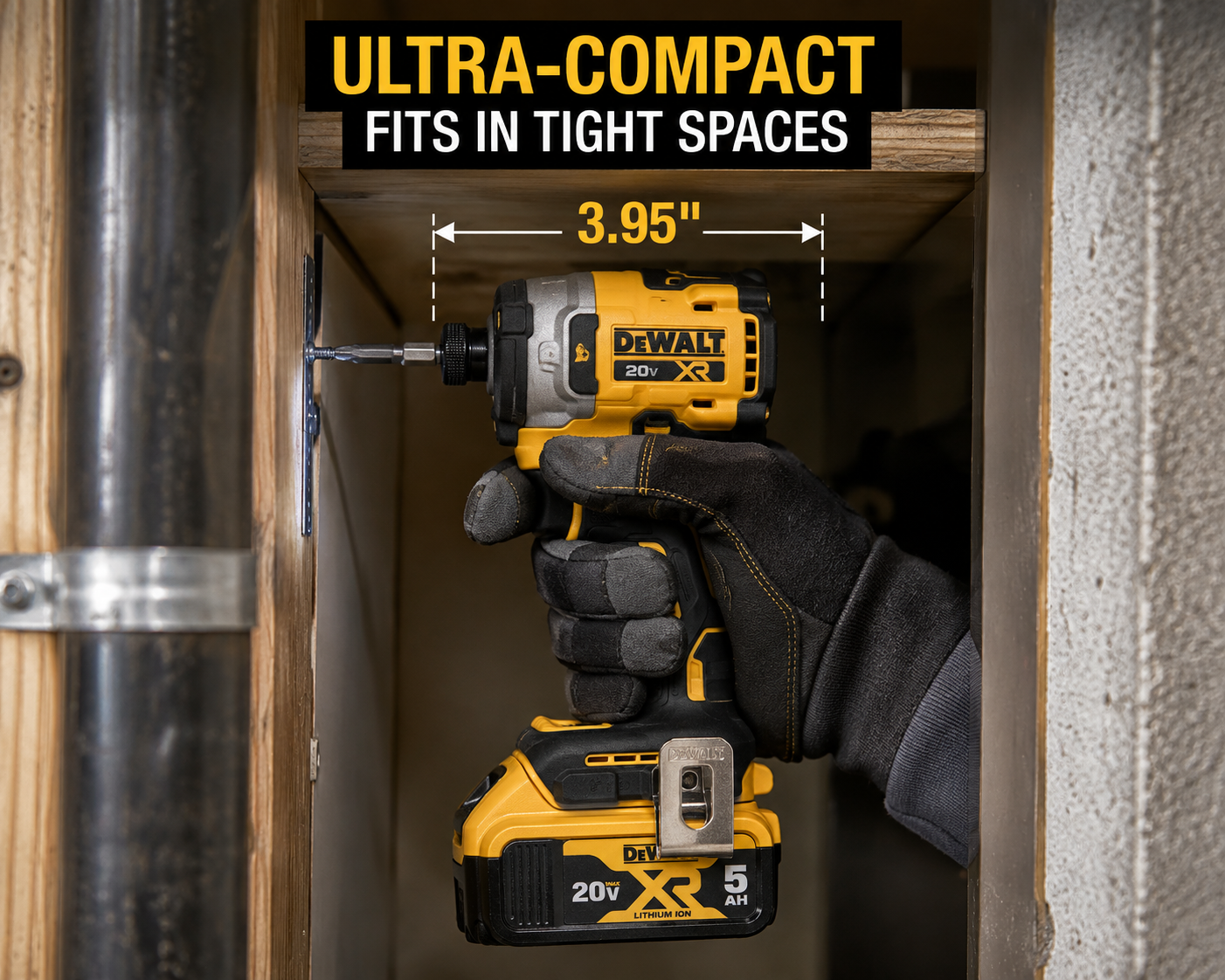
DeWalt specifically describes the DCF850 as measuring less than four inches from front to back. That dimension is the strongest reason to choose it over a conventional impact driver. A shorter head lets the chuck and bit reach farther into cabinets, between framing members, around mechanical assemblies, and into other areas where the rear of a longer tool contacts the surrounding material.
Compact dimensions also help when the tool is used repeatedly overhead or at awkward angles. The battery still determines much of the total height and weight, but the short motor housing makes positioning the business end of the driver noticeably easier.
Three-Speed Control
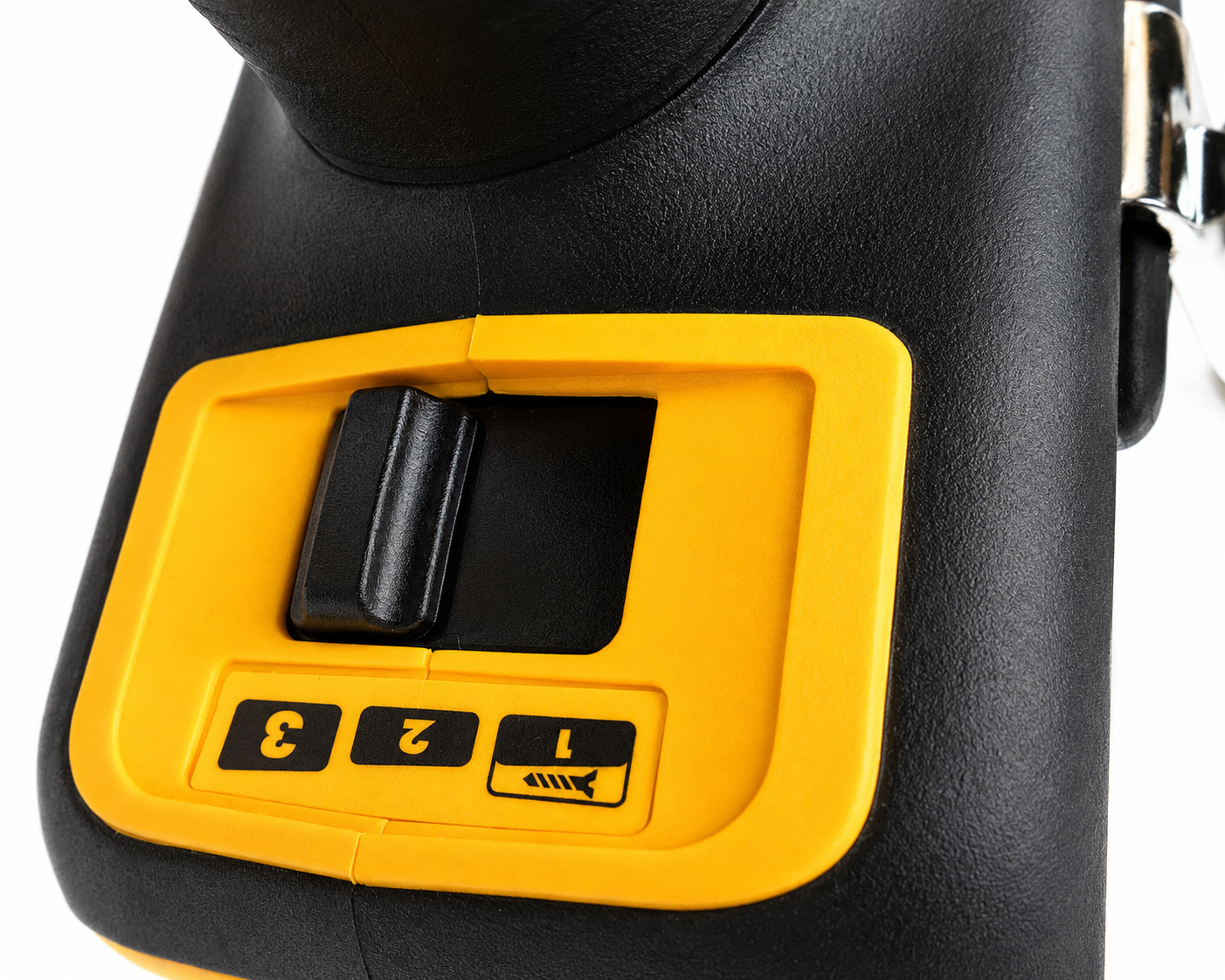
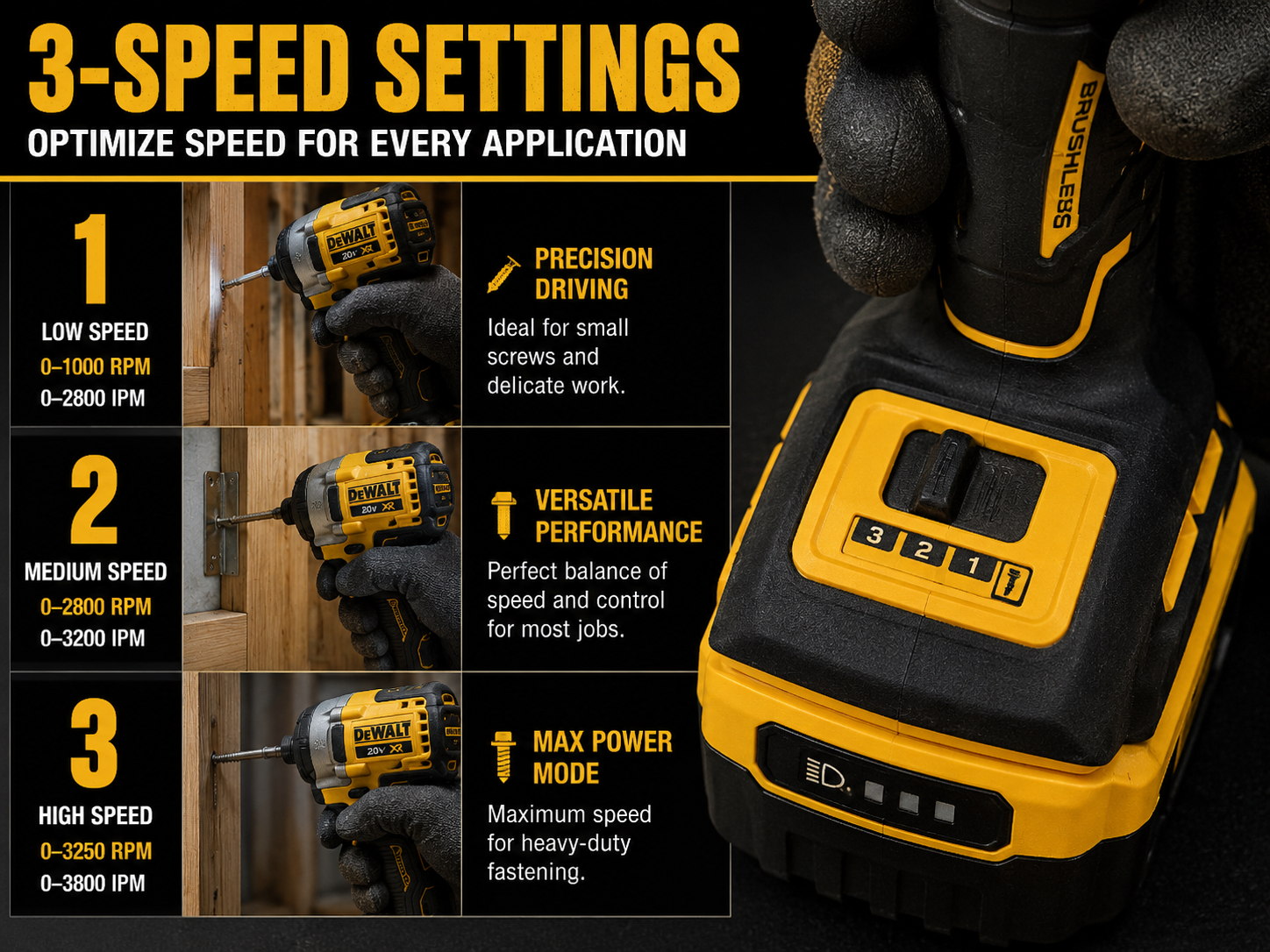
The DCF850 uses a three-speed selector together with a variable-speed trigger. That gives you a straightforward way to limit output before pulling the trigger: lower settings for more controlled fastening and the highest setting when you need the tool’s full available speed and impact performance.
This system is simpler than the multi-mode interfaces found on some premium competitors, which can be an advantage if you prefer direct controls. The tradeoff is that you do not get the same breadth of automatic application-specific modes for tasks such as self-drilling screws or automatic stopping.
1/4-Inch Quick-Release Chuck
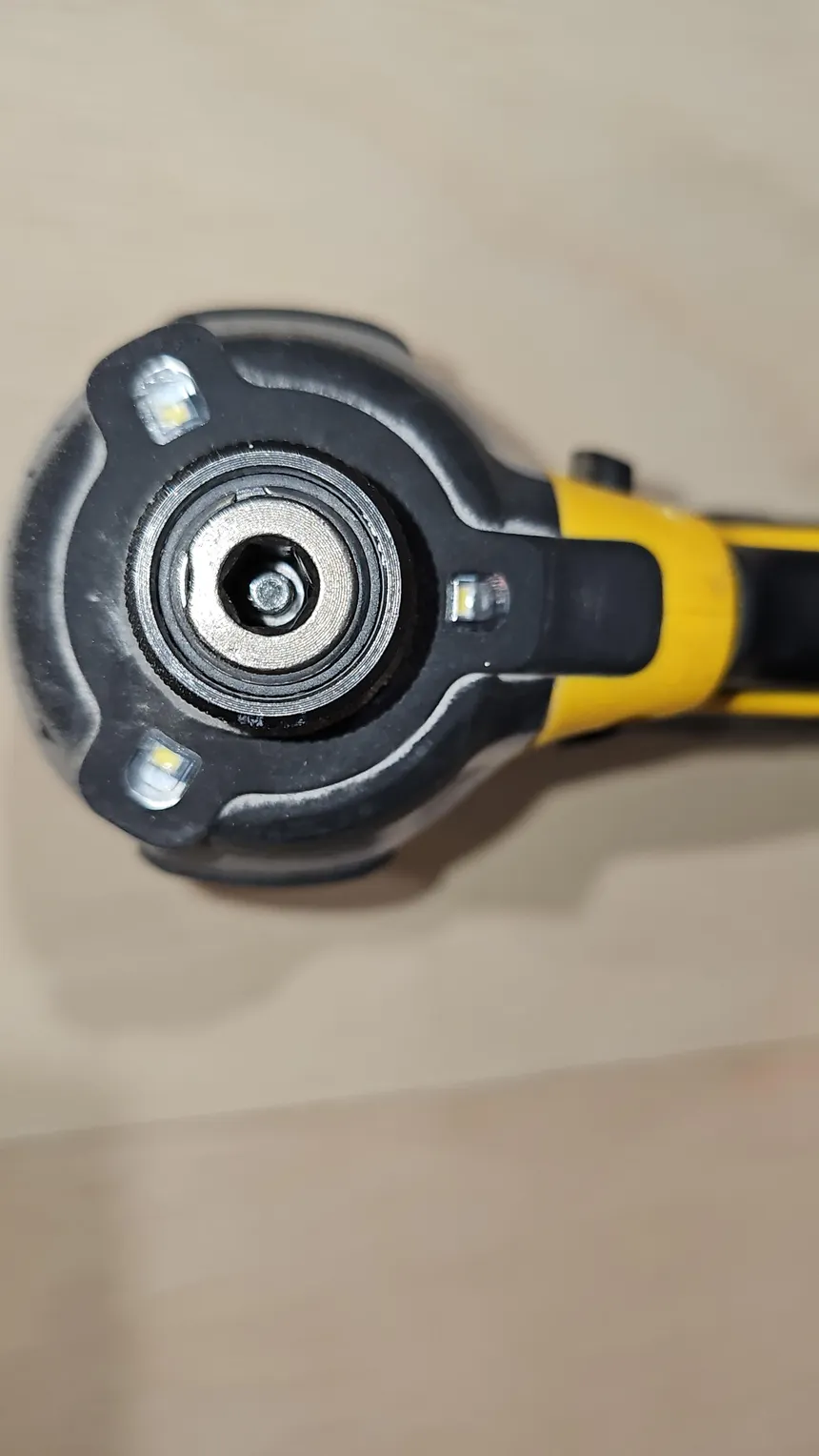
The DCF850 uses a 1/4-inch hex quick-release chuck for impact-rated accessories. DeWalt’s manual specifies 1/4-inch hex accessories and one-inch bit tips, making the tool compatible with the common driver bits, nut setters, extensions, and other impact accessories used for fastening work.
For new impact-driver users, our How to Use an Impact Driver guide covers bit installation, trigger control, accessory choice, and safe fastening technique.
Three-LED Work Light
Three work lights are positioned around the chuck collar. This arrangement is more useful than a single LED mounted near the trigger because light reaches the fastener from multiple directions, reducing the hard shadow that the chuck or bit can cast in a dark cabinet or corner.
DeWalt’s manual states that the lights activate with the trigger and can remain illuminated for up to 20 seconds after the trigger is released. They are intended to illuminate the immediate work surface rather than serve as a standalone flashlight.
20V MAX Battery Platform
Check the battery capacity and compatibility guide, then use our bare-tool versus kit cost checklist to compare the complete setup you need.
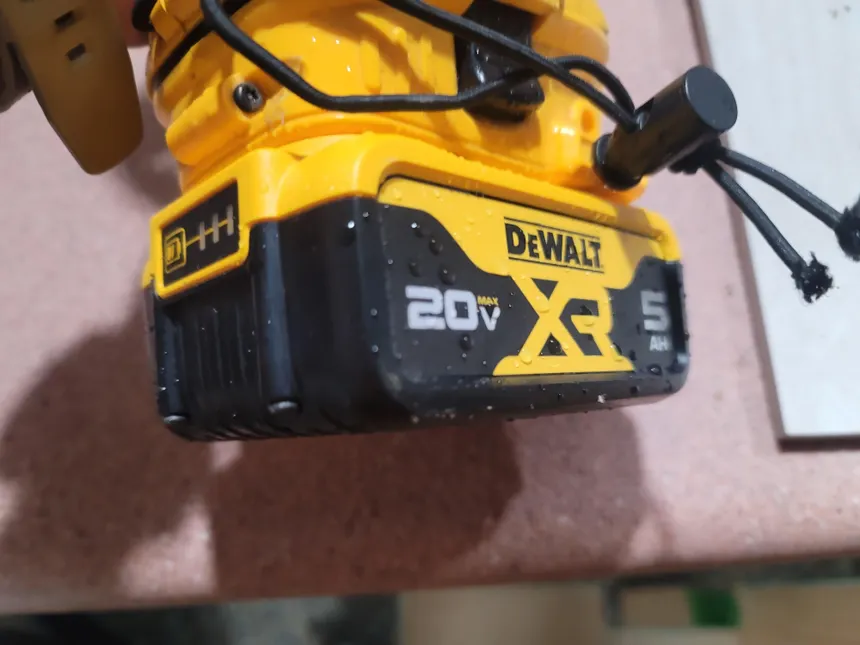
The DCF850B is sold as the tool-only configuration, while DeWalt also offers kit variants such as the DCF850E1 and DCF850P1 with batteries, chargers, and bags. That makes the bare tool particularly attractive for anyone who already owns compatible 20V MAX batteries.
Battery selection matters with a tool this compact. A compact pack preserves the DCF850’s small, agile character, while a larger-capacity battery increases runtime at the expense of weight and bulk. New DeWalt buyers should compare the total cost of a kit against purchasing the bare tool, battery, and charger separately.
DCF850 vs DeWalt DCF845
The DCF850 and DCF845 serve slightly different priorities within the DeWalt lineup. The DCF850 belongs to the ATOMIC Compact Series and makes its unusually short body the central selling point. The DCF845 is an XR impact driver and is a better comparison for buyers who prioritize the traditional XR positioning over minimum head length.
For cabinetry, installation, remodeling, and other confined work, the DCF850’s compactness is difficult to ignore. If tight-space access is not especially important, compare current pricing and specifications across DeWalt’s impact-driver lineup before deciding. For a closer look at the XR alternative, read our DeWalt DCF845 review.
DCF850 vs DeWalt DCF860
The DCF850 prioritizes compact access; the DCF860 offers higher manufacturer-rated torque and different lighting. Compare the features against your actual jobs and current battery ownership. These specifications are not a Pelstro head-to-head test.
Read our full DCF850 vs DCF860 buying comparison for the differences, regional kit choices and upgrade decision.
DCF850 vs Milwaukee 2953-20
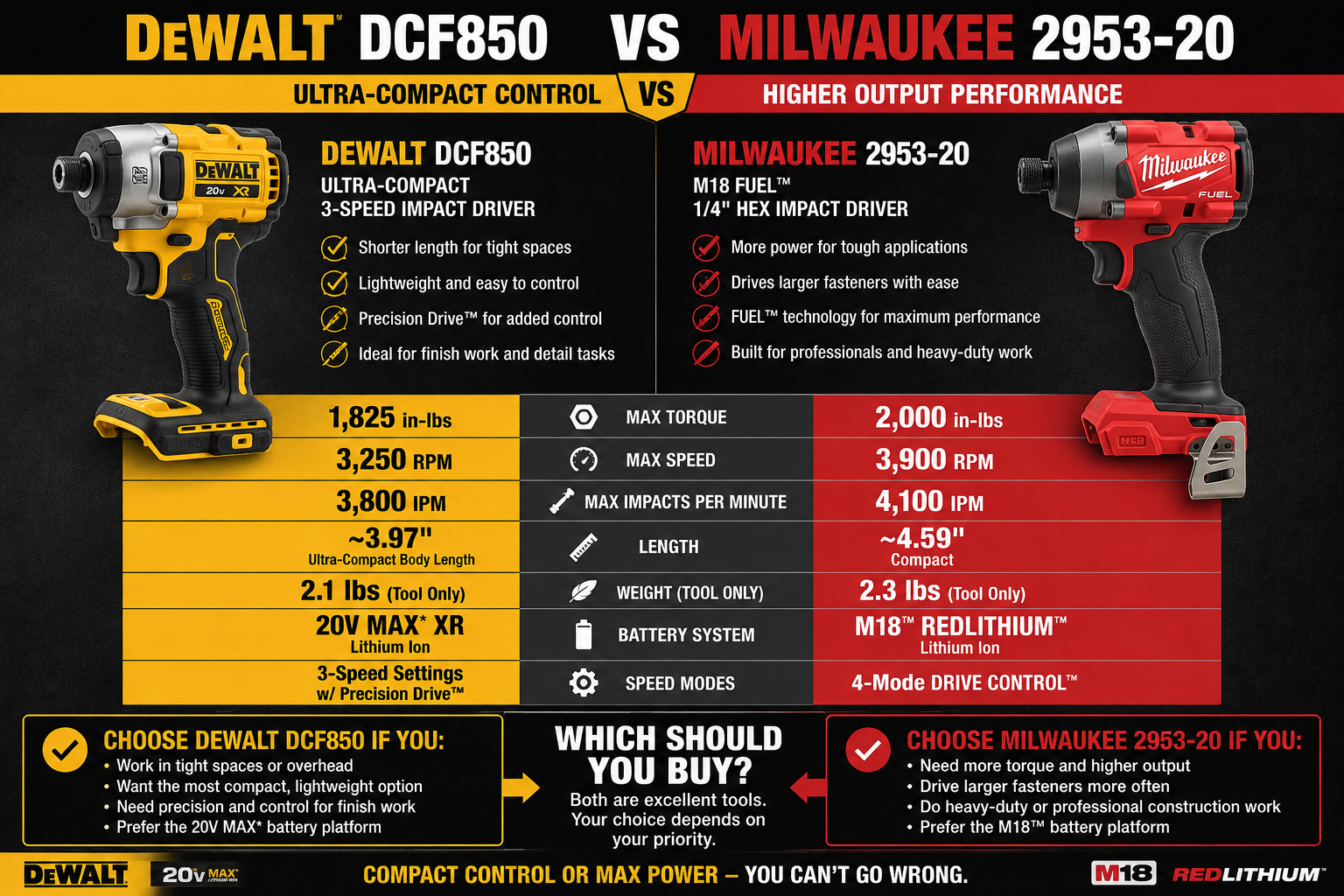
Milwaukee’s 2953-20 M18 FUEL is a natural cross-brand competitor. Milwaukee emphasizes higher headline output, while the DCF850’s standout advantage is its extremely short housing. Both sit in mature battery ecosystems, so existing battery ownership should heavily influence the decision.
If you already own DeWalt 20V MAX batteries and compactness is important, the DCF850 is the logical fit. Existing M18 owners who prioritize stronger rated performance have little reason to change platforms. See our Milwaukee 2953-20 review for the full breakdown.
Who Should Buy the DeWalt DCF850?
The strongest buyer is an existing DeWalt 20V MAX owner who regularly works in confined spaces. Cabinet installers, remodelers, electricians, HVAC installers, maintenance users, and serious DIYers can all benefit from getting a capable impact mechanism into a body this short.
It also makes sense for anyone who simply dislikes oversized cordless tools. The DCF850 keeps the familiar 20V MAX platform while shrinking the portion of the tool that most often gets in the way.
Before choosing for a restricted opening, use our compact impact-driver clearance checklist. It accounts for the projecting bit, battery and hand clearance as well as tool-head length.
Who Should Skip It?
Skip the DCF850 if your primary goal is owning DeWalt’s highest-output impact driver. DeWalt’s current lineup includes XR models aimed more directly at maximum fastening performance.
You should also consider alternatives if sophisticated automatic fastening modes are a priority. The DCF850’s three-speed system is simple and effective, but it does not try to match the application-specific control systems found on some competing premium models.
Is the DeWalt DCF850 Worth It in 2026?
Yes. The DCF850 still has a clear reason to exist in DeWalt’s current lineup: it combines the company’s widely used 20V MAX battery system with an impact-driver head measuring under four inches. Newer and more powerful models do not erase that advantage because maximum torque and minimum size solve different problems.
For buyers who work in tight spaces, the DCF850 remains one of the more distinctive choices in the category. If compactness is secondary and you mainly want the strongest specifications available, compare it with DeWalt’s newer XR models before buying.
For alternatives across brands, see our Best Impact Drivers guide.
Frequently Asked Questions
How much torque does the DeWalt DCF850 have?
DeWalt rates the DCF850 at up to 1,825 in-lbs of maximum torque.
How fast is the DCF850?
DeWalt specifies a maximum speed of 3,250 RPM.
How short is the DeWalt DCF850?
DeWalt describes the impact driver as measuring less than four inches from front to back.
Does the DCF850 have multiple speeds?
Yes. It uses a three-speed selector along with a variable-speed trigger.
Does the DCF850B come with a battery?
No. DCF850B is the tool-only version. DeWalt also sells kit configurations that include a battery and charger.
What batteries work with the DCF850?
The DCF850 is part of DeWalt’s 20V MAX cordless platform. Use compatible DeWalt battery packs and chargers according to the manufacturer’s current documentation.
The Pelstro Bottom Line
The DeWalt DCF850 is a strong compact-access option for the buyer described here. This qualitative verdict is based on documented design and specifications, not a measured performance score. Its 1,825 in-lbs of rated torque, three-speed control, three-LED work light, brushless motor, and 20V MAX compatibility are all useful, but the real reason to buy it is the under-four-inch head. If compact access matters, the DCF850 remains an excellent choice; if outright output matters more, compare DeWalt’s current XR alternatives.
Before buying, compare it with the current market in our Best Impact Drivers guide.
Pingback: DeWalt DCF860 Review (2026): Is It Worth It?
Pingback: DeWalt DCF845 Review (2026): Is It Worth It?
Pingback: How to Use an Impact Driver: Beginner’s Guide | Pelstro