
PELSTRO TOOL REVIEW
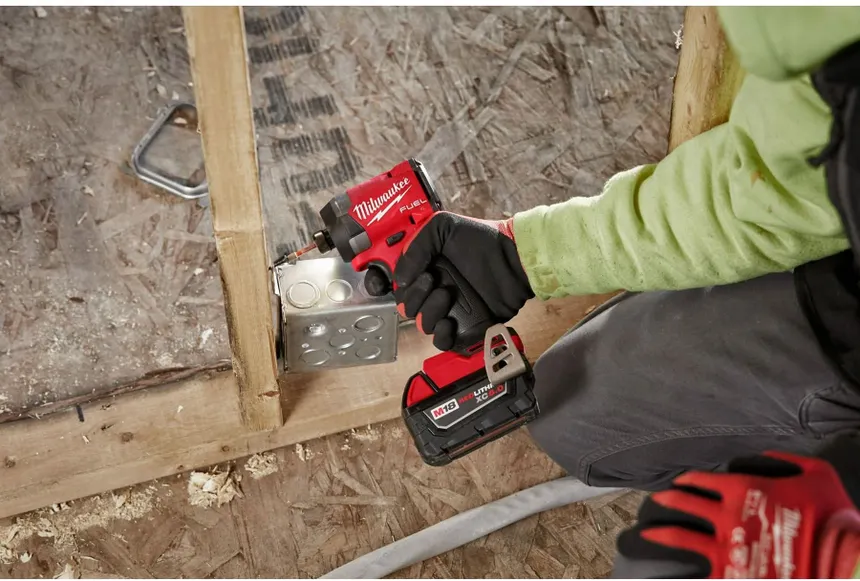
This Milwaukee 2953-20 review looks at a compact 18V impact driver built around high fastening output, fast driving speed, and unusually good control for demanding work. Milwaukee rates it at up to 2,000 in-lbs of torque and 3,900 RPM while keeping the tool body just 4.47 inches long.
Frequent fastening, construction, renovation, deck work, installers, and existing M18 users.
You only drive occasional household screws or do not need premium impact-driver performance.
Research-based verdict
See buyer fit and tradeoffs below; no measured score
Review methodology: This is a research-based Pelstro review, not a claim of hands-on laboratory testing. We evaluate manufacturer documentation, published specifications, platform compatibility, design, application fit, and how the tool compares with relevant alternatives.
Milwaukee 2953-20 Review: Specs at a Glance
| Tool type | Cordless 1/4-inch hex impact driver |
| Platform | Milwaukee M18 |
| Motor | POWERSTATE brushless |
| Maximum torque | 2,000 in-lbs |
| Maximum speed | 3,900 RPM |
| Impact rate | Up to 4,400 IPM |
| Drive control | 4 modes |
| Length | 4.47 inches |
| Weight | 2.2 lb bare tool |
| Work light | Tri-LED |
What We Like
- Excellent power-to-size ratio. Milwaukee combines 2,000 in-lbs of rated torque with a 4.47-inch tool body.
- Fast driving speed. Up to 3,900 RPM makes the 2953-20 well suited to repetitive fastening.
- Four-mode drive control. Multiple modes make the output easier to tailor to different fasteners and materials.
- Self-tapping screw mode. The dedicated mode is designed to reduce walking, overdriving, breaking, and stripping.
- Good trigger control. Smooth acceleration helps when starting smaller fasteners where full output would be excessive.
- Tri-LED lighting. Three LEDs illuminate the work area while helping reduce shadows around the bit.
- M18 compatibility. Existing Milwaukee M18 users can add the bare tool without starting another battery platform.
What We Don’t Like
- More tool than light-duty users need. Occasional furniture assembly and small household screws do not justify this level of performance.
- Bare tool means extra cost for new M18 users. The 2953-20 itself does not include a battery or charger.
- High output still requires restraint. Smaller screws and delicate materials benefit from the lower modes and careful trigger control.
- Premium positioning. Buyers who do not need the M18 FUEL performance level can find capable impact drivers for less.
Fastening Performance
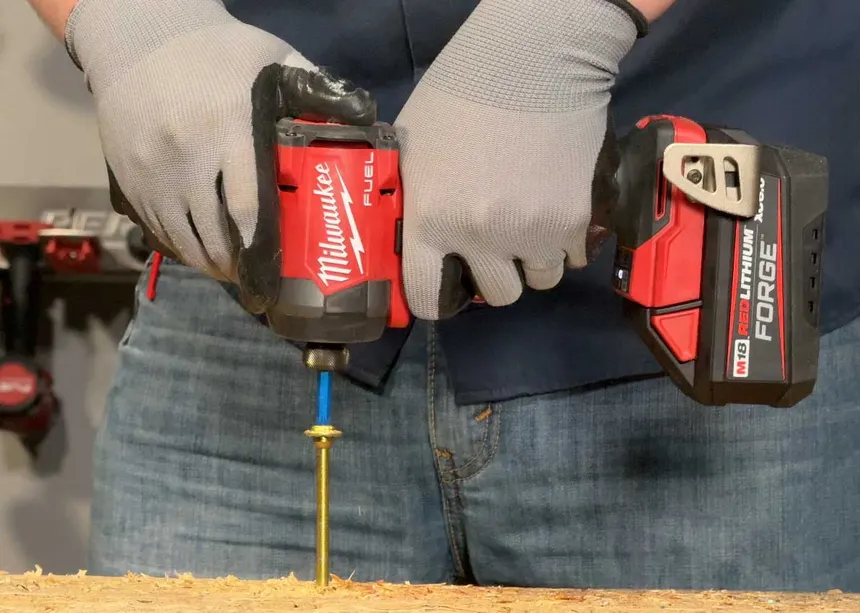
The headline specification is 2,000 in-lbs of torque, backed by up to 3,900 RPM and 4,400 impacts per minute. Those figures place the 2953-20 firmly in the high-performance end of mainstream cordless impact drivers. You can verify the core specifications and features on Milwaukee’s official 2953-20 product page.
The practical advantage is not simply that it can hit hard. An impact driver earns its keep through repeated fastening: deck screws, structural screws, framing hardware, cabinet installation, and similar work where a conventional drill/driver can feel slower or more cumbersome.
If you are deciding whether an impact driver is the right tool at all, see our cordless drill vs impact driver comparison.
Four-Mode Drive Control
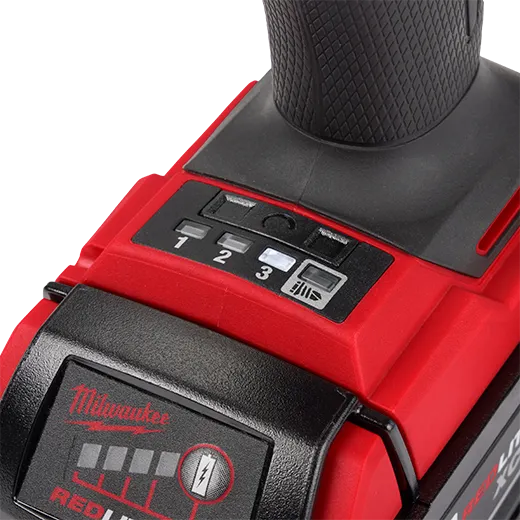
The four-mode drive control is one of the 2953-20’s most useful features because maximum power is not appropriate for every screw. Lower-output settings help with smaller fasteners and more delicate work, while the upper range is available when speed and fastening force matter.
The dedicated self-tapping screw mode is designed specifically to improve control when starting and seating self-tapping fasteners. Milwaukee says the mode helps reduce walking at startup as well as overdriving, breaking, and stripping once the screw seats.
Size, Handling, and Ergonomics
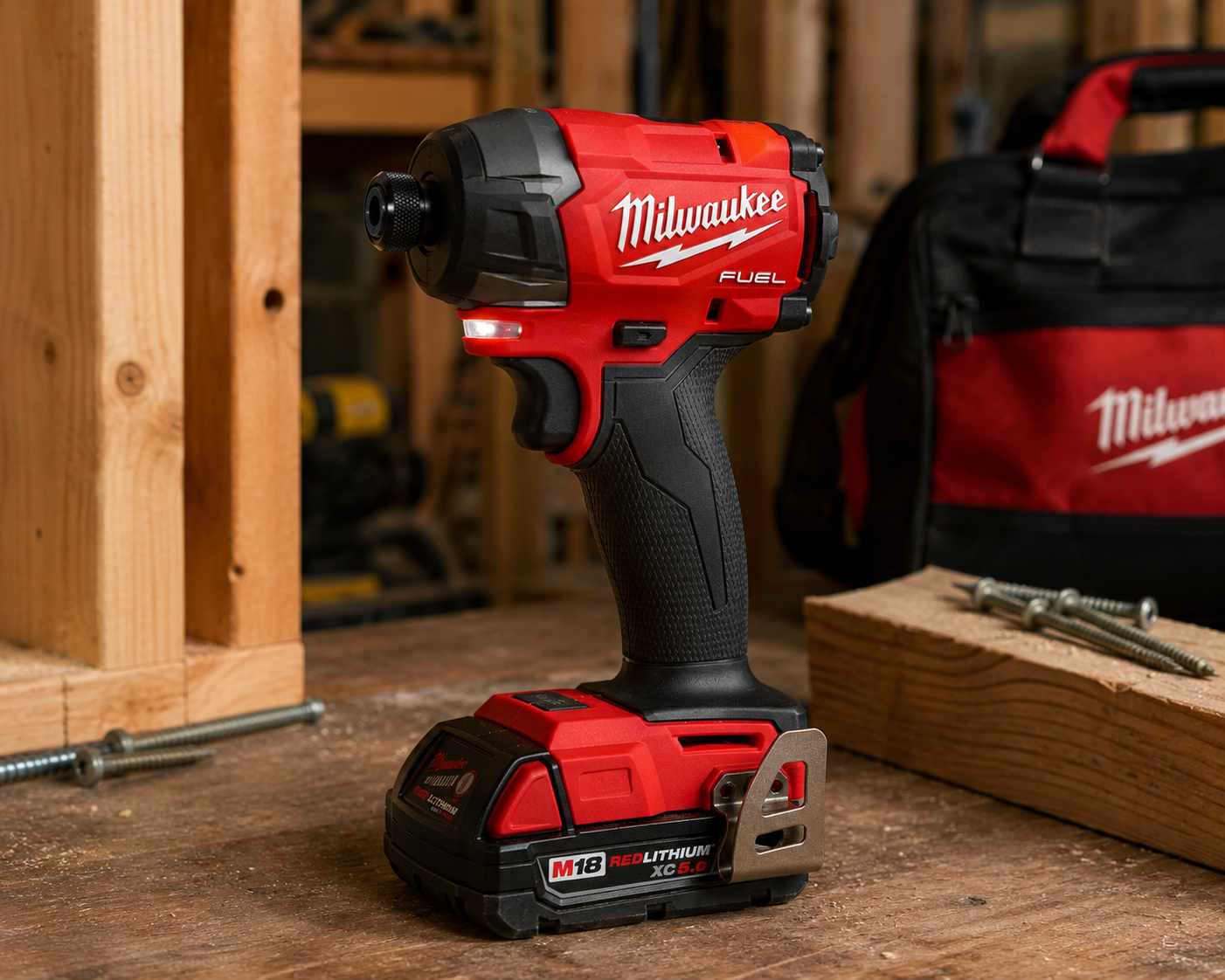
At 4.47 inches long, the 2953-20 is notably short for an 18V impact driver with this level of output. That compact head matters around framing, cabinets, brackets, mechanical assemblies, and other areas where a longer tool body limits access.
Milwaukee lists the bare-tool weight at 2.2 pounds. Battery choice changes the finished balance considerably: a compact M18 pack keeps the tool nimble, while a larger pack can make sense when runtime is more important than minimum weight.
1/4-Inch Hex Chuck and Trigger Control
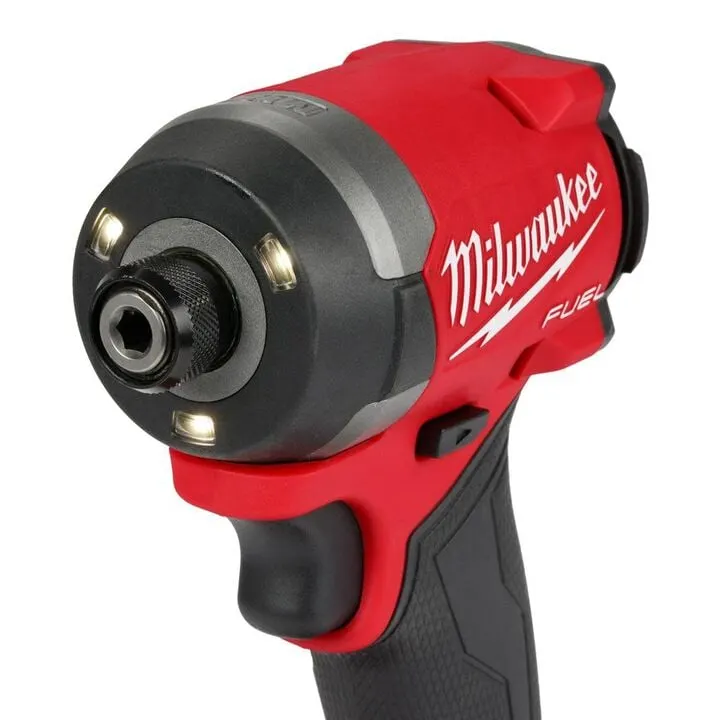
The standard 1/4-inch hex interface supports impact-rated driver bits, nut setters, socket adapters, and other common fastening accessories. Milwaukee also provides single-handed bit insertion, which makes bit changes quicker during repetitive work.
Trigger behavior deserves attention on a powerful impact driver. Milwaukee specifically emphasizes smooth acceleration so users can begin smaller fasteners without immediately applying the tool’s full output. New to this tool type? Our How to Use an Impact Driver guide covers the fundamentals.
Tri-LED Work Light
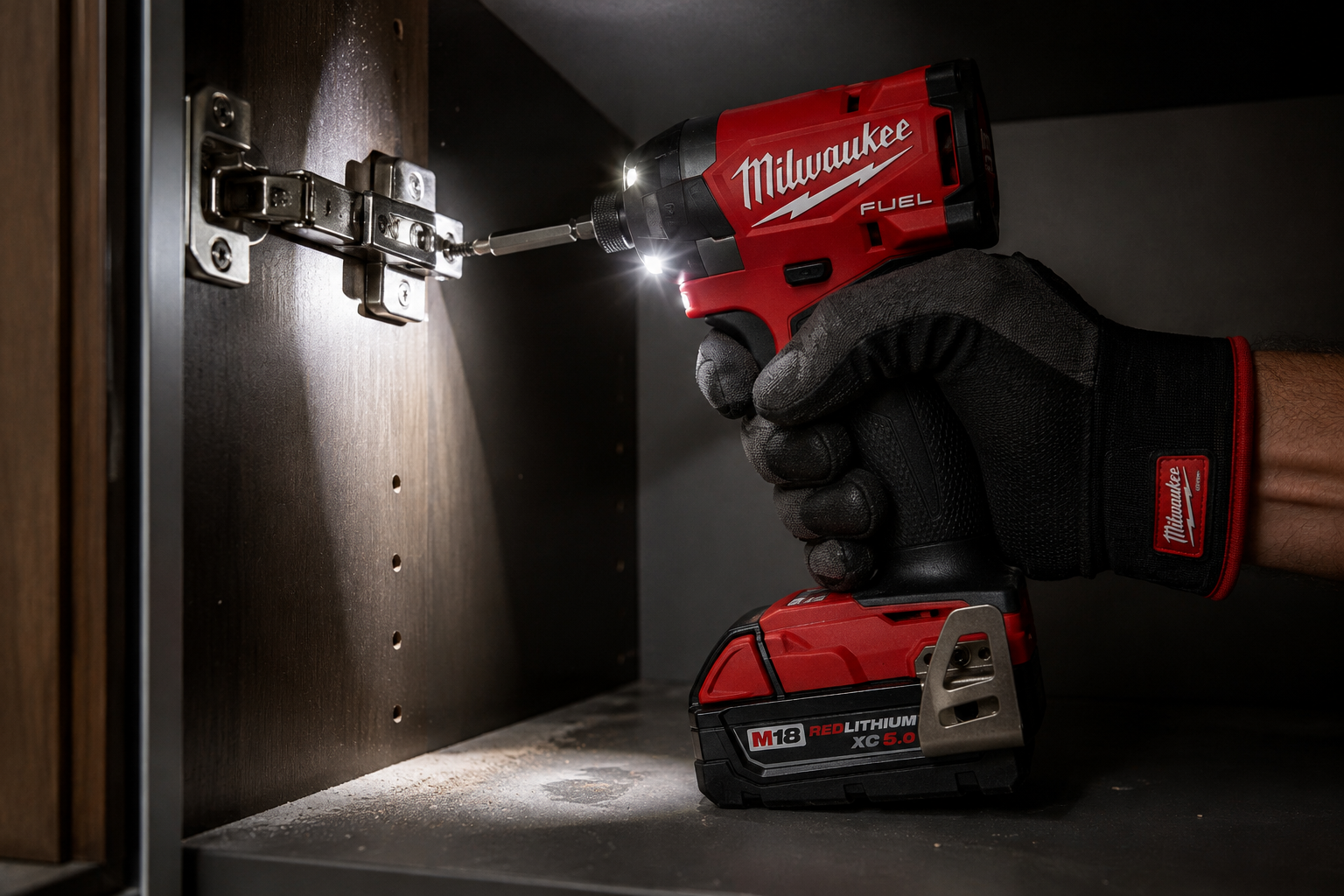
The 2953-20 uses three LEDs around the front of the tool rather than relying on a single light positioned below the chuck. The arrangement helps illuminate the fastener from multiple directions and reduces the shadow created by the bit and tool body.
It is particularly useful inside cabinets, under worktops, between framing members, and in unfinished spaces where ambient lighting is poor.
M18 Battery Platform
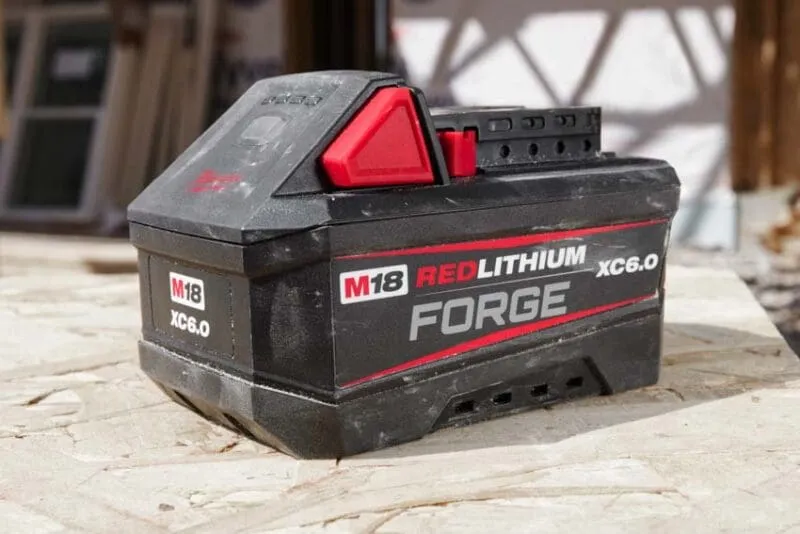
The 2953-20 belongs to Milwaukee’s M18 cordless platform and is compatible with M18 batteries and chargers. That is a major buying consideration: for an existing M18 owner, the bare tool can slot directly into the batteries already on hand.
First-time Milwaukee buyers should compare the total cost of a kit against the bare tool plus separate batteries and charger rather than evaluating the 2953-20 price in isolation. If you’re still comparing cordless platforms and models, our Best Impact Drivers guide puts the leading options side by side.
Milwaukee 2953 vs M12 3453
Compare the M12 3453 and M18 2953 by battery system, complete cost and usable clearance. The M12 model is not automatically shorter front to back. Our 3453-20 review explains when it fits an existing M12 setup, while the compact impact-driver buying guide compares access needs across brands.
Milwaukee 2953-20 vs 2853-20
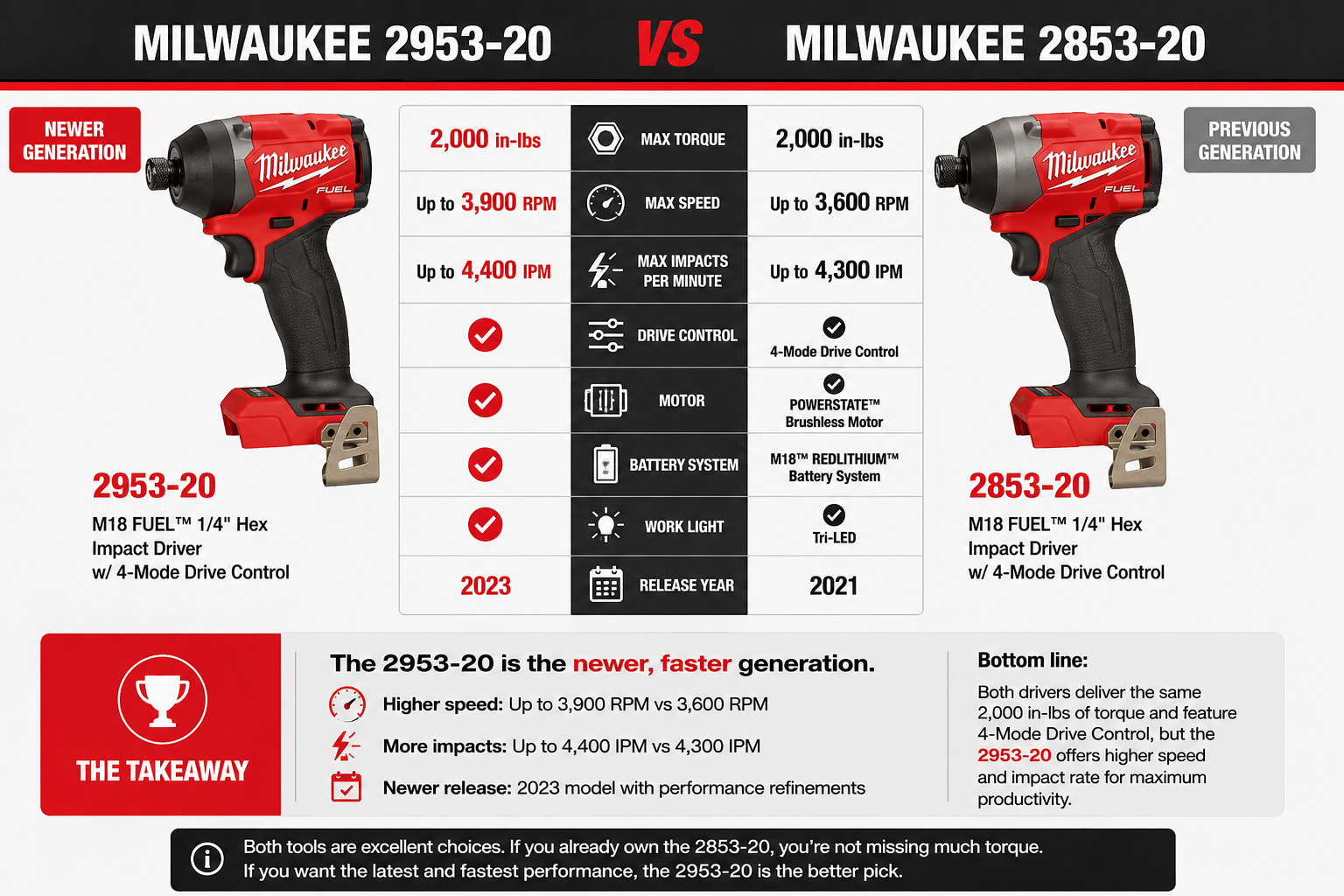
The 2853-20 is the previous-generation M18 FUEL impact driver that Milwaukee now lists as replaced by the 2953-20. Both are rated up to 2,000 in-lbs of torque, but the 2953-20 trims the body from 4.59 inches to 4.47 inches and raises maximum speed while adding the newer trigger-control and Tri-LED design.
If prices are close, the 2953-20 is the more logical purchase. A heavily discounted 2853-20 can still make sense for an M18 user who simply wants strong fastening performance and does not care about the newer refinements.
Milwaukee 2953-20 vs DeWalt DCF845
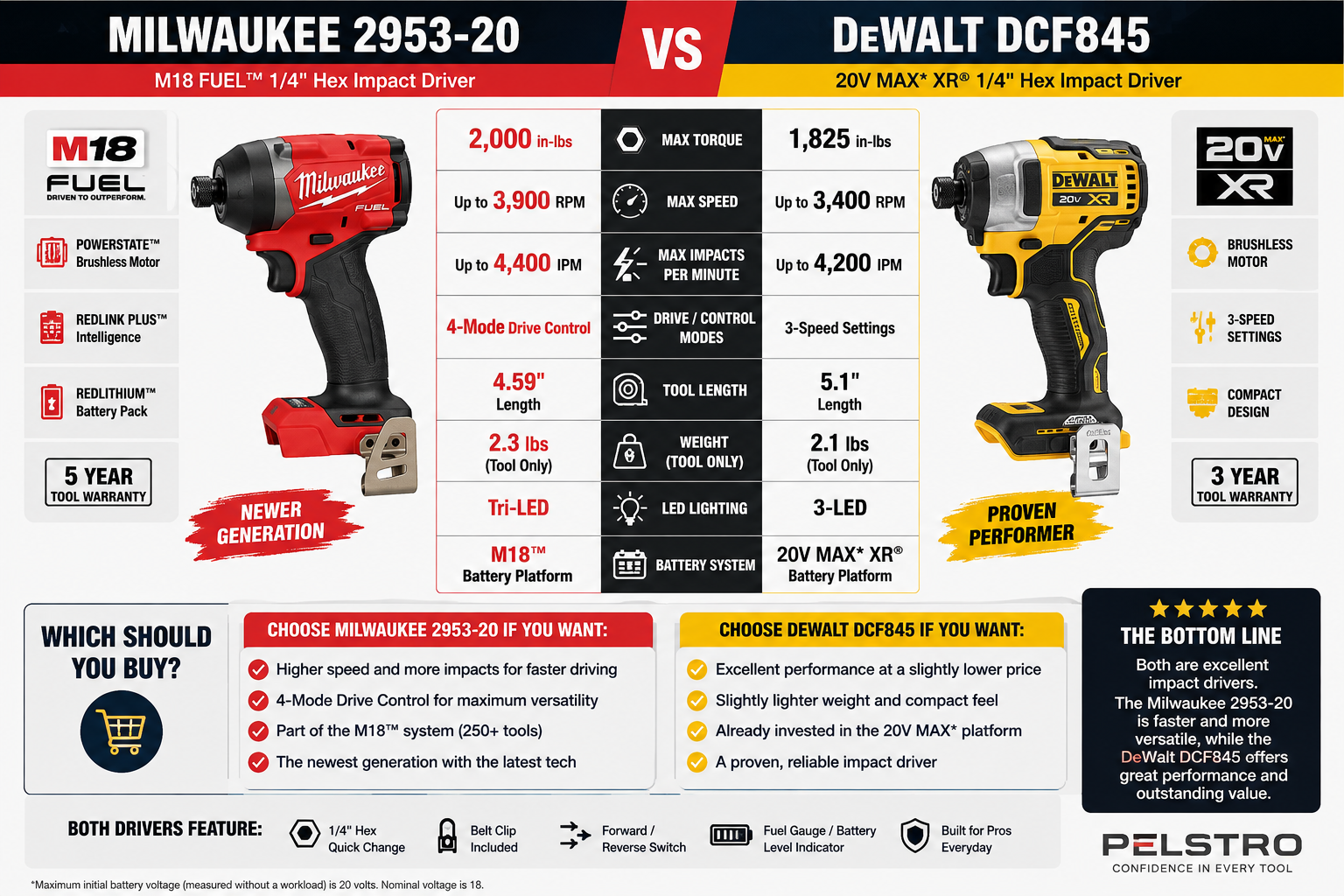
Against the DeWalt DCF845, the Milwaukee 2953-20 emphasizes higher headline output and four-mode control, while the DCF845 remains a strong option for buyers already invested in DeWalt’s 20V MAX platform. The better choice largely comes down to the battery ecosystem you already own and how much you value the Milwaukee’s additional performance.
Both are excellent general-purpose impact drivers, so switching battery platforms solely for this comparison rarely makes financial sense. For the DeWalt side in detail, read our DeWalt DCF845 review.
Milwaukee 2953-20 vs 2957-20 ONE-KEY
The 2957-20 is the closely related ONE-KEY version. Core fastening specifications remain similar, but ONE-KEY adds digital customization, tracking, management, saved task settings, and tool lockout functionality.
Choose the standard 2953-20 if you simply want the performance of the M18 FUEL impact driver. The 2957-20 becomes more compelling for professionals, fleets, or users who specifically value connected-tool management.
Who Should Buy the Milwaukee 2953-20?
The 2953-20 makes the most sense for serious DIYers, remodelers, carpenters, installers, contractors, and existing Milwaukee M18 users who regularly drive fasteners. Its combination of output, compact dimensions, drive modes, and battery compatibility makes it particularly well suited to frequent use.
It is also a strong choice if you want one premium impact driver that can handle both controlled smaller-fastener work and substantially more demanding fastening without changing tools.
Who Should Skip It?
Skip it if your fastening needs are limited to occasional furniture assembly, small household repairs, or a few screws at a time. A less expensive compact impact driver—or even a drill/driver you already own—may be enough.
It also makes less financial sense if you are not invested in M18 and another battery platform already covers your cordless tools well. If you’re choosing between Milwaukee and DeWalt rather than just individual models, our DeWalt and Milwaukee platform differences can help you weigh the two ecosystems.
Is the Milwaukee 2953-20 Worth It in 2026?
Yes, particularly for buyers who will actually use its performance. The 2953-20 combines 2,000 in-lbs of rated torque, up to 3,900 RPM, four-mode drive control, a short 4.47-inch body, Tri-LED lighting, and the broad M18 platform in a well-rounded package.
Its biggest strength is balance. It is powerful without abandoning control, compact without becoming a lower-output specialty tool, and versatile enough to cover most impact-driver jobs a serious DIYer or professional is likely to encounter.
For alternatives across brands and price points, see our Best Impact Drivers guide.
Frequently Asked Questions
How much torque does the Milwaukee 2953-20 have?
Milwaukee rates the 2953-20 at up to 2,000 in-lbs of torque.
How fast is the Milwaukee 2953-20?
Its maximum no-load speed is rated at 3,900 RPM, with an impact rate of up to 4,400 IPM.
Does the 2953-20 include a battery?
No. The 2953-20 is the bare-tool configuration. Milwaukee also sells kit configurations that include batteries and a charger.
What batteries work with the 2953-20?
It is part of Milwaukee’s M18 platform and is compatible with M18 batteries and chargers.
What is the difference between the 2953-20 and 2957-20?
The 2957-20 adds Milwaukee ONE-KEY connected features such as customization, tracking, management, saved task settings, and lockout functionality.
Is the Milwaukee 2953-20 good for beginners?
It can be, because the drive modes and controllable trigger help tame its output. However, beginners doing only occasional light work may not need a premium M18 FUEL impact driver.
The Pelstro Bottom Line
Pelstro’s recommendation is qualitative and research-based; no measured performance score is assigned. Its standout quality is the combination of 2,000 in-lbs of torque, fast 3,900-RPM output, four-mode control, and a compact 4.47-inch body. It is best suited to serious DIYers, tradespeople, and M18 users who want a premium impact driver that balances speed, power, and control.
Before buying, compare it with the current market in our Best Impact Drivers guide.
Pingback: Makita XDT19Z Review: Is It Worth It in 2026? - Pelstro
Pingback: DeWalt DCF860 Review (2026): Is It Worth It?
Pingback: DeWalt DCF850 Review (2026): Is It Worth It?
Pingback: Bosch GDR18V-1950CN Review: Is It Worth It in 2026? - Pelstro