
PELSTRO TOOL REVIEW
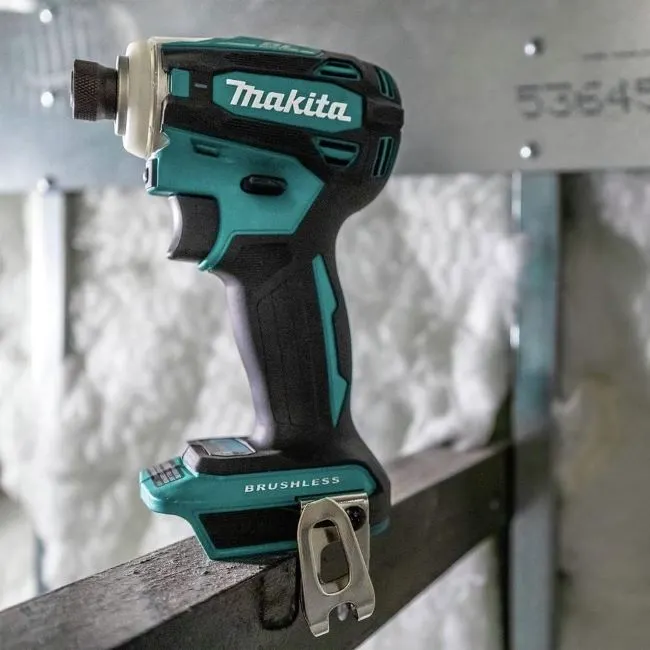
The Makita XDT19Z is a compact 18V LXT brushless impact driver built around control rather than headline torque alone. It combines four speed settings, Quick-Shift Mode, Assist Mode, two Tightening Modes, reverse auto-stop, and a short 4-1/2-inch body.
Existing LXT users, installers, cabinetry, metal fastening, renovation, and users who value precise electronic control.
The newer XDT20Z costs about the same, or maximum headline torque is your main priority.
Research-based verdict
See buyer fit and tradeoffs below; no measured score
Review methodology: This is a research-based Pelstro review, not a claim of hands-on laboratory testing. We evaluate official manufacturer documentation, published specifications, platform compatibility, design, application fit, and the product’s position against current alternatives.
Makita XDT19Z at a Glance
| Tool type | Cordless 1/4-inch hex impact driver |
| Platform | Makita 18V LXT |
| Motor | Brushless |
| Maximum torque | 1,590 in-lbs |
| Maximum speed | 3,600 RPM |
| Maximum impact rate | 3,800 IPM |
| Power selection | 4 speeds |
| Overall length | 4-1/2 inches |
| Status in 2026 | Discontinued; replaced by XDT20Z |
What We Like
- Excellent fastening control. Four power settings make it easier to match output to the fastener instead of relying only on trigger discipline.
- Useful automatic modes. Assist Mode and two Tightening Modes target common problems such as cam-out, cross-threading, stripped material, and damaged fasteners.
- Compact body. At only 4-1/2 inches long, the XDT19Z works well in cabinetry, framing bays, and other confined areas.
- Quick-Shift Mode. Electronic control can reduce speed and impact as the screw seats, improving precision.
- Reverse auto-stop. The tool can stop rotation and impact after a fastener has been loosened adequately.
- LXT compatibility. Existing Makita 18V LXT owners can use batteries they already own.
What We Don’t Like
- It is officially discontinued. The XDT20Z is Makita’s replacement, which changes the value equation in 2026.
- Headline torque is not class-leading. Its 1,590 in-lbs rating trails some competing premium impact drivers on paper.
- The control system has a learning curve. Users who simply want low, medium, and high may find the additional modes unnecessary.
- Bare-tool buyers need batteries separately. New Makita users must include the cost of an LXT battery and charger.
Makita XDT19Z Review: Fastening Performance
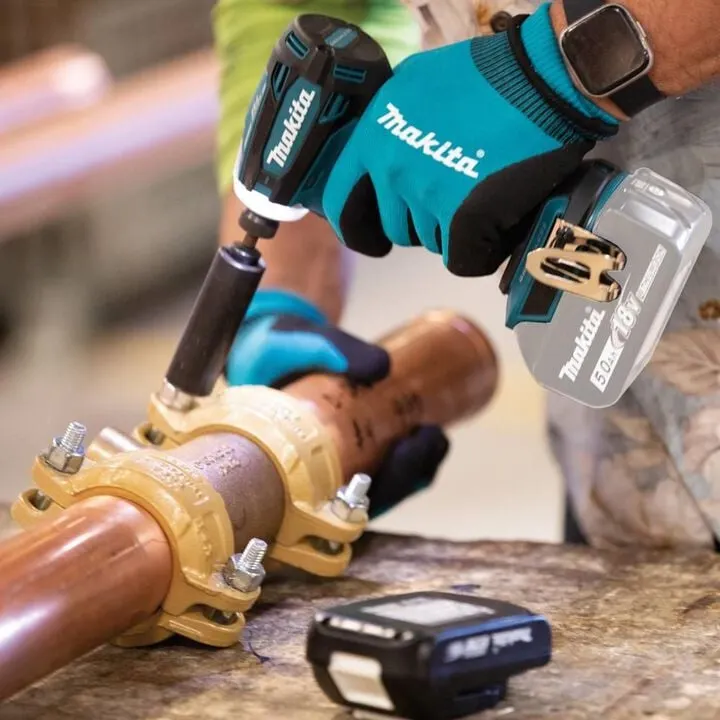
In this Makita XDT19Z review, the specifications reinforce the tool’s emphasis on controlled fastening. Makita rates the XDT19Z at 1,590 in-lbs of maximum torque, up to 3,600 RPM, and up to 3,800 impacts per minute. The four standard speed ranges top out at 1,100, 2,100, 3,200, and 3,600 RPM, giving the tool a broad usable range. Makita’s official XDT19 documentation also confirms Quick-Shift Mode, Assist Mode, two Tightening Modes, reverse auto-stop, and the 4-1/2-inch overall length.
The important distinction is that Makita did not design the XDT19Z simply to win a torque-number contest. Its strength is combining useful output with unusually granular electronic control. For repetitive fastening, cabinetry, installation work, self-drilling screws, and general construction, that can matter more than a larger maximum-torque figure that you rarely need.
If you are still deciding between tool types, see our cordless drill vs impact driver comparison.
Four-Speed Power Selection
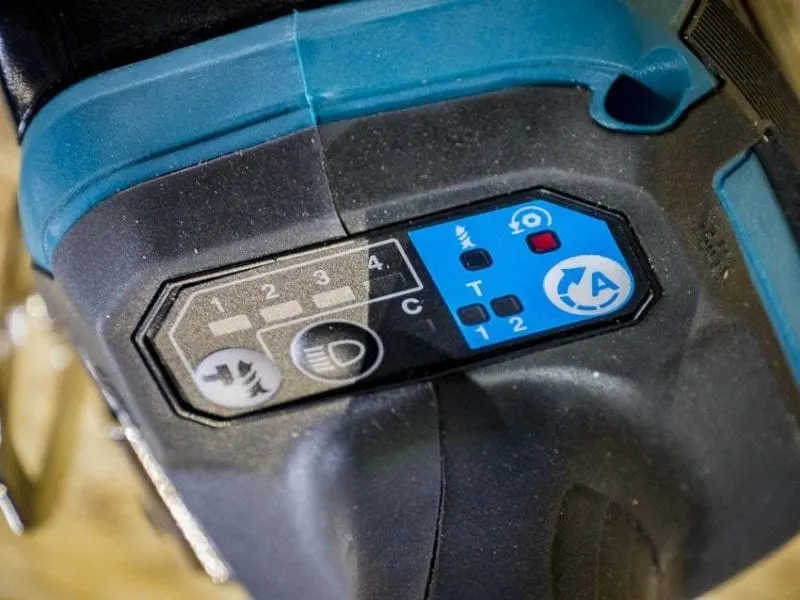
The XDT19Z provides four standard impact-power settings. The lowest range is useful when smaller fasteners or delicate materials demand restraint, while the upper settings progressively increase speed and impact rate for heavier fastening.
Makita also placed an additional one-touch four-speed selector below the chuck. That allows speed changes without relying exclusively on controls at the base of the tool, a small convenience that becomes more valuable during repetitive work.
Quick-Shift, Assist, and Tightening Modes
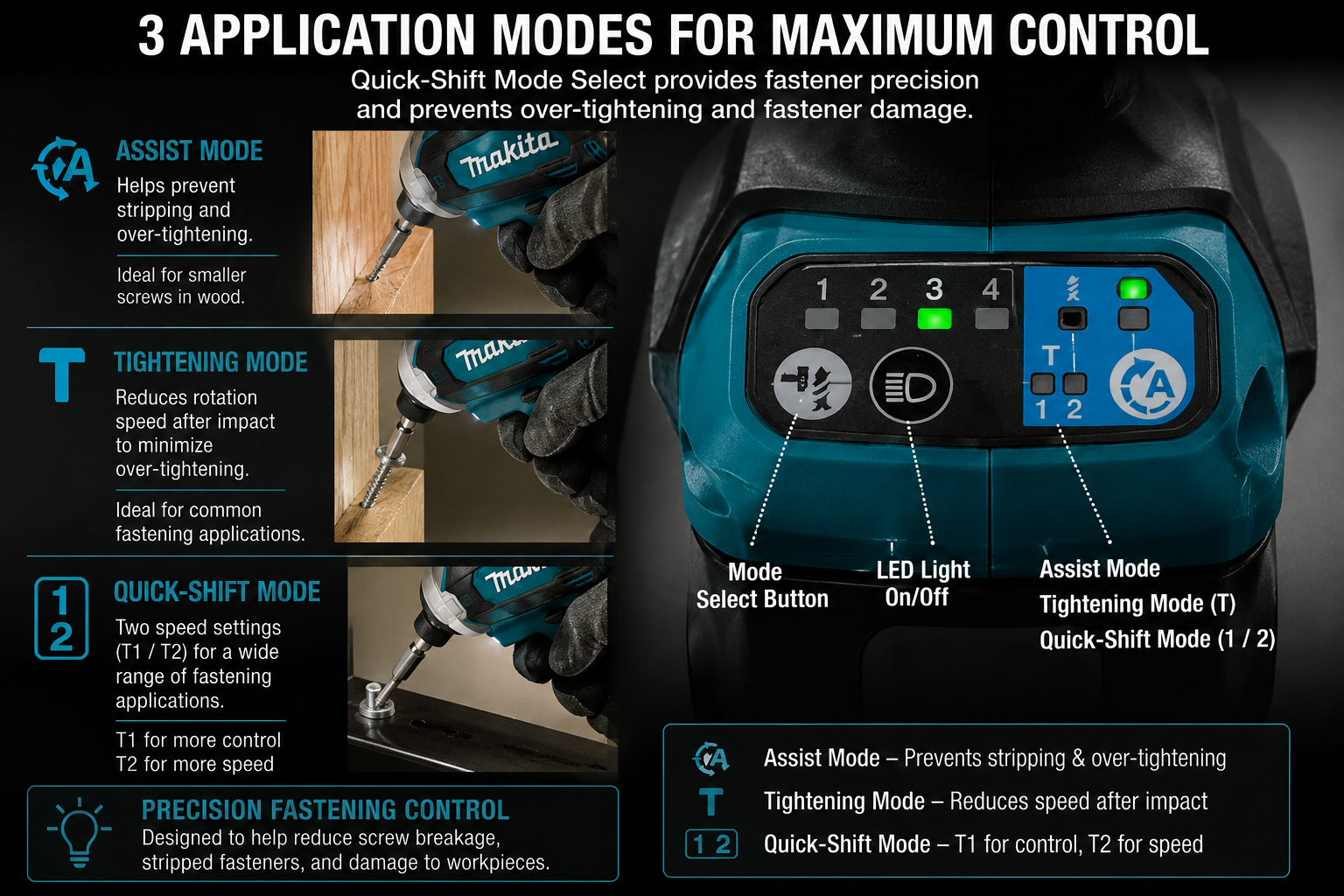
Quick-Shift Mode uses the brushless motor’s electronic controls to adjust the balance of speed and torque during fastening. Makita designed it to reduce rotation and impact speed as a fastener seats, helping limit stripped threads, broken screws, and damage to the workpiece.
Assist Mode starts a screw at low speed until tightening begins, specifically targeting cam-out and cross-threading. The two Tightening Modes are intended for self-drilling screws in thinner and thicker metal. Together, these modes make the XDT19Z particularly interesting for users who regularly move between wood fastening, sheet metal, and installation work.
Size, Handling, and Ergonomics
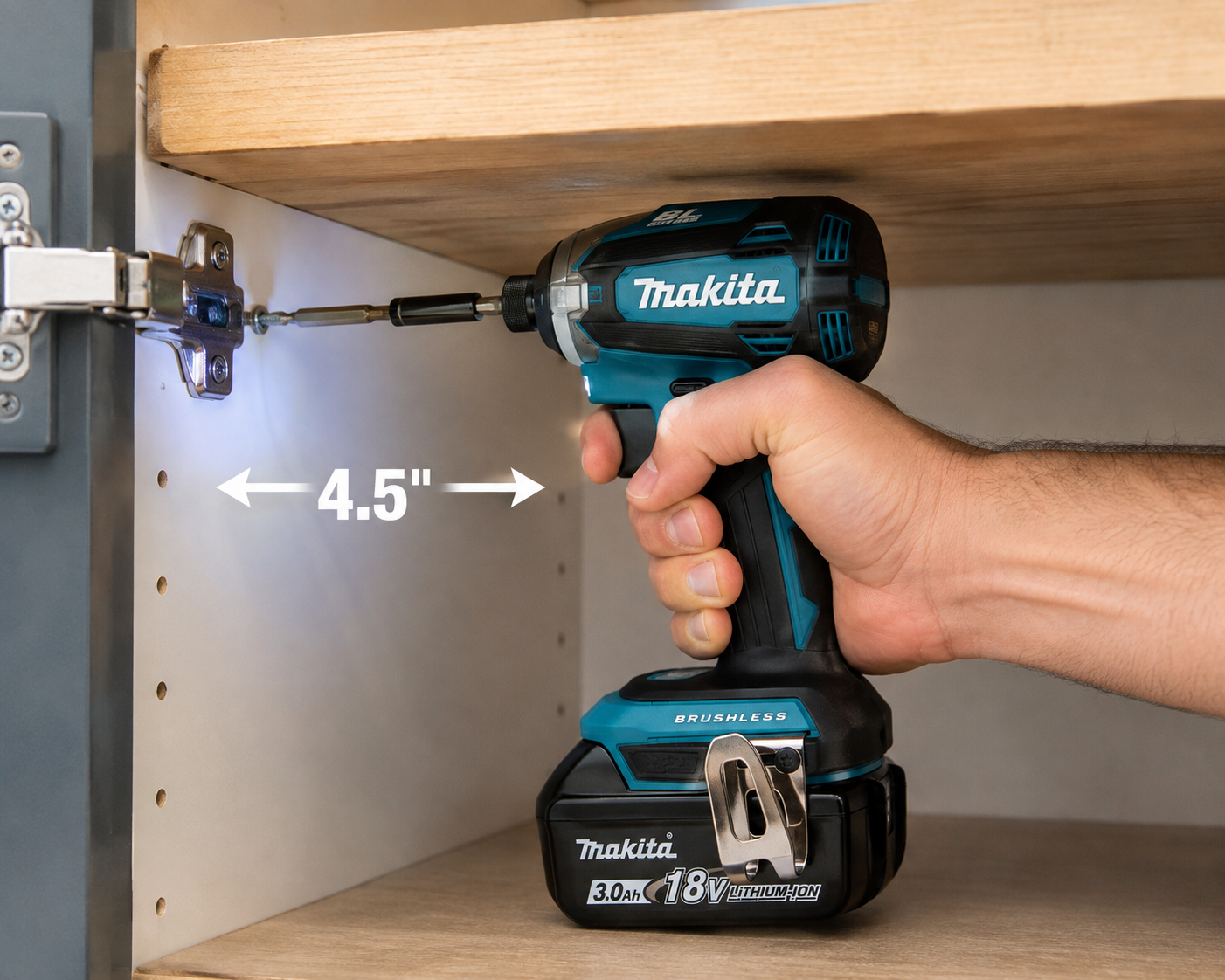
At 4-1/2 inches long, the XDT19Z is impressively compact for a full 18V impact driver. Makita lists the operating weight range at roughly 2.6 to 3.3 pounds depending on the battery configuration.
The short head is useful around cabinets, brackets, framing, and mechanical assemblies where a longer driver becomes awkward. Battery choice still affects the finished feel considerably: a compact LXT pack favors maneuverability, while a larger pack favors runtime.
1/4-Inch Hex Chuck and Bit Control
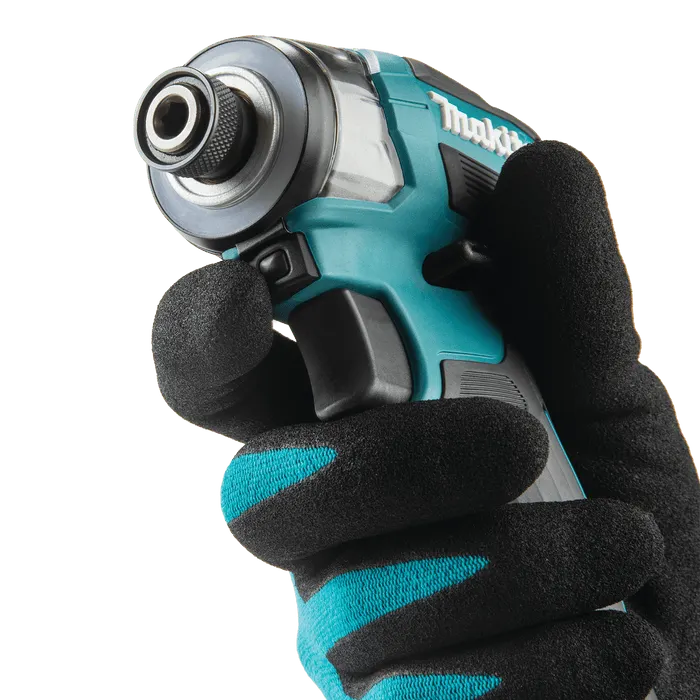
The XDT19Z uses the standard 1/4-inch hex interface expected from an impact driver. Makita specifically designed the chuck with dual ball bearings to reduce bit wobble and runout, a detail that fits the tool’s broader emphasis on controlled fastening.
For new impact-driver users, our How to Use an Impact Driver guide covers bit selection, installation, trigger control, and safe fastening technique.
Reverse Rotation Auto-Stop
The reverse auto-stop function is particularly useful during removal work. Once the tool detects that a fastener has loosened adequately, it stops rotation and impact. The goal is to reduce unnecessary spinning and the chance of dropping a loosened nut or bolt.
It is not a substitute for an impact wrench when large automotive or structural fasteners are involved, but it adds another layer of control for appropriate bolts and general removal tasks.
Makita 18V LXT Battery Platform
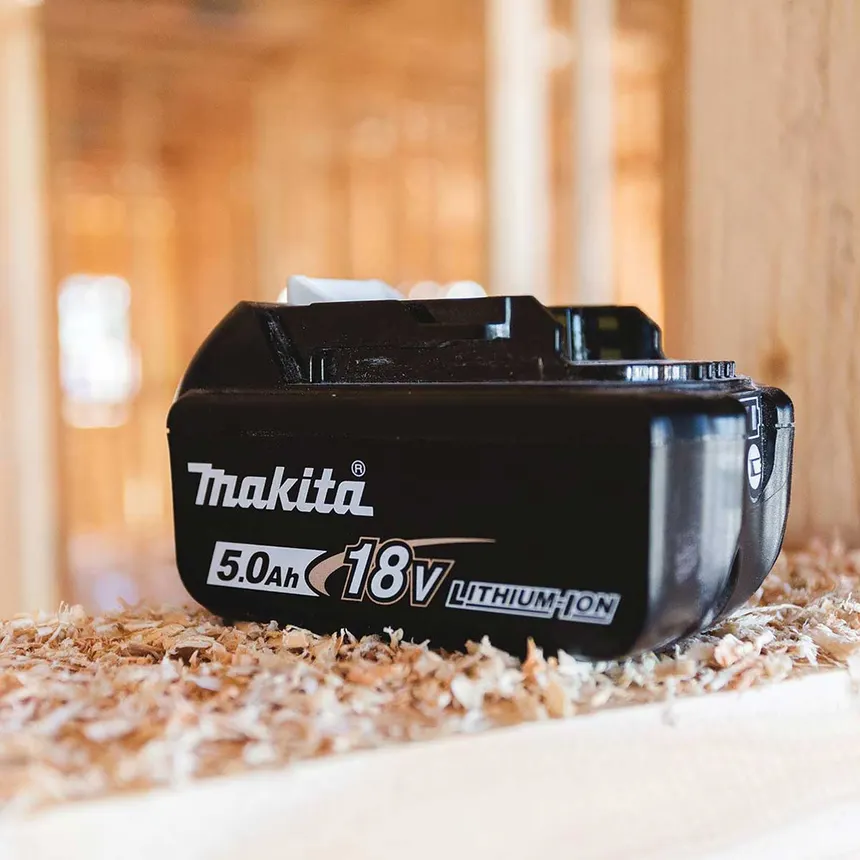
The XDT19Z is the bare-tool version and runs on Makita’s 18V LXT lithium-ion platform. For an existing LXT owner, that is a major reason the tool can still make financial sense: there is no need to buy into another battery ecosystem.
First-time Makita buyers should compare the total system cost. The XDT19 was also sold in kit configurations with batteries and a rapid charger, so remaining kit inventory may occasionally offer better value than assembling a system around the bare tool. If you’re comparing battery ecosystems before committing, our Makita and DeWalt platform differences can help clarify the tradeoffs.
Makita XDT19Z vs XDT20Z
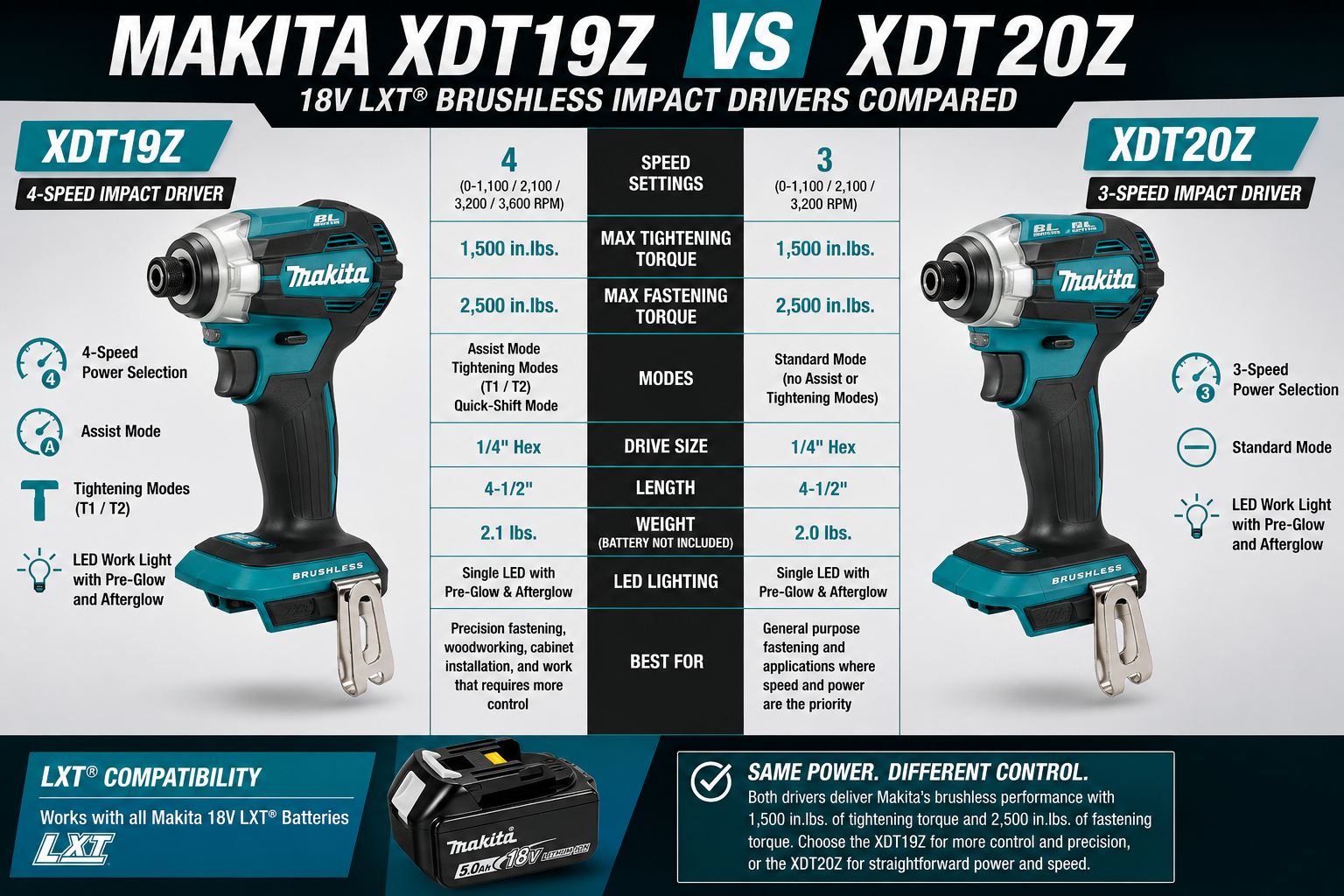
This comparison is essential in 2026 because Makita now identifies the XDT19Z as discontinued and lists the XDT20Z as its replacement. Interestingly, the headline specifications remain very similar: the XDT20Z is also rated at 1,590 in-lbs, 3,600 RPM, 3,800 IPM, and 4-1/2 inches in length.
The newer XDT20 reorganizes the controls, placing power and fastening controls at the rear of the handle for easier access. Because the newer model exists, the XDT19Z should now be judged primarily on price. If the older tool is substantially cheaper, it remains compelling. If pricing is close, buying the current XDT20Z is the more sensible long-term choice.
Makita XDT19Z vs Milwaukee 2953-20
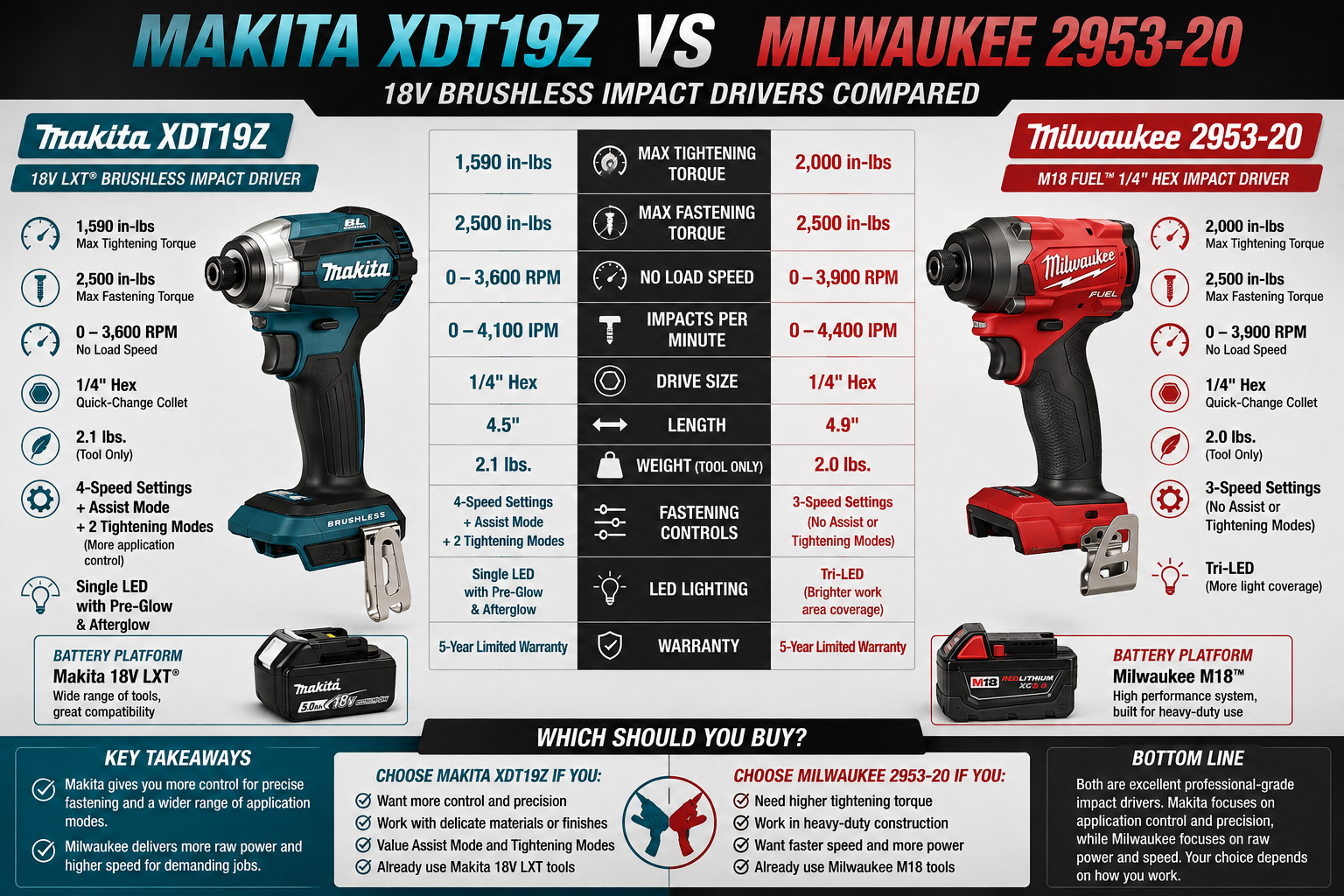
The Milwaukee 2953-20 has the stronger headline specifications, with Milwaukee rating it at 2,000 in-lbs and up to 3,900 RPM. The Makita counters with a more elaborate set of application-specific fastening controls, including Assist Mode, two Tightening Modes, Quick-Shift functionality, and reverse auto-stop.
For most buyers, battery ownership should carry substantial weight. Existing LXT users have little reason to change ecosystems solely for additional rated torque, while existing M18 users will generally find the Milwaukee the easier purchase. See our Milwaukee 2953-20 review for the full breakdown.
Who Should Buy the Makita XDT19Z?
The strongest buyer is an existing Makita LXT user who finds the XDT19Z at a good clearance or remaining-stock price. It is particularly well suited to installers, cabinet work, renovation, metal fastening, and serious DIYers who value controlled fastening as much as outright power.
Its multiple automatic modes also make sense for users who frequently change applications and want the electronics to help reduce damaged fasteners and workpieces.
Who Should Skip It?
Skip the XDT19Z if the XDT20Z is available for roughly the same money. Buying the current replacement is easier to justify when there is no meaningful savings on the older model.
It is also not the obvious choice if your priority is simply the highest rated torque available. Competing premium impact drivers now advertise substantially larger figures, although rated torque alone does not determine real-world usefulness.
Is the Makita XDT19Z Worth It in 2026?
Yes, but price is now the deciding factor. The XDT19Z remains a sophisticated, compact, and capable impact driver. Its four-speed selection, application-specific automatic modes, 4-1/2-inch body, and LXT compatibility have not suddenly become less useful simply because a replacement exists.
What has changed is its position in Makita’s lineup. In 2026, it is best viewed as a previous-generation premium tool worth buying on discount rather than the default Makita impact driver to purchase at full current-model pricing.
For alternatives across brands, see our Best Impact Drivers guide.
Frequently Asked Questions
How much torque does the Makita XDT19Z have?
Makita rates it at up to 1,590 in-lbs of maximum torque.
How fast is the XDT19Z?
The highest standard speed setting reaches 3,600 RPM, with an impact rate up to 3,800 IPM.
Is the Makita XDT19Z discontinued?
Yes. Makita currently lists the XDT19Z as discontinued and identifies the XDT20Z as its replacement.
Does the XDT19Z include a battery?
No. The Z suffix denotes the tool-only configuration. Batteries and charger are separate unless you purchase one of the XDT19 kit configurations.
What batteries work with the XDT19Z?
It uses Makita 18V LXT lithium-ion batteries. Check Makita’s current compatibility documentation for approved battery and charger combinations.
What is the difference between XDT19Z and XDT20Z?
The XDT20Z is the current replacement. Core headline specifications remain similar, while the newer model reorganizes the power and fastening controls for easier access.
The Pelstro Bottom Line
Pelstro’s recommendation is qualitative and research-based; no measured performance score is assigned. It remains an excellent precision-focused impact driver with four speed settings, sophisticated automatic fastening modes, compact dimensions, and full LXT compatibility. Its discontinued status is the deciding caveat: buy it when the price meaningfully undercuts the newer XDT20Z; otherwise, move to the current model.
Before buying, compare it with the current market in our Best Impact Drivers guide.
Pingback: Bosch GDR18V-1950CN Review (2026) | Pelstro