
PELSTRO TOOL REVIEW
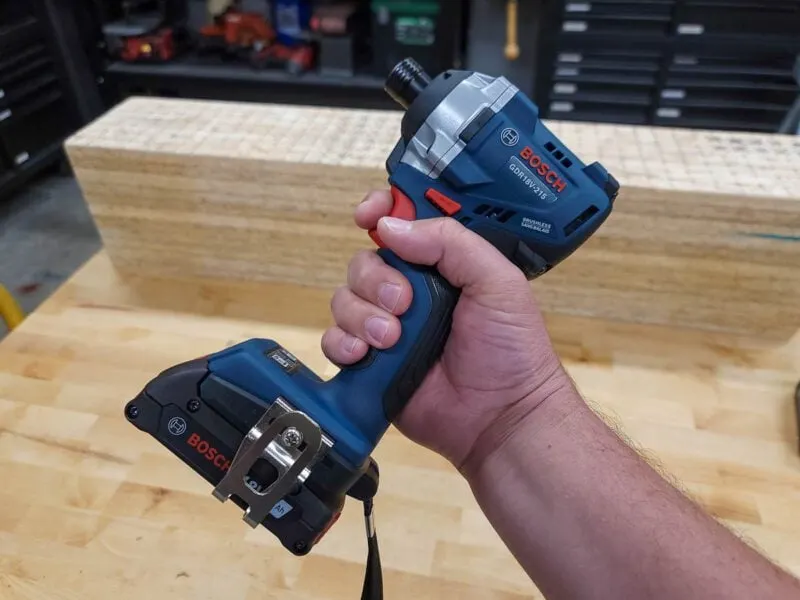
The Bosch GDR18V-215 is a compact 18V brushless impact driver built around 1,900 in-lbs of rated torque, two speed and torque settings, preset auto-drive modes, and a light 2.2-lb bare-tool weight. It gives Bosch users a simpler, lighter alternative to the GDR18V-1950CN while retaining the control features that matter for everyday fastening.
Bosch 18V owners, installers, DIYers, repetitive screw driving, and users who value a light compact tool.
You want Bosch’s shortest premium driver, three speed settings, or the highest published torque available in this class.
Research-based verdict
See buyer fit and tradeoffs below; no measured score
Review methodology: This is a research-based Pelstro review, not a claim of hands-on laboratory testing. We evaluate official manufacturer specifications and documentation, design, battery-platform fit, application usefulness, and how the tool compares with current alternatives.
Bosch GDR18V-215 at a Glance
| Motor | Brushless |
| Maximum torque | 1,900 in-lbs |
| Maximum no-load speed | 3,300 RPM |
| Maximum impact rate | 3,800 IPM |
| Speed/torque settings | 2 |
| Drive | 1/4-inch quick-change hex |
| Head length | 4.9 inches |
| Bare-tool weight | 2.2 lb |
| Battery platform | Bosch 18V / AMPShare |
Bosch rates the GDR18V-215 at up to 1,900 in-lbs of torque, 3,300 RPM no-load speed, and 3,800 impacts per minute. The bare tool weighs 2.2 lb and uses a compact 4.9-inch head. Bosch also includes two speed and torque settings plus preset auto-drive modes for self-drilling metal screws and wood screws.
Fastening Performance and Control
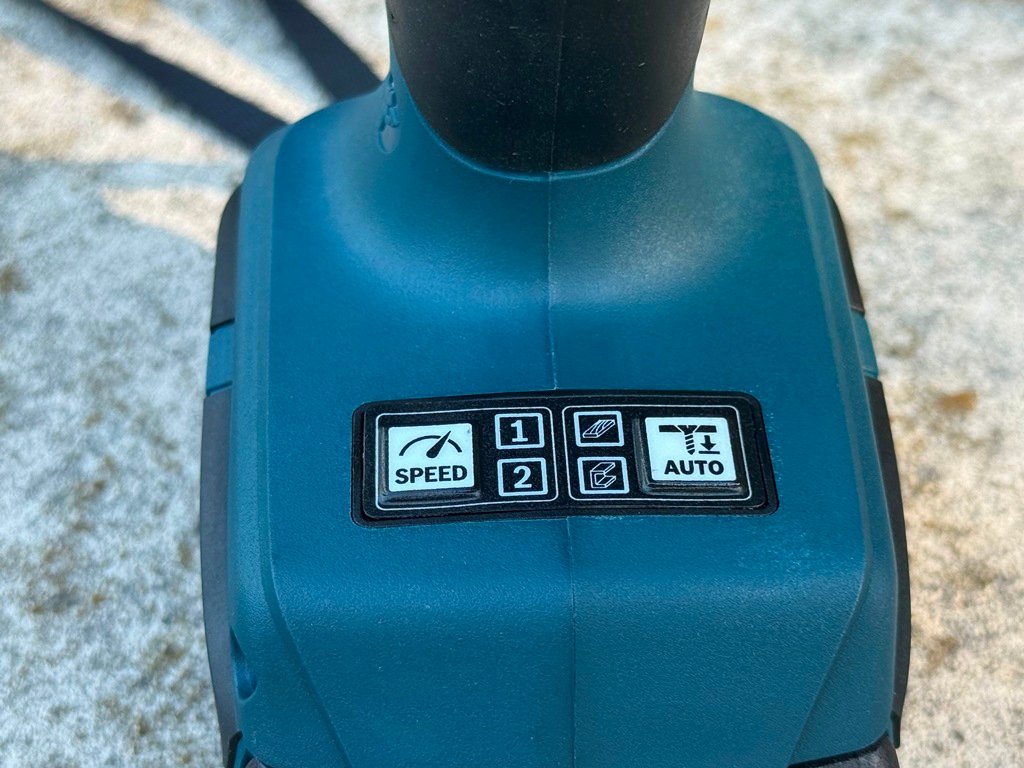
1,900 in-lbs Is Plenty for Everyday Impact-Driver Work
The GDR18V-215 sits just below Bosch’s GDR18V-1950CN in published peak torque, but the difference is only 50 in-lbs. On paper, that means the 215 still has the output expected from a modern full-power 18V impact driver. It is designed for deck screws, construction screws, installation work, framing hardware, cabinet assembly, and other fastening jobs where a drill/driver can become slower or more cumbersome.
Peak torque should not be treated as a universal measure of real-world speed, but 1,900 in-lbs gives this Bosch enough rated headroom for the vast majority of normal impact-driver applications. Buyers regularly driving unusually large structural fasteners may prefer a more aggressive flagship model, but most users will benefit more from control, balance, and battery choice than another few hundred in-lbs on a specification sheet.
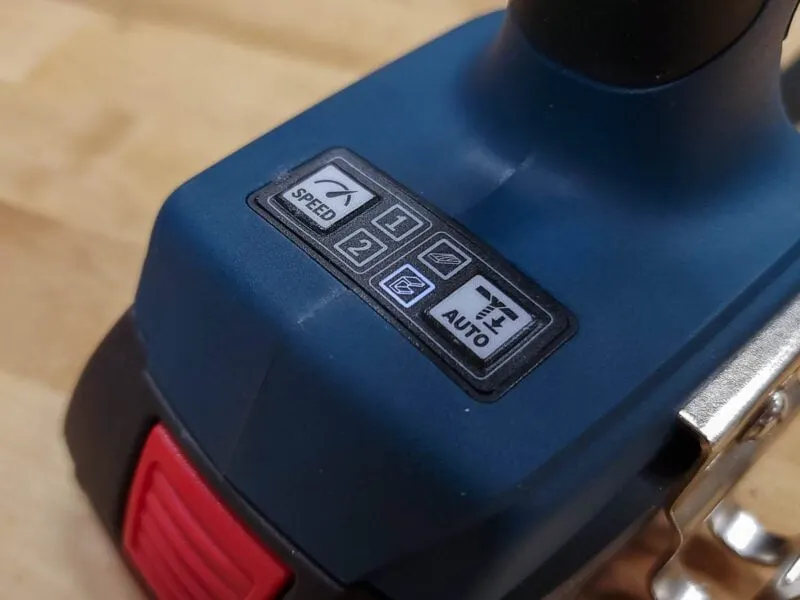
Two Speed/Torque Settings
Bosch gives the GDR18V-215 two selectable speed and torque settings. That is less granular than the three settings on the GDR18V-1950CN or some premium rivals, but it still lets you move between controlled fastening and maximum output without relying entirely on trigger pressure.
The variable-speed trigger adds another layer of control. For smaller screws or finished materials, starting slowly helps reduce the chance of slipping, stripping a head, or burying a fastener too deeply. For long construction screws, switching to the higher output setting allows the motor to deliver its full capability.
Auto-Drive Modes Are the Standout Feature
The more interesting feature is Bosch’s preset auto-drive functionality. The company specifies modes for self-drilling metal screws and wood screws, intended to reduce damage to the fastener and workpiece. That matters during repetitive installation because the tool can help manage the final stage of driving rather than leaving every stop point entirely to trigger discipline.
This is one reason the GDR18V-215 makes sense for installers and tradespeople who drive the same type of fastener repeatedly. Electronic modes do not eliminate the need for proper technique, but they can make a powerful impact driver easier to control.
For beginners, our guide to using an impact driver explains bit selection, trigger control, fastener technique, and the jobs where an impact driver works best.
Compact Design and Ergonomics
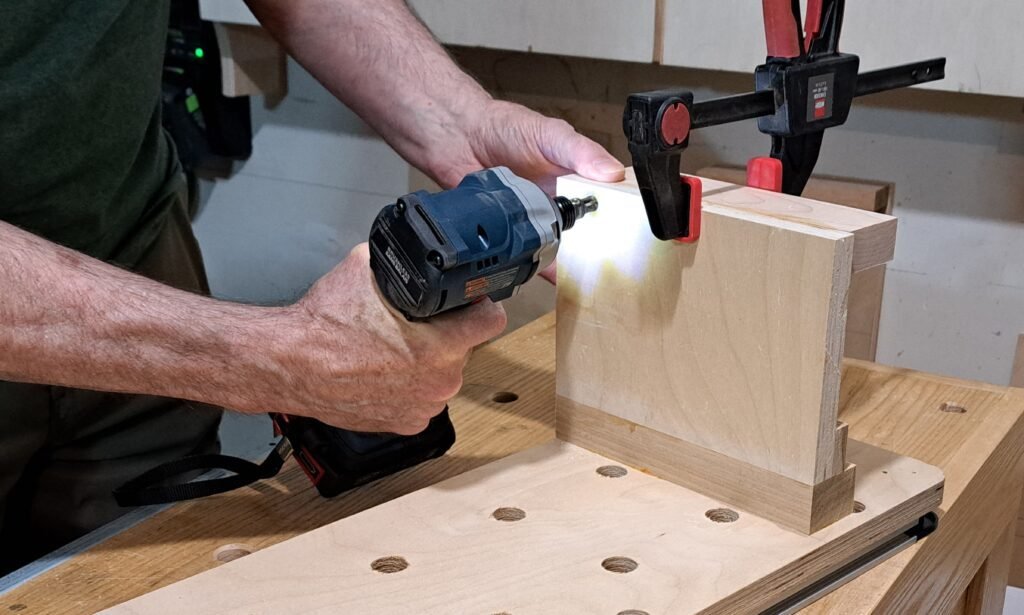
At 2.2 lb without a battery, the GDR18V-215 is notably light for an 18V impact driver with this level of rated output. Bosch lists the tool at 5 inches long overall, while its product highlights describe a 4.9-inch head length. Either way, this is a compact tool intended for tight work areas.
Low bare-tool weight becomes particularly useful during overhead fastening, cabinet installation, electrical or mechanical work, and jobs involving dozens or hundreds of screws. Battery choice will change the finished balance considerably. Pairing the driver with a compact Bosch 18V pack keeps the tool much more nimble than attaching one of the largest high-capacity batteries.
The quick-change 1/4-inch hex drive is designed for fast bit swaps and includes a power groove for secure bit retention. LED work lights illuminate the fastening area, while the included belt clip on the bare-tool package gives the driver a convenient place to sit between tasks.
Bosch 18V and AMPShare Battery Compatibility
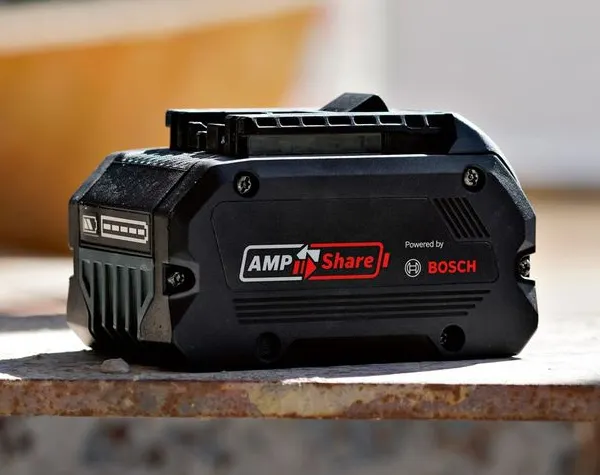
The GDR18V-215 is part of Bosch’s 18V system and Bosch promotes AMPShare compatibility across a growing range of cordless products. For someone who already owns Bosch 18V batteries, that ecosystem fit is one of the strongest reasons to buy this tool.
The kit version, GDR18V-215B12, includes a 2Ah Bosch 18V battery, charger, belt clip, and carrying bag. That compact battery is a sensible match for a lightweight impact driver because it keeps overall size and weight down. Users who need longer runtime can use larger compatible packs, but there is little reason to make a compact impact driver unnecessarily heavy for ordinary screw driving.
If you’re deciding whether you need an impact driver at all, see our cordless drill vs impact driver comparison.
Bosch GDR18V-215 vs GDR18V-1950CN
This is the most important comparison for Bosch buyers. The Bosch GDR18V-1950CN produces a slightly higher rated 1,950 in-lbs of torque, reaches 3,400 RPM and 4,000 IPM, and has three speed/torque settings. Its 4.45-inch head is also shorter than the 4.9-inch head Bosch specifies for the GDR18V-215.
The GDR18V-215 counters with a 2.2-lb bare-tool weight and preset auto-drive modes for self-drilling metal and wood screws. The choice therefore is not simply 1,950 versus 1,900 in-lbs. The 1950CN is the more feature-rich premium driver for users who want a shorter head and finer three-stage output control. The 215 is the simpler lightweight option and can make more sense when its price is meaningfully lower.
Pelstro pick: Choose the GDR18V-1950CN when maximum compactness and three-stage control matter most. Choose the GDR18V-215 when you want a light Bosch driver with useful application-specific auto modes and do not need the extra speed setting.
How It Compares With DeWalt, Milwaukee, and Makita
Vs DeWalt DCF860
The DeWalt DCF860 is the more aggressive choice on published output, with DeWalt rating it well above the Bosch in peak torque. The GDR18V-215 is better viewed as a balanced compact driver than a specification-sheet power champion. Existing battery ownership should heavily influence this comparison.
Vs Milwaukee 2953-20
Milwaukee’s 2953-20 M18 FUEL is another premium alternative with strong published performance and a mature M18 ecosystem. The Bosch makes the most sense when its lighter design, auto-drive modes, or Bosch battery compatibility better fit your work.
Vs Makita XDT19Z
The Makita XDT19Z offers a deeper selection of electronic settings and assist modes. Bosch answers with higher published maximum torque and a simpler interface. Buyers who frequently switch between specialized fastening applications may appreciate Makita’s controls, while the Bosch is easier to approach.
Pros and Cons
Pros
- Strong 1,900 in-lbs rated torque
- Light 2.2-lb bare-tool weight
- Compact 4.9-inch head
- Brushless motor
- Two selectable speed/torque settings
- Auto-drive modes for metal and wood screws
- Quick-change 1/4-inch hex drive
- LED work lights
- Bosch 18V and AMPShare compatibility
Cons
- Only two speed/torque settings
- GDR18V-1950CN has a shorter head
- Not the highest-torque flagship in the category
- Starting a new battery platform raises total cost
Who Should Buy the Bosch GDR18V-215?
Buy it if: you already own Bosch 18V batteries, want a light and compact impact driver, regularly drive wood or self-drilling metal screws, or prefer useful automatic fastening assistance over a complicated control panel.
Consider something else if: you want Bosch’s shortest current premium impact driver, need three or four selectable speed levels, already own another major battery platform, or simply want the highest published torque available.
For a wider category comparison, our best impact drivers guide compares the models worth considering before you commit to a platform.
Frequently Asked Questions
How much torque does the Bosch GDR18V-215 have?
Bosch rates the GDR18V-215 at up to 1,900 in-lbs of maximum torque.
How fast is the Bosch GDR18V-215?
Its maximum no-load speed is 3,300 RPM, and Bosch lists a maximum impact rate of 3,800 IPM.
How much does the GDR18V-215 weigh?
Bosch lists the bare tool at 2.2 lb. The installed battery increases total working weight.
Does the Bosch GDR18V-215 have multiple modes?
Yes. It has two speed/torque settings plus preset auto-drive modes designed for self-drilling metal screws and wood screws.
GDR18V-215 or GDR18V-1950CN: which is better?
The GDR18V-1950CN is the stronger premium specification with a shorter head, slightly more torque, and three speed/torque settings. The GDR18V-215 is lighter and adds application-specific auto-drive modes. The better choice depends on which features matter most and the price difference when you buy.
The Pelstro Bottom Line
Pelstro’s recommendation is qualitative and research-based; no measured performance score is assigned. Its combination of 1,900 in-lbs of rated torque, 2.2-lb bare-tool weight, compact design, two speed/torque settings, and auto-drive modes makes it a practical all-round impact driver rather than a pure numbers-chasing flagship. Existing Bosch 18V owners are the clearest audience. If the GDR18V-1950CN is only slightly more expensive, we prefer the 1950CN for its shorter head and extra control setting; at a meaningful discount, the GDR18V-215 becomes the better-value buy.
See our Best Impact Drivers guide for the broader shortlist.