
Research-based buying advice · Reviewed October 20, 2026 · US model references
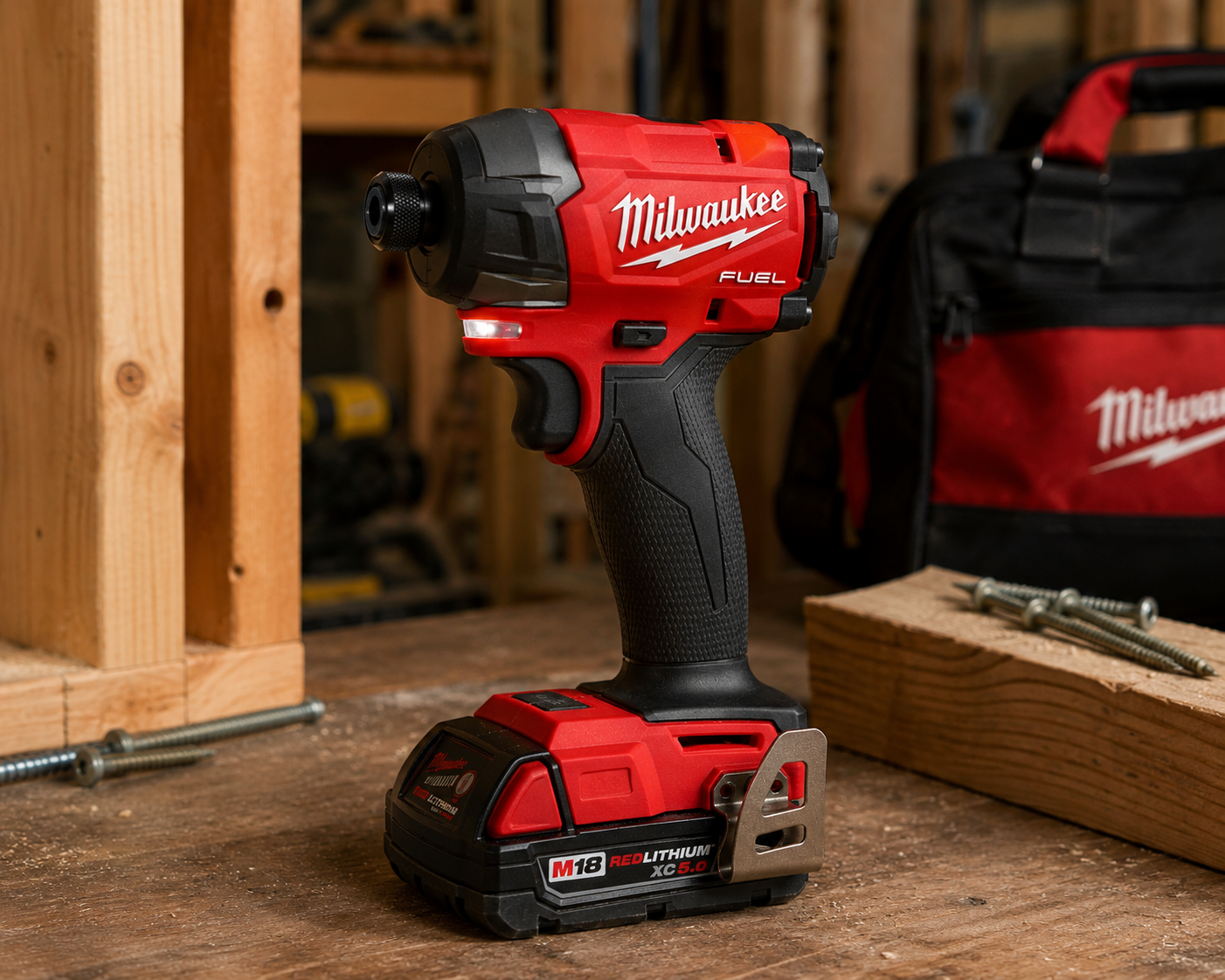
Featured artwork is an existing editorial illustration of an M18-style impact driver for platform context; it does not depict the M12 3453-20.
Milwaukee 3453-20 review: who should buy it?
The Milwaukee 3453-20 is worth considering if you already own M12 batteries and need a dedicated impact driver for general fastening. It offers useful output controls and lighting without moving you to M18. If you mainly assemble flat-pack furniture, a manual screwdriver or drill with a suitable clutch is often the more controlled choice.
This is a research-based assessment of the US 3453-20 bare tool. Pelstro has not physically tested this model. Our recommendation concerns application fit, controls and complete setup cost; it is not a measured performance or durability verdict.
30-second decision guide
- Shortlist it: existing M12 users, mobile repair work and repeated screwdriving within the tool’s limits.
- Compare the M18 2953: existing M18 ownership, demanding fastening and projects involving other M18 tools.
- Consider a different tool: precision furniture assembly, regular round-shank drilling or automotive wheel fasteners.
The 3453 vs 2953 comparison includes the dimension and output comparison. The 3453 is not automatically the shorter tool simply because it uses the smaller battery platform.
What the specifications establish
Milwaukee lists a brushless motor, quarter-inch hex accessory fitting, four drive modes, Tri-LED lighting and single-handed bit insertion. The 3453-20 is the bare-tool version; a separately identified kit includes power equipment. Published specifications describe the design, not measured outcomes in every material.
In practice, the accessory interface suits hex-shank driving bits and appropriately rated accessories. It does not provide the adjustable round-shank chuck found on a conventional drill. If you need both pilot holes and screws, a drill-and-driver combination can save repeated accessory changes.
What makes it appealing
Adding a driver to equipment you own
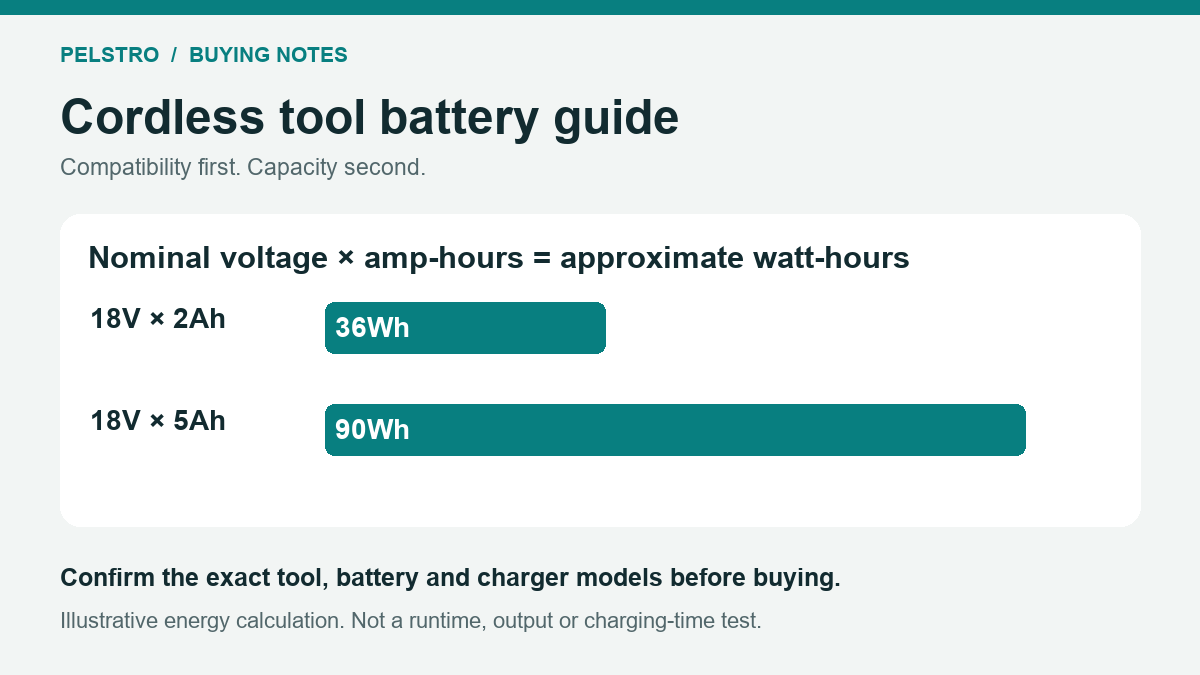
The strongest value case is simple: you already have suitable M12 packs and a charger. Then the bare tool adds another function without duplicating equipment. Check battery condition as well as compatibility; an old pack that no longer meets your needs still creates a replacement cost.
Controls for different fasteners
Four modes give you options for starting and seating screws. The dedicated self-tapping setting is intended for that application; it should not become your default for every screw. Read the mode descriptions in the manual, practice on scrap and start conservatively.
Modes do not guarantee a particular final tightening torque. For fixings with a specified installation procedure, follow the fastener manufacturer’s guidance. Do not substitute an impact-driver setting for calibrated torque control.
Lighting around the accessory
The front lighting arrangement is relevant when working inside cabinets and shaded spaces. It can help you see bit engagement, but it cannot solve a poor approach angle. Keep the bit square to the screw and use a correctly fitting profile.
Limitations that affect the purchase
Another battery system still has a cost. An M18 owner buying a 3453 may need an M12 battery even when an existing charger supports both. Check the actual charger rather than assuming compatibility.
Impact action can damage delicate work. The tool should not be judged only by whether it can turn a small screw. Soft materials, fragile fittings and finish surfaces often call for a gentler tool and careful final seating.
Compact is a whole-tool question. Battery footprint, grip comfort and the projecting bit determine access. If possible, hold the exact tool with the pack you intend to use before buying it.
This is an impact driver, not an impact wrench. A socket adapter does not turn it into the right tool for every nut or bolt. Choose the tool and rated accessories for the application.
3453-20 bare tool or 3453-22 kit?
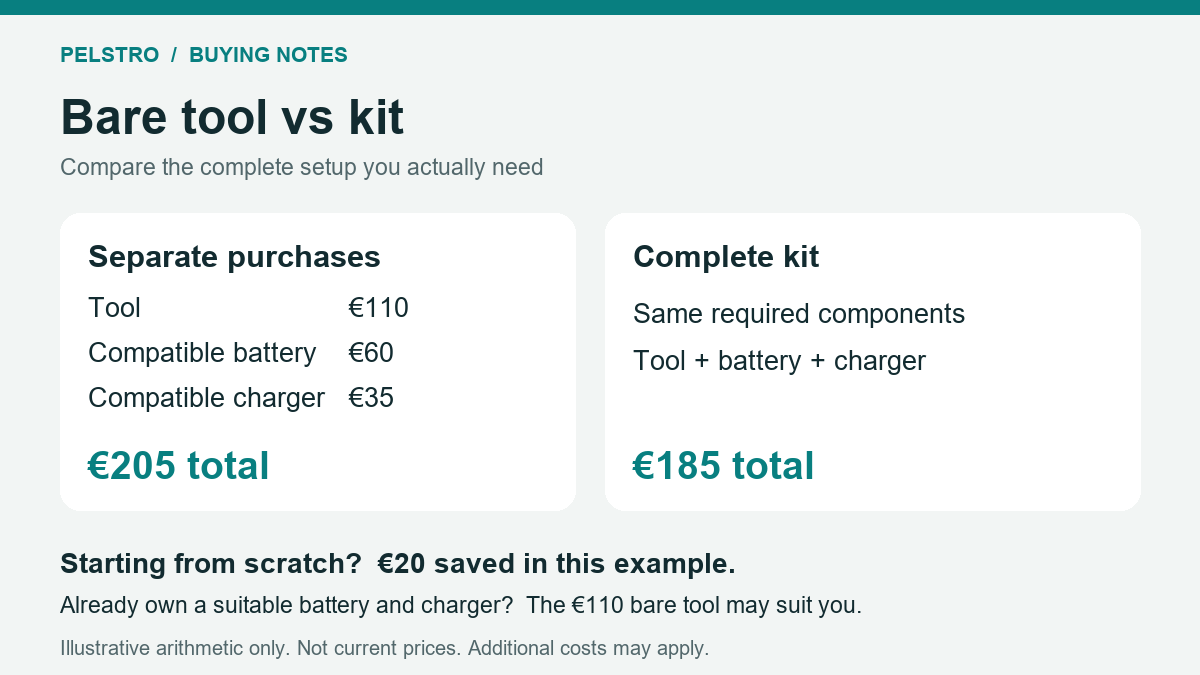
Milwaukee lists the 3453-22 kit separately from the 3453-20 bare tool. Check the current official kit contents and the seller’s exact package before comparing offers. Regional codes and retailer bundles can differ.
For a new platform purchase, calculate: tool or kit price + required batteries + required charger + bits + delivery + tax not included. Enter zero only for equipment you already own and can actually use. Our bare-tool versus kit guide explains the break-even calculation.
Do not count an unwanted case or duplicate charger as a saving just because it appears in a bundle. The useful price is the total needed to complete your jobs, with a suitable seller, returns arrangement and applicable warranty.
Alternatives worth comparing
- Milwaukee 2953-20: consider it if M18 fits your equipment and workload.
- DeWalt DCF850: relevant if you already use compatible DeWalt packs and front-to-back access matters.
- Makita XDT19Z: a platform-preserving option for existing 18V LXT users.
Our compact impact-driver buying guide explains how to compare these choices without treating different brands’ torque ratings as a laboratory ranking.
Before ordering
- Confirm the complete model code and package contents.
- Check approved battery and charger combinations.
- Measure access with the intended bit, not only the bare tool.
- Budget for impact-rated bits and eye protection; follow the manual’s other requirements.
- Compare the complete setup with your current platform’s alternatives.
Frequently asked questions
Does the 3453-20 include a battery?
No. It is the bare-tool reference. Check a specific kit listing if you need batteries and a charger.
Will M18 batteries fit?
No. The 3453 uses M12 batteries. Some chargers accept both systems, but the tool’s battery fitting remains system-specific.
Is it suitable for beginners?
It can suit beginners who need an impact driver, learn the modes and practice trigger control. Occasional delicate assembly may be better served by a simpler tool.
Can it replace a cordless drill?
Not for every task. Its hex fitting and impact action differ from a drill with a chuck and clutch. See how to use an impact driver before choosing accessories.
Final recommendation
Buy the 3453-20 when it fills an actual fastening need in an existing M12 setup. Compare a kit when starting fresh, and compare the 2953 when M18 better fits the rest of your work. A useful purchase reduces cost or effort on your projects; it does not merely add a higher specification to the tool shelf.
Sources and method
We used official US product and kit information, assessing controls, accessory interface and ownership costs. No hands-on testing or long-term reliability study was conducted.