
PELSTRO TOOL REVIEW
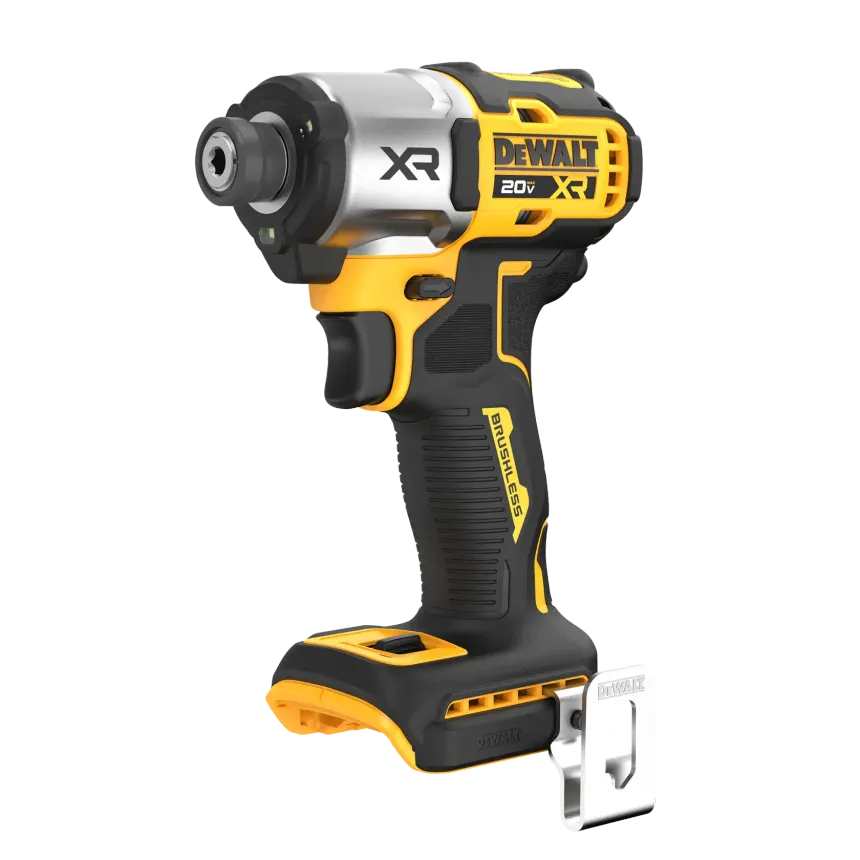
The DeWalt DCF845 sits in an interesting spot in DeWalt’s 20V MAX XR impact-driver lineup: it is compact enough for everyday work but still built for demanding fastening. DeWalt rates the brushless DCF845 at up to 1,825 in-lbs of maximum torque and 3,400 RPM, with three speed settings and a variable-speed trigger.
DIYers, remodelers, carpenters, installers, and tradespeople who regularly drive screws and fasteners.
Your work is extremely light, ultra-compact size matters most, or you specifically need DeWalt’s highest-output impact driver.
Research-based verdict
See buyer fit and tradeoffs below; no measured score
Review methodology: This is a research-based review. Pelstro has not physically tested this specific tool. Our assessment is based on manufacturer documentation, specifications, feature analysis, and how the DCF845 fits within DeWalt’s current impact-driver lineup.
DeWalt DCF845 Specifications
| Motor | Brushless |
| Voltage | 20V MAX |
| Maximum torque | 1,825 in-lbs |
| Maximum speed | 3,400 RPM |
| Drive | 1/4-inch hex |
| Speed settings | 3 |
| Work light | Integrated 3-LED light |
DeWalt DCF845 Review: Fastening Performance
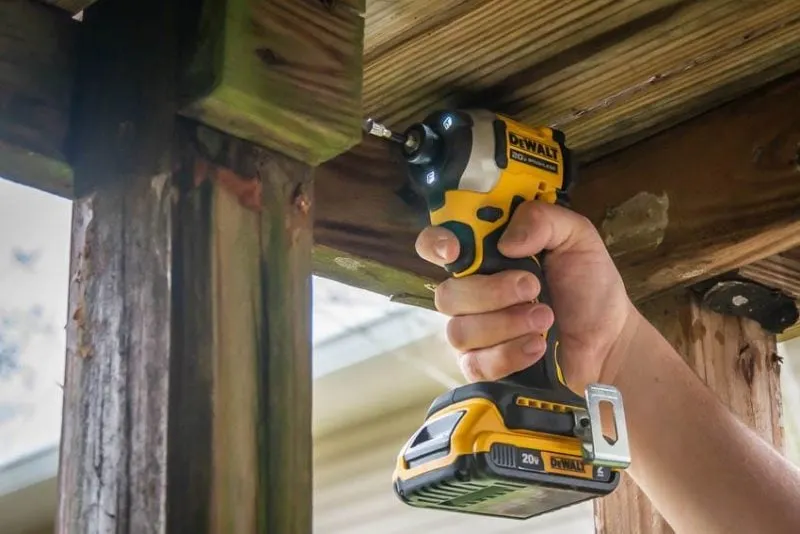
The headline figure is 1,825 in-lbs of maximum torque. That puts the DCF845 well beyond what most homeowners need for ordinary screws and gives it the muscle for larger fasteners and more demanding construction work. DeWalt specifically positions it for driving large-diameter screws on the official DCF845 product page.
Power alone is not what makes an impact driver useful, though. The combination of impact action and a compact body is what makes this class of tool particularly effective for repetitive fastening. Compared with a conventional drill/driver, an impact driver is generally the more natural choice when the job revolves around long screws, structural fasteners, or repeated driving. If you’re deciding between the two tool types, see our cordless drill vs impact driver comparison.
Three-Speed Control
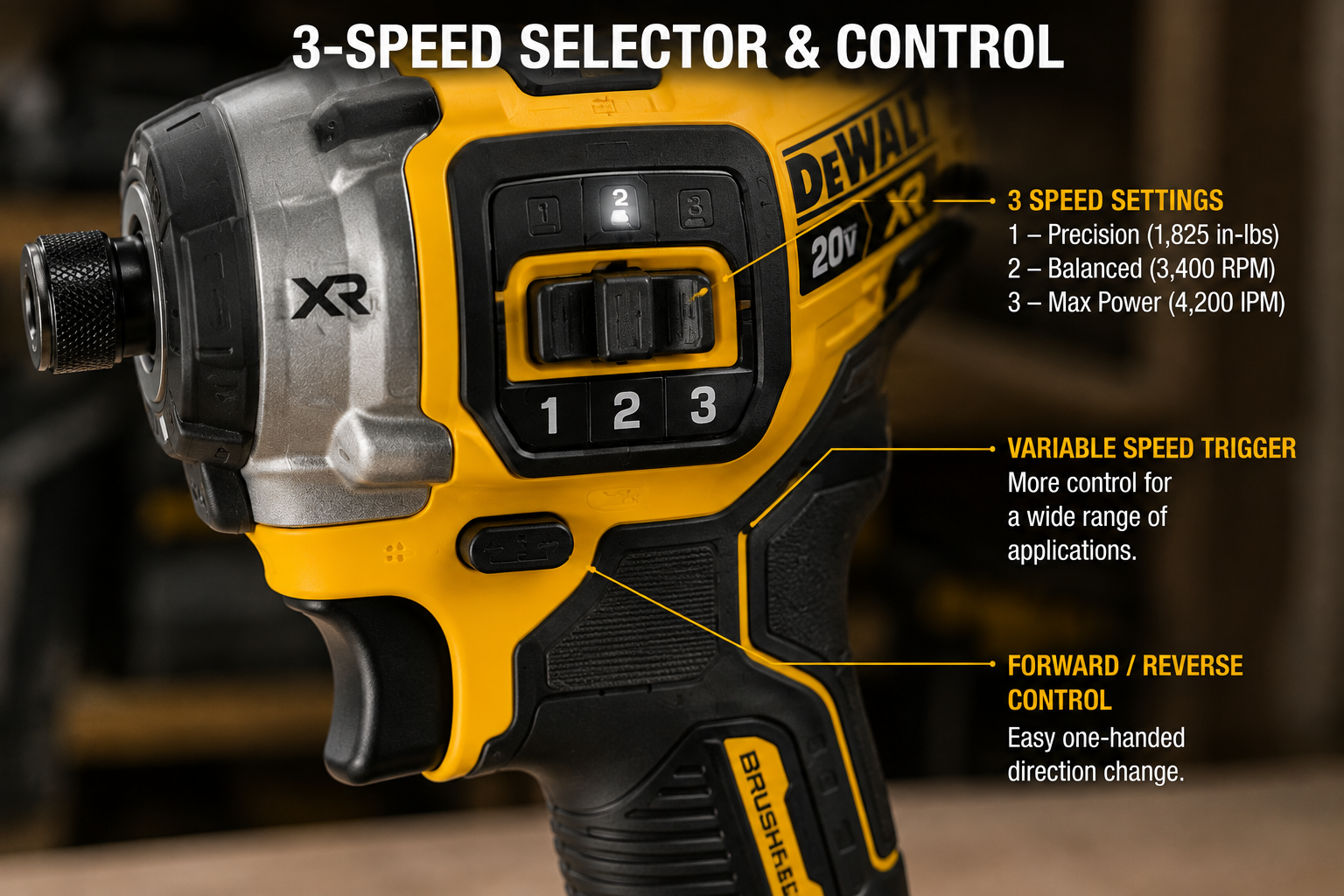
The DCF845 provides three speed settings in addition to its variable-speed trigger. That matters because maximum output is not desirable for every fastener. Lower settings give you more control when starting screws or working with smaller hardware, while the upper range is available when you need faster driving and more output.
For a general-purpose impact driver, this is one of the DCF845’s strongest features: you are not locked into an all-or-nothing power delivery. For more context on how speed and control compare across current models, see our Best Impact Drivers guide.
Size, Handling, and Ergonomics
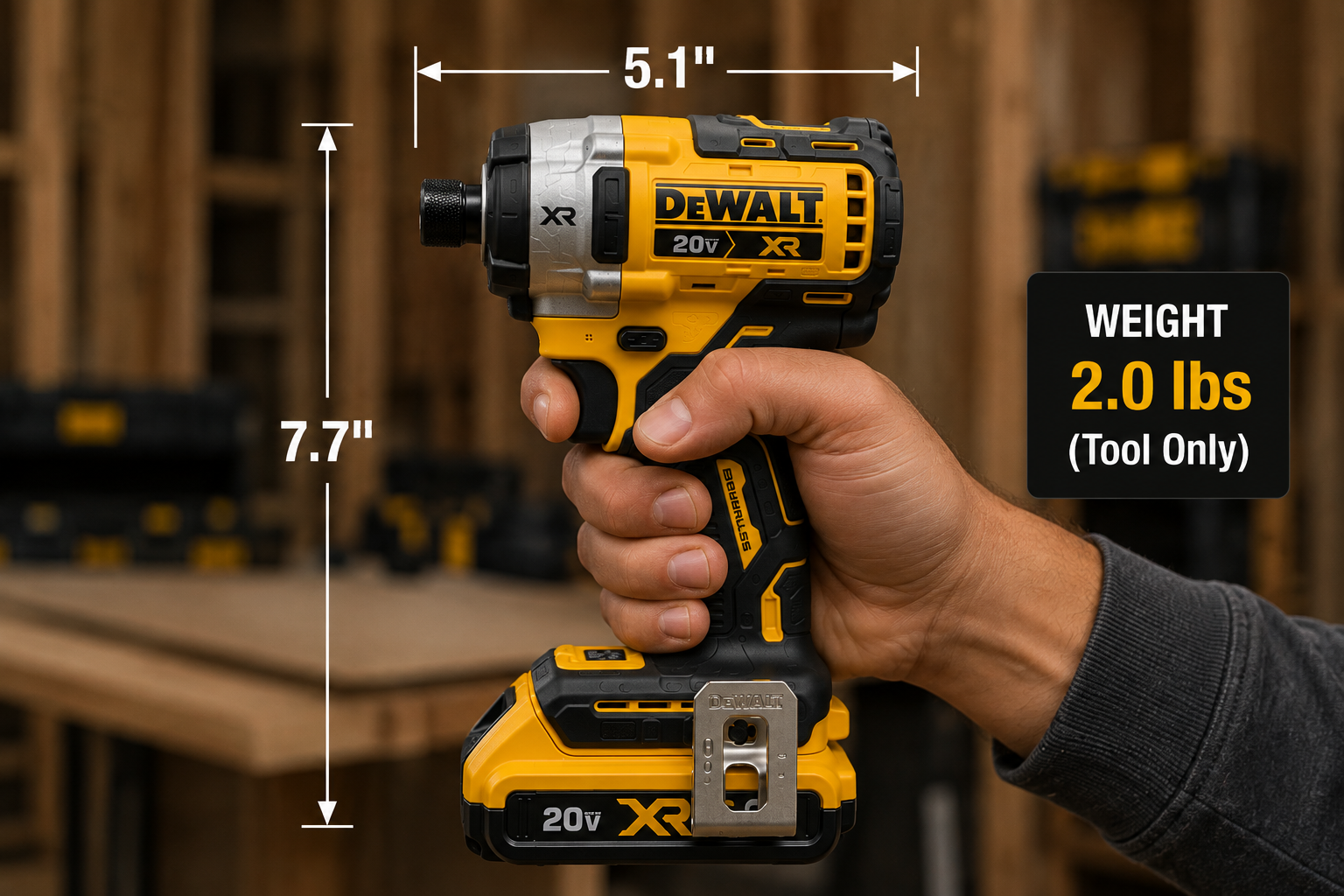
The DCF845 is designed as a compact XR impact driver. That makes it easier to maneuver between framing, inside cabinetry, around brackets, and in other spaces where a full-size drill can become awkward. Pairing it with a compact 20V MAX battery keeps the overall package especially manageable.
The familiar pistol-grip format, belt hook, and one-handed 1/4-inch hex interface make it well suited to repetitive fastening. Users already invested in DeWalt’s 20V MAX system also avoid adding another battery platform. To keep cordless tools and batteries in good condition between jobs, see our guide to storing power tools properly.
1/4-Inch Hex Chuck and Controls
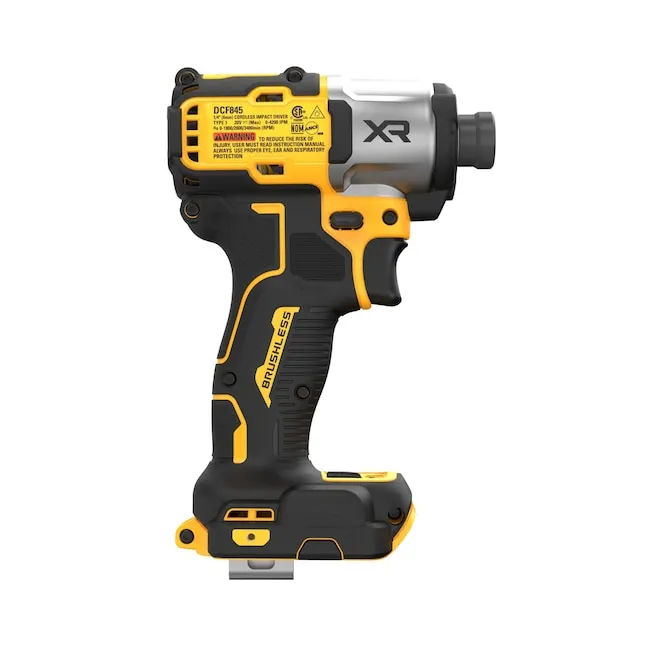
The DCF845 uses the standard 1/4-inch hex interface expected on an impact driver. Bit changes are quick, and the format supports the large ecosystem of impact-rated driver bits, nut setters, sockets, and specialty accessories.
Its three-speed selector is the more important control distinction. It lets you tailor the tool to the fastener instead of relying exclusively on trigger finesse.
3-LED Work Light
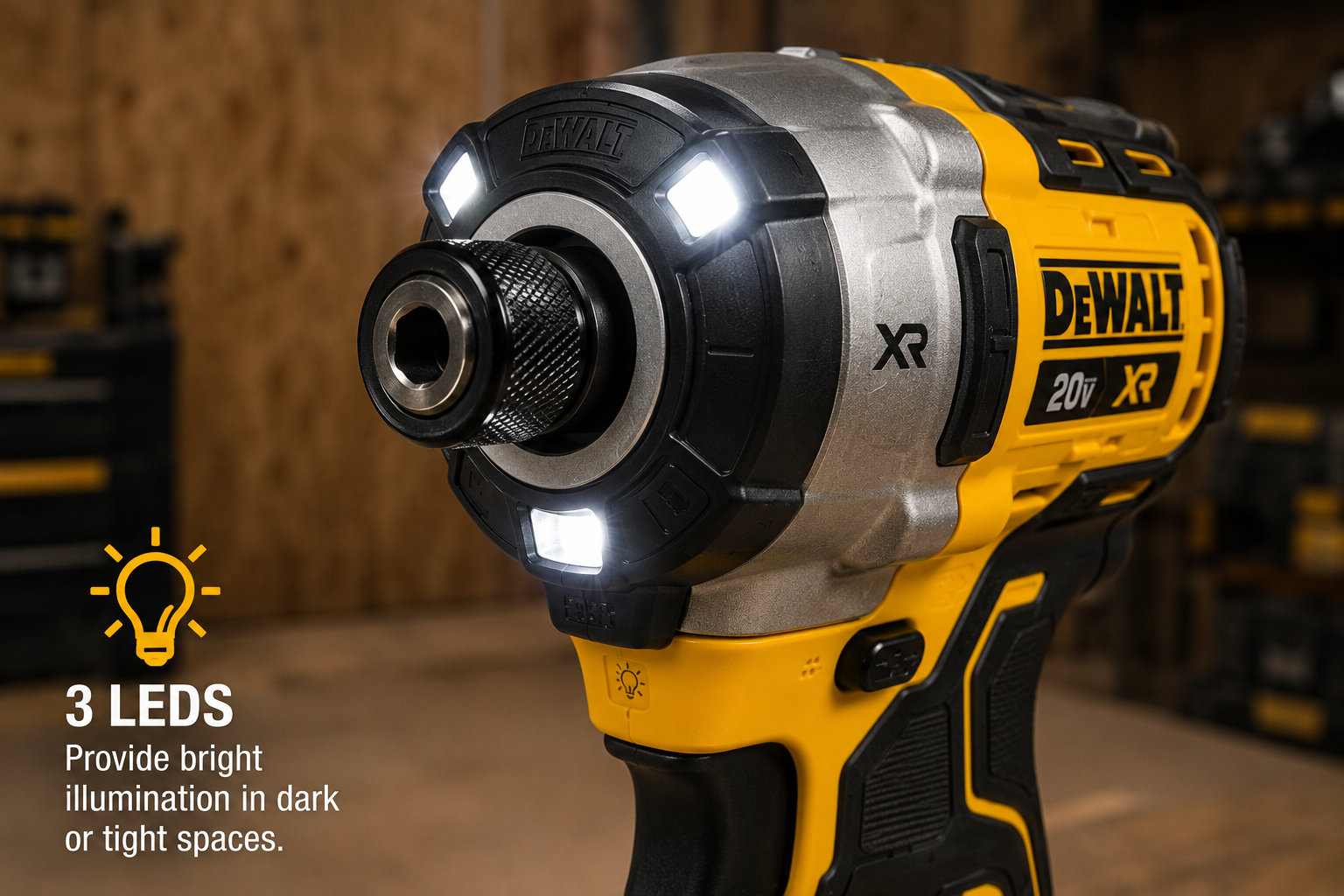
DeWalt equips the DCF845 with an integrated three-LED work light. It is a small feature that becomes genuinely useful inside cabinets, under benches, in unfinished rooms, or anywhere the tool itself blocks ambient light from reaching the fastener.
A multi-LED arrangement also helps illuminate the work area more evenly than a single point light.
Battery Platform and Kit Options
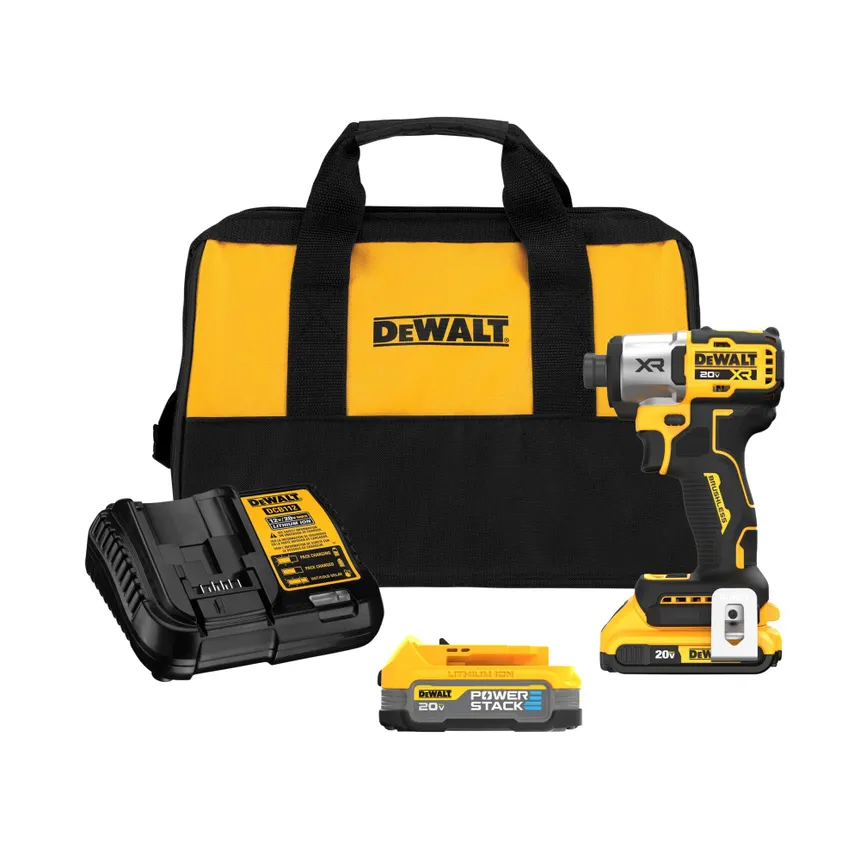
The bare DCF845B is sold without a battery or charger, which makes the most sense for someone who already owns compatible DeWalt 20V MAX batteries. DeWalt also offers kit configurations with batteries, charger, belt hook, and bag. Some configurations pair the tool with compact POWERSTACK batteries, while others include conventional 20V MAX packs.
If this is your first DeWalt cordless tool, compare the complete kit cost rather than judging the bare-tool price alone. If battery-platform choice is part of your decision, our Brushless vs Brushed Drill guide also explains why motor type matters across cordless tools.
DeWalt DCF845 vs DCF850
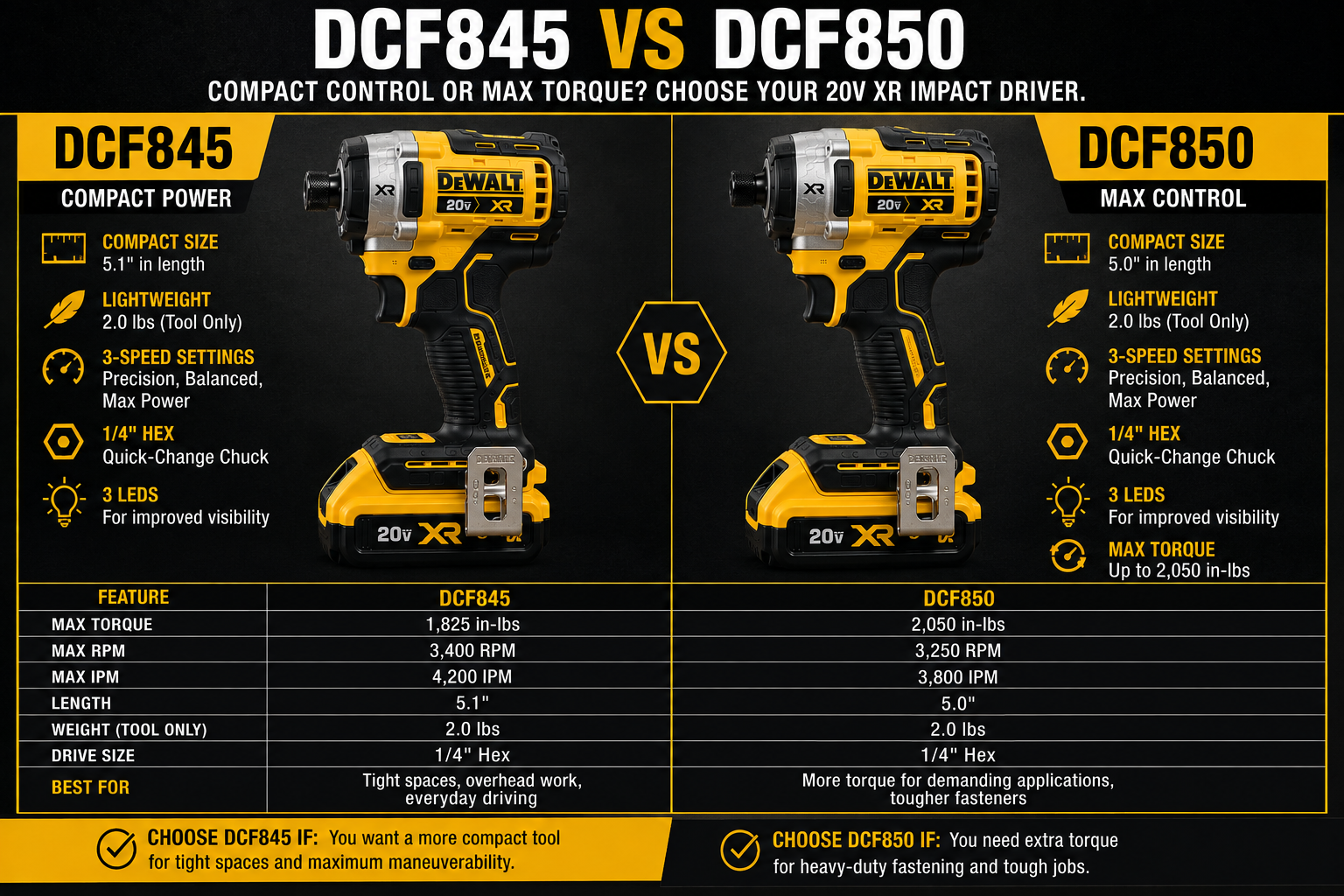
The DCF850 is the compact ATOMIC alternative in DeWalt’s lineup. Both target users who want a powerful 20V impact driver without excessive bulk, but they emphasize slightly different priorities. The DCF850 is especially focused on a short, compact form factor, while the DCF845 sits in the XR family and makes a compelling general-purpose choice.
If access in extremely tight spaces dominates your work, the DCF850 deserves a close look; see our DeWalt DCF850 review. If you want an XR impact driver with three-speed control and a balanced mix of size and output, the DCF845 is easier to recommend as an all-rounder.
DeWalt DCF845 vs DCF860
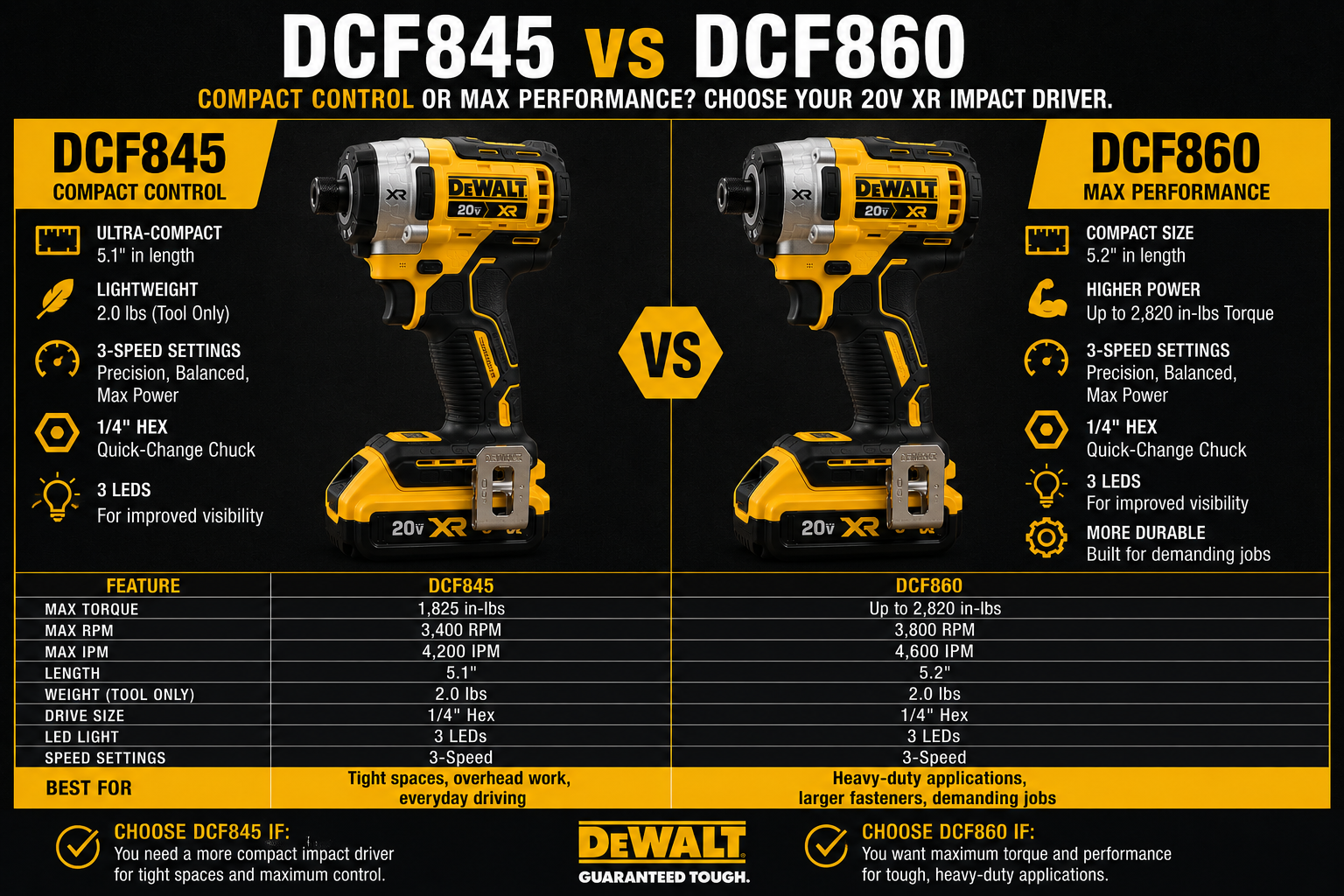
The newer DCF860 is DeWalt’s high-torque XR option and is the more logical choice when maximum fastening output is the priority. That does not automatically make the DCF845 obsolete. More power can come with tradeoffs in cost, weight, and how much tool you actually need.
For routine deck screws, construction fasteners, workshop projects, and general DIY or trade use, the DCF845’s 1,825 in-lbs is already substantial. The DCF860 makes more sense for users deliberately seeking the higher-output end of the lineup; see our DeWalt DCF860 review.
Pros and Cons
Pros
- Strong 1,825 in-lbs maximum torque
- Fast 3,400 RPM maximum speed
- Three speed settings
- Brushless motor
- Compact XR design
- Useful three-LED work light
- Compatible with the broad DeWalt 20V MAX battery system
Cons
- Bare tool does not include battery or charger
- Not DeWalt’s smallest 20V impact driver
- Newer high-torque models offer more output
- Overkill if you only drive occasional small household screws
Who Should Buy the DCF845?
The DCF845 makes the most sense for DIYers, remodelers, carpenters, installers, and tradespeople who regularly drive screws and fasteners and want one dependable 20V impact driver. It is particularly attractive if you already own DeWalt batteries. New to this type of tool? Our beginner’s guide to using an impact driver covers the basics.
If you mainly drill holes, buy a drill/driver first. If your work involves repeated fastening, long screws, deck construction, framing hardware, or similar jobs, the impact driver earns its place quickly.
Who Should Skip It?
Skip the DCF845 if your work is extremely light and occasional, if ultra-compact dimensions matter more than anything else, or if you specifically need the highest-output DeWalt impact driver available. Those cases point toward a basic drill/driver, the compact DCF850, or the higher-output DCF860 respectively.
Final Verdict
The DeWalt DCF845 remains an excellent general-purpose impact driver. Its combination of 1,825 in-lbs of torque, 3,400 RPM, three-speed control, brushless motor, three-LED lighting, and 20V MAX compatibility covers the things that matter most in day-to-day fastening.
It is not automatically the best DeWalt impact driver for every buyer, but that is precisely why it works as an all-round recommendation: it offers substantial performance without requiring you to chase the most extreme specification in the lineup. For alternatives across brands and price points, see our best impact drivers of 2026.
The Pelstro Bottom Line
Pelstro’s recommendation is qualitative and research-based; no measured performance score is assigned. Buy the DCF845 if you want a powerful, controllable DeWalt 20V impact driver for everyday fastening and you value the XR platform more than having the smallest or highest-torque model available.
For alternatives across brands and price points, see our Best Impact Drivers guide.
Pingback: DeWalt DCF860 Review (2026): Is It Worth It?
Pingback: Milwaukee 2953-20 Review: Is It Worth It in 2026?
Pingback: DeWalt DCF850 Review (2026): Is It Worth It?