
PELSTRO TOOL REVIEW
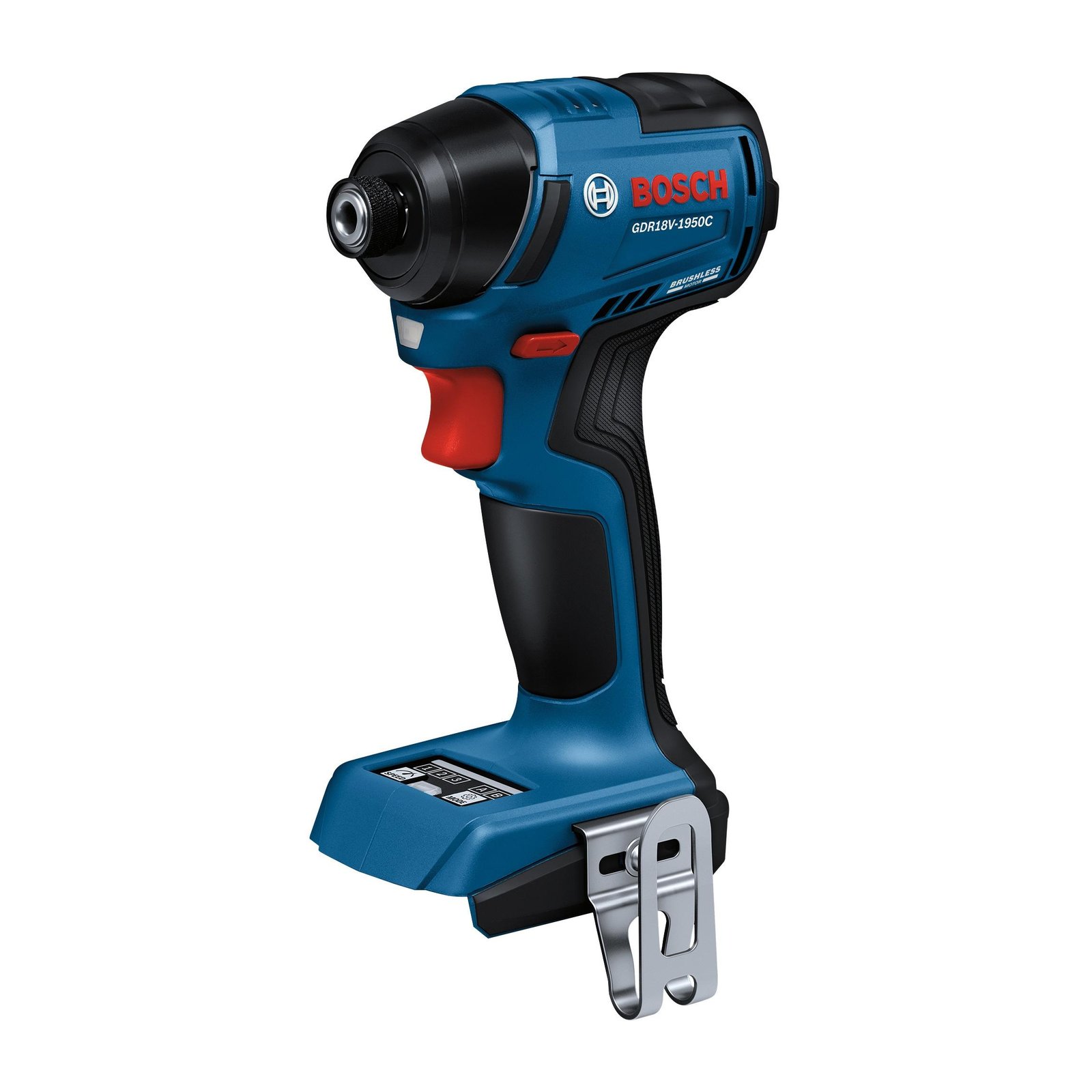
The Bosch GDR18V-1950CN combines a compact 4.45-inch head with 1,950 in-lbs of rated torque, three selectable speed and torque settings, and fastening-control features designed to reduce overdriving. It is a premium 18V impact driver built around a balance of power, control, and compact dimensions.
Existing Bosch 18V users, construction fastening, installations, compact-access work, and users who value selectable torque control.
Maximum published torque is your priority or you already own a substantial DeWalt, Milwaukee, or Makita battery collection.
Research-based verdict
See buyer fit and tradeoffs below; no measured score
Review methodology: This is a research-based Pelstro review, not a claim of hands-on laboratory testing. We evaluate official manufacturer documentation, published specifications, platform compatibility, design, application fit, and the product’s position against current alternatives.
Bosch GDR18V-1950CN at a Glance
| Motor | Brushless |
| Maximum torque | 1,950 in-lbs |
| Maximum speed | 3,400 RPM |
| Maximum impact rate | 4,000 IPM |
| Speed settings | 3 |
| Drive | 1/4-inch hex |
| Head length | 4.45 inches |
| Lighting | Dual LED |
| Battery platform | Bosch 18V |
Bosch lists the three no-load speed ranges at 0–800, 0–2,300, and 0–3,400 RPM. The corresponding maximum torque levels are 890, 1,240, and 1,950 in-lbs, while impact rate tops out at 4,000 IPM. Those stepped settings give the tool distinct personalities rather than forcing every task through one maximum-output mode. Bosch’s official GDR18V-1950CN specifications provide the full manufacturer data.
Performance and Fastening Control
Fastening Performance
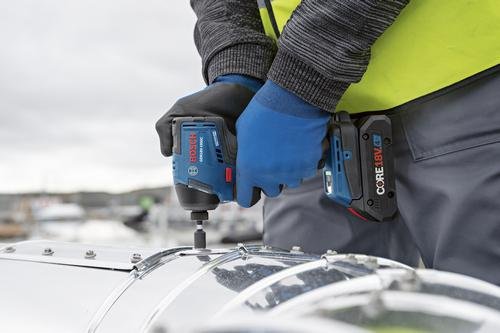
At a rated 1,950 in-lbs, the GDR18V-1950CN has enough published output for the fastening jobs most people reasonably expect from a 1/4-inch impact driver: construction screws, structural fasteners, deck screws, cabinet installation, framing hardware, and general assembly work.
The more useful story is how Bosch distributes that output. Setting 1 limits speed to 800 RPM and torque to 890 in-lbs, giving a calmer response for smaller hardware and tasks where overdriving would be costly. Setting 2 raises the ceiling to 2,300 RPM and 1,240 in-lbs. Setting 3 unlocks the full 3,400 RPM and 1,950 in-lbs.
This gives the Bosch a broad usable range. Maximum torque matters when a long fastener starts loading the tool heavily, but controlled low-speed behavior matters just as much around finished surfaces or smaller screws.
Three-Speed Control and Fastening Modes
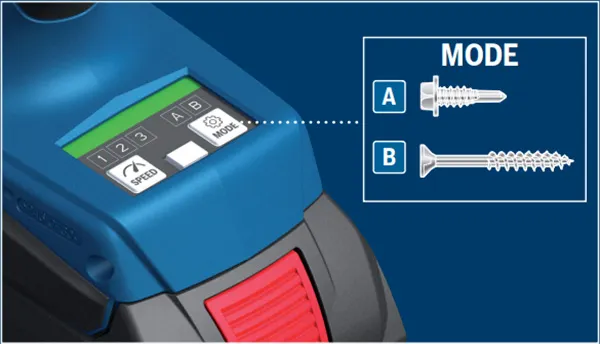
The onboard user interface is one of the GDR18V-1950CN’s strongest features. Three speed and torque settings let you tailor output before pulling the trigger, while Bosch also includes Auto Stop and Auto Slow Down functions intended to help prevent screws from being overdriven.
That is especially useful for repetitive fastening. A powerful impact driver that always behaves aggressively can require constant trigger discipline. Electronic assistance does not replace good technique, but it can make the tool easier to manage when moving between delicate and demanding applications.
If you’re new to this type of tool, our guide to using an impact driver covers bit installation, trigger control, fastening technique, and common beginner mistakes.
Design and Ergonomics
Compact Size and Ergonomics
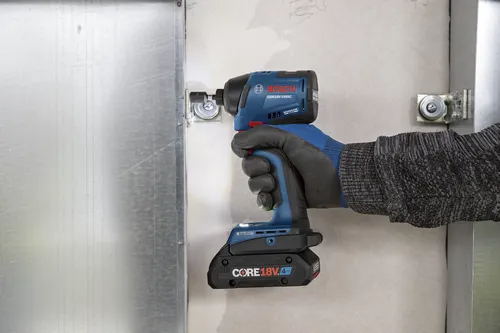
Bosch lists a head length of just 4.45 inches. That compact front-to-back dimension is valuable inside cabinets, between framing members, around mechanical equipment, and anywhere a full-size drill or longer impact driver becomes awkward.
The short head also helps keep the tool close to the fastener instead of forcing your wrist farther away from the work. Bosch describes the grip and overall layout as ergonomic, and the dual LED work lights improve visibility in dim work areas.
Compactness should not be judged by head length alone because the battery changes the overall balance and weight. Still, 4.45 inches puts the Bosch firmly into compact premium-impact-driver territory.
Quick-Insert Hex Collet and Dual LEDs
The 1/4-inch quick-insert hex driver supports one-handed bit installation, a small convenience that becomes more valuable when swapping driver bits repeatedly. It accepts standard impact-rated 1/4-inch hex accessories with a power groove.
Dual LED work lights are another practical improvement over a single light mounted far below the chuck. They will not replace dedicated jobsite lighting, but they help reduce shadows around the screw head in cabinets, corners, and other enclosed areas.
Bosch 18V Battery Platform
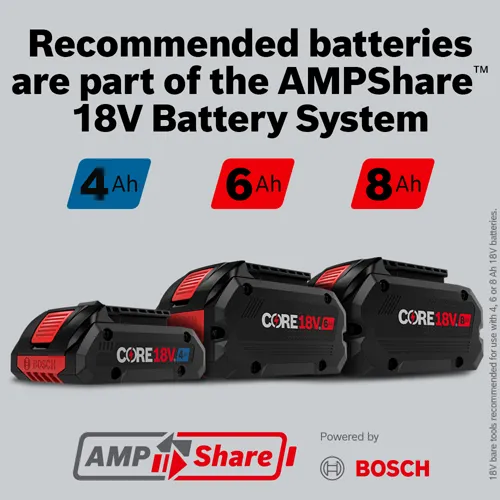
Battery ownership should be a major part of the buying decision. If you already have compatible Bosch 18V batteries and chargers, the GDR18V-1950CN makes considerably more sense as a bare-tool purchase. You gain a high-output impact driver without paying to duplicate batteries and chargers you already own. If you’re still deciding between tool types, our cordless drill vs impact driver comparison explains where an impact driver fits in a typical DIY tool kit.
For someone starting from zero, the decision is broader. DeWalt 20V MAX, Milwaukee M18, Makita LXT, and Bosch 18V all extend well beyond impact drivers. Think about the next several cordless tools you expect to buy, not just the tool in front of you today.
How the Bosch GDR18V-1950CN Compares
Bosch GDR18V-1950CN vs DeWalt DCF860
The DeWalt DCF860 takes the more aggressive approach on paper. DeWalt rates it at 2,500 in-lbs and 3,800 RPM, giving it a substantial published torque advantage over Bosch’s 1,950 in-lbs.
The Bosch counters with a compact 4.45-inch head and useful three-stage torque progression. If maximum rated fastening output is the priority, the DCF860 is the stronger specification-sheet choice. If you’re already on Bosch 18V or value controlled output alongside compact dimensions, the GDR18V-1950CN remains compelling.
Bosch GDR18V-1950CN vs Milwaukee 2953-20
Milwaukee’s 2953-20 M18 FUEL impact driver is an extremely close rival on rated torque, at 2,000 in-lbs versus Bosch’s 1,950 in-lbs. Milwaukee also rates the 2953-20 at up to 3,900 RPM, compared with 3,400 RPM for the Bosch.
That makes battery ecosystem and control preferences particularly important. Existing M18 users have little reason to switch platforms solely for this Bosch, while Bosch 18V owners can get comparable rated torque without moving ecosystems.
Bosch GDR18V-1950CN vs Makita XDT19Z
The Makita XDT19Z emphasizes control and specialized fastening modes, while Bosch carries the higher published maximum torque figure. Makita rates the XDT19Z at 1,590 in-lbs, so Bosch has the clear specification advantage in peak rated torque.
Makita’s four-speed system and additional assist modes remain attractive for users who prioritize a wide range of electronic control. Bosch keeps the interface simpler with three speed/torque settings plus Auto Stop and Auto Slow Down.
Pros and Cons
Pros
- Strong 1,950 in-lbs rated maximum torque
- Compact 4.45-inch head length
- Three differentiated speed and torque settings
- Auto Stop and Auto Slow Down assistance
- Brushless motor
- Quick-insert 1/4-inch hex collet
- Dual LED work lights
- Excellent fit for Bosch 18V users
Cons
- DCF860 offers considerably more rated torque
- Milwaukee 2953-20 has a higher published maximum RPM
- Starting a new battery ecosystem increases total cost
- Some rivals offer more specialized electronic modes
Who Should Buy the Bosch GDR18V-1950CN?
Buy it if: you already use Bosch 18V batteries, want a compact professional-grade impact driver, regularly move between light and demanding fastening, or value selectable torque levels and anti-overdriving assistance.
Consider something else if: maximum published torque is your overriding priority, you already own a substantial M18, 20V MAX, or LXT battery collection, or you specifically want the deepest range of electronic fastening modes.
For buyers comparing the category rather than one brand, our best impact drivers guide is the better starting point.
Frequently Asked Questions
How much torque does the Bosch GDR18V-1950CN have?
Bosch rates the GDR18V-1950CN at up to 1,950 in-lbs of maximum torque in its highest setting.
How fast is the Bosch GDR18V-1950CN?
Maximum no-load speed is 3,400 RPM, with a maximum impact rate of 4,000 IPM.
Does the Bosch GDR18V-1950CN have multiple speeds?
Yes. It has three selectable speed and torque settings: up to 800, 2,300, and 3,400 RPM, with progressively higher torque limits.
Is the Bosch GDR18V-1950CN brushless?
Yes. Bosch specifies an efficient brushless motor.
Is the Bosch GDR18V-1950CN worth it in 2026?
For Bosch 18V users who want strong output, compact dimensions, and useful fastening control, yes. Buyers without an existing battery investment should compare the total platform cost and competing impact drivers before committing.
The Pelstro Bottom Line
Pelstro’s recommendation is qualitative and research-based; no measured performance score is assigned. Its 1,950 in-lbs of rated torque, compact 4.45-inch head, three speed and torque settings, Auto Stop and Auto Slow Down functions, and Bosch 18V compatibility make it a well-balanced premium impact driver. It is not the outright specification champion, but for existing Bosch 18V owners it is an easy model to shortlist.
Compare the broader field in our Best Impact Drivers guide, and see our power tool maintenance guide for keeping cordless tools working properly.
Pingback: Bosch GDR18V-215 Review: Is It Worth It in 2026? - Pelstro